Mobilitätswende: Der Fahrer wird zum Passagier – Jobrad-Gründer lässt das E-Bike autonom fahren
Ulrich Prediger entwickelt mit seinem Start-up Veluto ein vollverkleidetes Roboter-Zweirad. Welches Potenzial hat seine Erfindung?
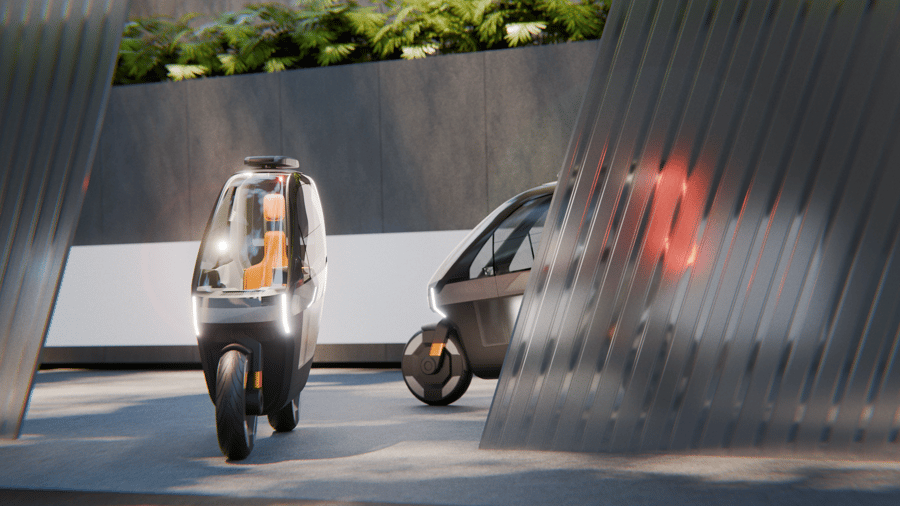
Ulrich Prediger, the founder of Jobrad, aims to let E-Bikes operate autonomously in the future. Equipped with sensors and cameras, the bicycles are designed to navigate traffic safely and without a rider. When a rider sits in the saddle, they can still check their emails or read a book, but overall operation remains the responsibility of the technology.
Prediger has demonstrated his ability to change things that were previously deemed impossible, having pioneered the concept of ride-sharing bicycles 20 years ago. Now, he hopes to replicate his success with a new start-up called Veluto, which focuses on autonomous e-bikes. The primary goal is to attract more people to bicycles by providing a safer alternative to cars.
Prediger believes that cameras and sensors, combined with autonomous steering and braking, can significantly improve bicycle safety. However, the major obstacle is the lack of legal framework for autonomous e-bikes, as no one has yet attempted such a project. This means that there are no specific technologies or regulations in place.
Veluto's team, led by Prediger, has developed a highly specialized crew of 12 members, including a robot engineer and a bicycle designer, to tackle this challenge. The completed product will be fully enclosed to mitigate weather-related issues that can affect car use. Veluto plans to test the technology on heavy cargo bikes on private property, with the hope of eventually deploying the bikes on public roads.
The company is already in discussions with several German municipalities to secure special permits for autonomous e-bikes. Initial speed limits would be set at six kilometers per hour, with the potential to increase to 25 kilometers per hour in a later phase when a passenger is aboard. Veluto is seeking an abo-style business model, where the vehicles would cost around 20,000 euros each, a fraction of the cost of fully autonomous cars.
Prediger estimates that replacing 3-5% of the 15-20 million second and third cars in Germany could lead to significant numbers. The study conducted by the University of Magdeburg supports this idea, showing that even with the high initial costs, the implementation of autonomous bicycles could be financially viable.
Written by urgent.news from Handelsblatt's reporting — not their text. Machine-written — may contain errors; check the original before relying on it.
This story
This is one outlet's version. Read the fullest account.