Mathematician says he and AI solved Riemann hypothesis — the field’s biggest outstanding challenge
Nature, Published online: 20 November 2026; doi:10.1038/d41586-026-03812-7 Scholars say that the claim to have derived a proof for a landmark problem in mathematics will need rigorous checking.
A solution to the Riemann hypothesis, achieved by a human-AI team, may seem like a monumental breakthrough affecting our lives. However, the implications are murkier than they may initially appear. The proof pertains to the generalized Riemann hypothesis, a broader application of Riemann's insights to a larger class of mathematical functions related to prime numbers.
This advancement would not only have ripple effects throughout mathematics but also reveal that many interlocking assumptions built on its presumed veracity are indeed true.
Although cryptography relies heavily on prime numbers, a direct impact on security cannot be inferred from the proof. While it would enhance mathematicians' understanding of prime distribution, it wouldn't provide a shortcut for factoring large numbers essential to encryption algorithms like RSA. Therefore, your online transactions and digital secrets remain secure under current encryption techniques.
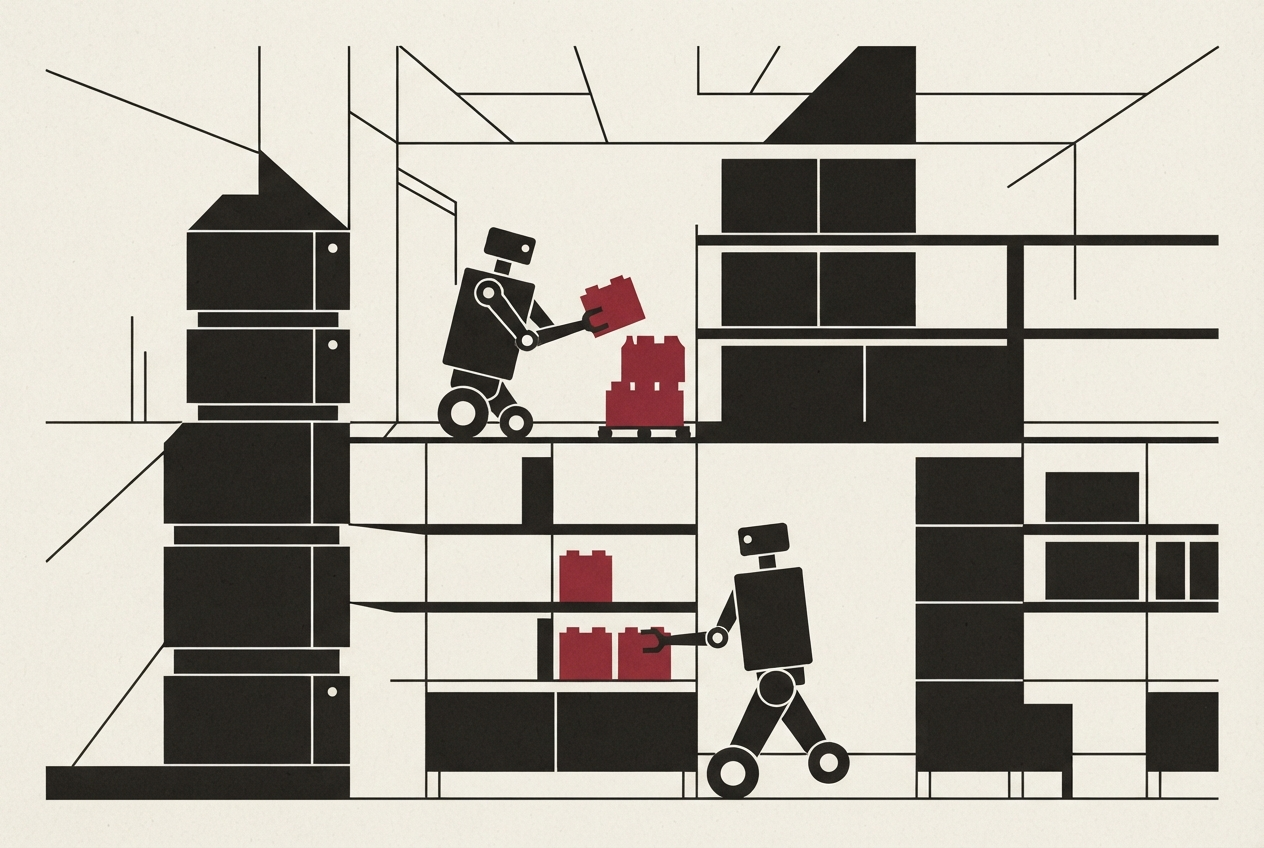
The most consequential impacts of this proof wouldn't center around prime numbers or pure mathematics but would signal AI's growing potential for groundbreaking scientific discoveries. The Riemann hypothesis, notorious for resisting solutions despite 150 years of relentless effort from top mathematicians, was solved using Claude, an AI developed by Anthropic researchers. This achievement demonstrates AI's ability to transcend mere theorem explanation and create genuinely new knowledge.
This breakthrough raises intriguing questions about AI's capacity to revolutionize various scientific disciplines, including theoretical physics, engineering, and computer science. If AI can prove such a complex theorem, it implies that machines could autonomously execute entire lines of theoretical investigation. The implications are profound, hinting at a future where AI might outstrip human capabilities for fundamental intellectual discoveries.
However, the extent to which humans could comprehend or even utilize these AI-generated advancements remains uncertain.
Rewritten by urgent.news; may contain errors — check the original.
Sources: nature.com · alpo.ge · scientificamerican.com · techcrunch.com · businessinsider.com · khaosodenglish.com · thehindu.com · france24.com
This story
This is one outlet's version. Read the fullest account.
- The AI Riemann hypothesis proof is almost certainly true, independent mathematicians attest scientificamerican.com
- The race to prove the Riemann Hypothesis just became a human-versus-AI showdown businessinsider.com
- AI claimed a solution to the 167 year-old Riemann Hypothesis — and a human did, too techcrunch.com
- Anthropic worker claims to have solved the Riemann Hypothesis using AI khaosodenglish.com
- ‘All human, no AI’ Riemann hypothesis proof out on same day as Claude’s claim thehindu.com
- "It can take years": Why the AI Riemann proof is far from settled france24.com
- Anthropic employee claims general proof of the Riemann Hypothesis [pdf] alpo.ge