Linux KVM Flaw CVE-2026-99312 Lets Guest VMs Access Host Memory on AMD Hosts
A flaw in KVM, the hypervisor built into the Linux kernel, let researchers read about 127 GB of a cloud server's memory from inside a virtual machine of their own on DigitalOcean. On a shared server, that memory can include other customers' virtual machines. The flaw, tracked as CVE-2026-99312, affects only hosts with AMD processors and nested virtualization enabled. Fixed kernels shipped
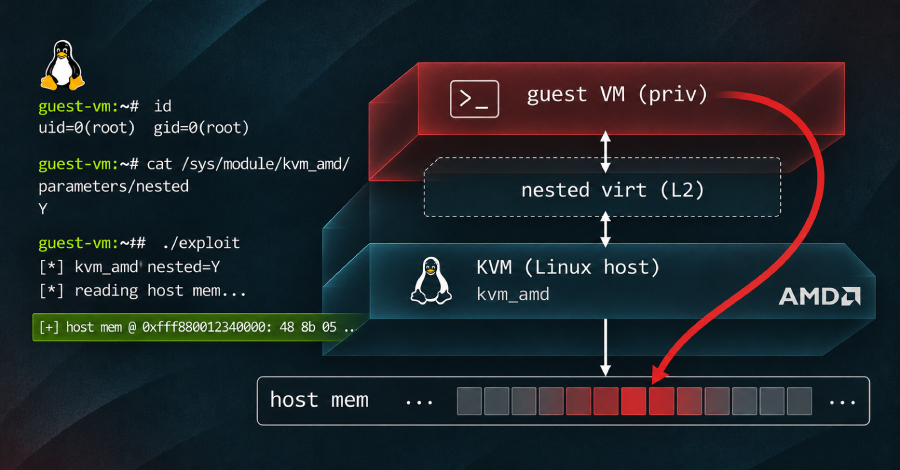
A flaw in KVM, the hypervisor built into the Linux kernel, allows researchers to access about 127 GB of a cloud server's memory from inside a virtual machine (VM) on AMD hosts. This vulnerability, tracked as CVE-2026-99312, impacts only AMD processors with nested virtualization enabled. The issue was discovered by researcher Oren Yomtov at security firm Terra Security, who reported it to DigitalOcean and the Linux KVM maintainers.
KVM hosts with AMD processors and nested virtualization enabled need to update the host kernel or disable nested virtualization to mitigate the risk. Fixed kernels were released upstream on Tuesday, just a day before the research became public. DigitalOcean patched its fleet with a live patch, notifying its Droplet customers that no action was required on their part.
Operators running their own KVM hosts on AMD hardware must update their host kernels or turn nested virtualization off. The flaw was exploited in tests conducted by the researchers, who were able to read up to 127 GB of the host's RAM and write data to the host's kernel memory. Intel-based KVM hosts are not affected by this vulnerability, as the issue exists solely in KVM's support for nested virtualization on AMD processors.
Written by urgent.news from The Hacker News's reporting — not their text. Machine-written — may contain errors; check the original before relying on it.