Kenyan startup Dira wins African AI challenge as innovators push for continent’s role in global standards
Marga AI emerged as the first runner-up, winning US$8,000, while TALO was the second runner-up, receiving US$6,000. All three teams also received computing credits.
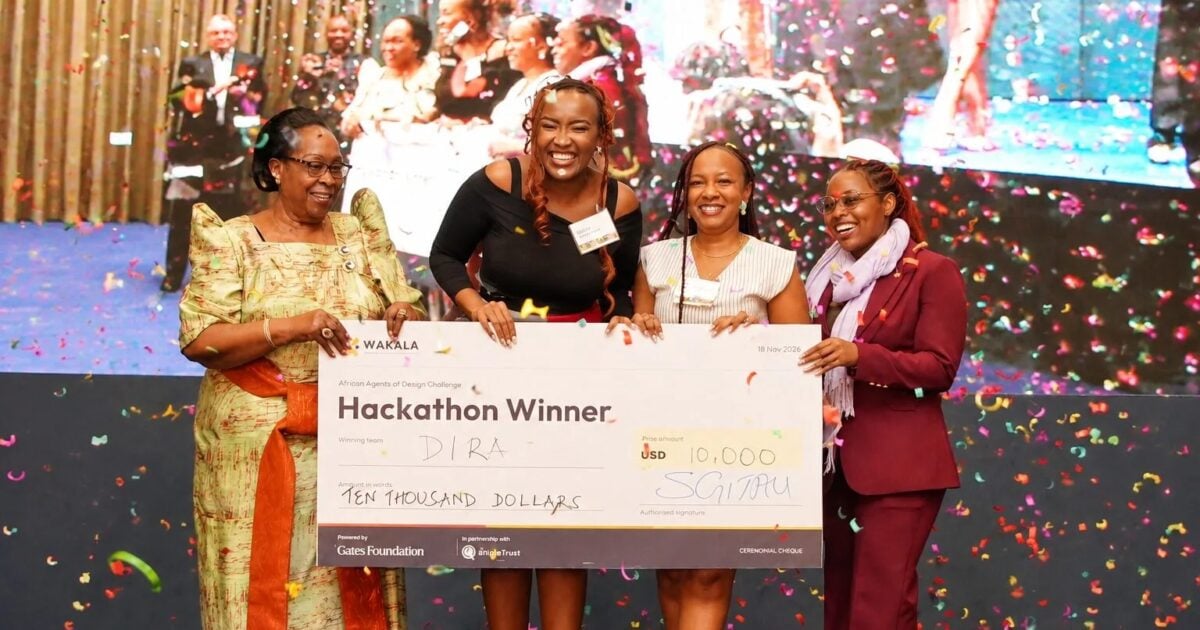
Nairobi, Kenya - Kenyan education technology startup Dira emerged victorious at the African Agentic AI Design Challenge, securing a US$10,000 prize as African innovators strive to play a more significant role in setting global artificial intelligence standards. The startup, founded by Irene Mukii (Miss Universe Kenya 2024), Jacinta Wanjiru, and Michelle Gati, was honored for its AI-driven solution designed to assist teachers in identifying students needing additional support and providing customized assistance.
Dira was one of several winners announced at the "Agentic AI for the Global South" event, a closed-door side gathering held alongside the MCP Dev Summit in Nairobi.
Marga AI claimed the first runner-up position, earning US$8,000, while TALO, a team of university students aged 21 and 22, secured the second runner-up prize of US$6,000. All three teams also received computing credits. Dira operates as an AI assistant integrated into teachers' daily workflows, helping them recognize students who might require support and converting spoken observations into structured "Evidence Cards."
The system searches educational research to suggest interventions tailored to individual learners' needs, learning styles, or potential disabilities, while allowing teachers to maintain control by approving or rejecting modifications.
The challenge showcased over 60 AI agents developed by innovators, demonstrating the increasing application of agentic AI to address African issues. The workshop, held on November 18 at the Hyatt Hotel in Nairobi, centered on how Africa can contribute to shaping the rules governing agentic AI instead of relying on standards developed elsewhere.
Participants explored the importance of including African voices from the outset, arguing that early engagement by policymakers could prevent fragmented regulations across countries while fostering collaboration between governments and innovators.
Paulin Basinga, Africa Director at the Gates Foundation, praised the developers for creating solutions capable of addressing modern challenges but cautioned against deploying AI where simpler alternatives would suffice. Basinga emphasized that AI should serve as a tool to assist rather than replace basic services, stressing that African countries must invest in data, skills, and evidence to shape AI solutions around their unique requirements rather than merely consuming technologies developed elsewhere.
The Gates Foundation is intensifying its efforts to ensure AI benefits communities previously overlooked by technological advancements, committing at least US$1 billion over the next two years to expand AI and AI-enabled solutions access. The funding will be allocated to healthcare (40%), education (40%), agriculture (10%), and digital foundations (10%).
The discussions underscored the necessity for African countries to participate in shaping upcoming global AI standards, ensuring that the continent's priorities, experiences, and requirements are reflected as agentic AI continues to develop.
Written by urgent.news from Capital FM Kenya's reporting — not their text. Machine-written — may contain errors; check the original before relying on it.