Gipfel in Brüssel: EU und Großbritannien rücken näher zusammen
Es sind weitgehende Schritte - aber lange nicht der Exit vom Brexit, auf den Großbritanniens Premierminister Hoffnungen geschürt hatte. Diskussionen um Studiengebühren bremsen die Vereinbarungen aus.
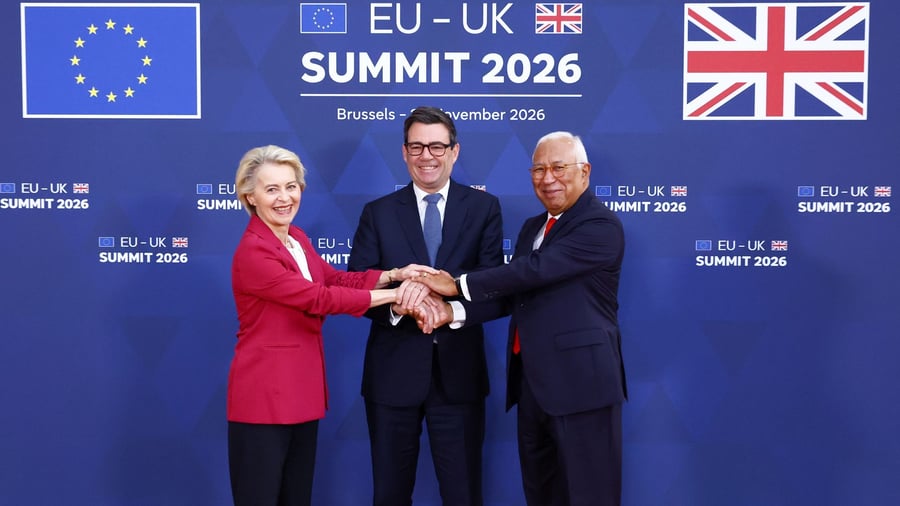
The European Union intends to bring the United Kingdom back into closer proximity, just seven years after Brexit, provided certain conditions are met. The agreements reached during a summit in Brussels are expected to have significant implications for Germans as well. They include limited mobility for young people, the reduction of controls in food trade, and the integration of emissions trading systems.
However, the implementation of these projects will only occur after a remaining agreement on aligning rules for tuition fees is reached, according to diplomats and EU officials. Negotiations are expected to be finalized within the next six months. High tuition fees are a key sticking point, as EU students in the United Kingdom pay considerably more than domestic students since Brexit.
This has led to fewer Europeans studying in the UK since the country's exit from the European Union, according to an EU diplomat. The desire is to resolve these negotiations within the upcoming six months to mitigate the impact on relations. Top politicians agreed on additional relief for young people at the summit. Starting from 2030, up to 100,000 EU and British young people will be able to stay in each other's regions without complications for a limited time – for work, travel, and further education.
Currently, this is often hindered by stringent visa requirements. By March 2028, many animal and plant products will be able to be traded without certificates and controls. This is a significant simplification in the trade of food products. Britain commits to adhering to European standards for this, which, in turn, limits London's ability to form trade agreements with other nations like the US.
Progress is also being made in linking emissions trading systems. This aims to address both climate efforts and competitiveness. Emissions trading is a crucial climate protection tool where companies must prove rights to emit greenhouse gases like carbon dioxide (CO2). They can then trade these rights as needed, which serves as an incentive for energy-intensive industries to reduce their emissions.
Closer cooperation is also sought in digital matters, civil missions, migration, and reliable supply chains. However, security and migration matters fell short of the expectations of those who hoped for a return to closer cooperation. For instance, an agreement on British participation in EU civilian crisis missions has not yet been signed, and commitments to information exchange about refugee movements remain relatively vague.
The same applies to plans for closer coordination on measures to protect producers of electric cars and steel from unfair competition from other regions. In foreign policy, the EU and Britain agreed to continue military and financial support for Ukraine, which was attacked by Russia. They also aim to coordinate closely on peace efforts, including through sanctions against Russia.
Additionally, they urge Israel to halt construction plans in the West Bank by withdrawing tenders. The exit from the Brexit? Britain left the EU in early 2020, ending 47 years of EU membership. Since 2021, the United Kingdom is no longer a member of the EU customs union and the single market. In a referendum held in 2016, a narrow majority of Brits had voted for the exit.
Now, a majority of Brits in surveys are in favor of exiting the Brexit. Just before the summit, Labour leader Keir Burnham had spoken strongly about a closer reunion, with the option of returning to the EU. However, his statements were later toned down, partly because the EU issue remains sensitive for Burnham's Labour party. Former Foreign Minister David Lammy has suggested making the EU return a permanent part of his party's election platform for the upcoming parliamentary election (by no later than 2029).
At their first summit last year, both sides had already agreed on closer cooperation on issues such as defense and security, food standards, fisheries, and energy, as well as irregular migration. They also aimed to make travel easier. Starting from 2027, Britain will also join the Erasmus+-program again, allowing students to study for a semester on the other side of the English Channel more easily.
Written by urgent.news from Handelsblatt's reporting — not their text. Machine-written — may contain errors; check the original before relying on it.