Decency and Tradition: Colm Tóibín on Thomas Mann and Fatherland
Mann was a luftmensch of a patriarch, impassively observing his own drift through time in the moments when he was not absorbed by his craft.
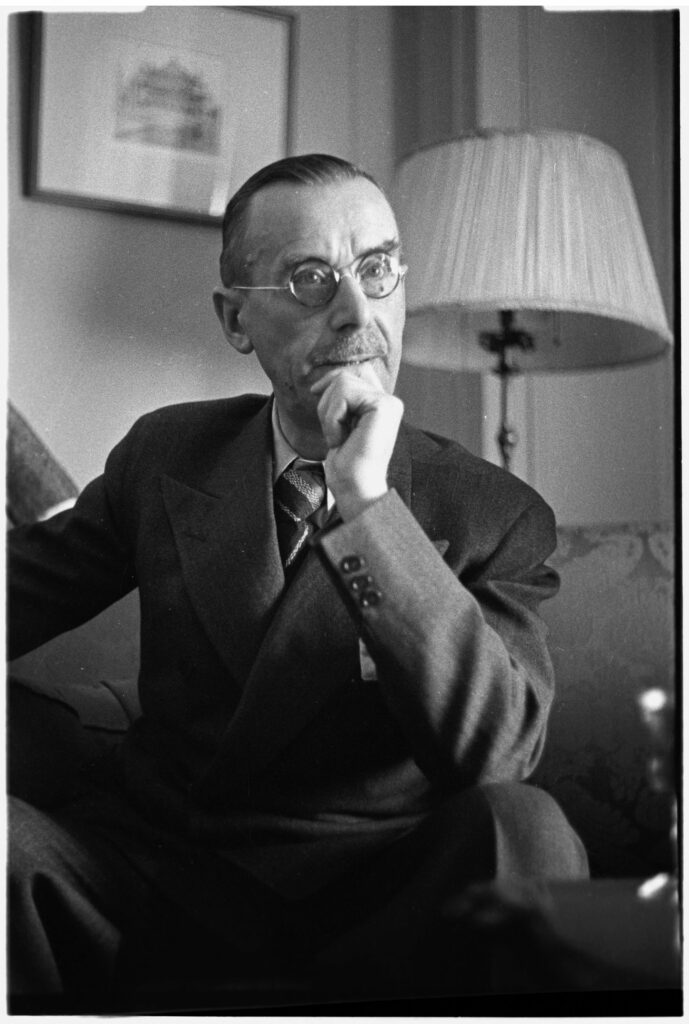
Colm Tóibín, the renowned Irish novelist, has spent three decades delving into the life and times of Thomas Mann and his family. Tóibín's fascination with Mann began during his teenage years, when he read Mann's first novel, Buddenbrooks. In 1996, Tóibín was commissioned to review three extensive biographies of Mann for the esteemed London Review of Books.
His dedication to the subject culminated in the publication of his monumental novel, The Magician, in 2021. This literary work meticulously recreates the various stages of Mann's life, from his childhood in Lübeck to his Nobel Prize-winning days and his post-war exile in France and the United States.
The protagonist of The Magician, Der Zauberer (the magician), is often referred to as Thomas Mann, a title that aptly captures his magnetic and enigmatic personality. In the novel, Mann is portrayed as a luftmensch (a detached spirit), who observes his own drifting through time while deeply engrossed in his craft. This portrayal of Mann has left a lasting impression on readers, as Tóibín's vivid depiction of the author's introspective nature continues to resonate with audiences.
In a recent interview, Tóibín discussed his journey of writing The Magician and his interactions with the Mann family. He revealed that he was granted access to the Mann's former residence in Seven Palms, California, in 2005, courtesy of a commendation from the Los Angeles Times Book Prize. This experience allowed Tóibín to immerse himself in the very environment that shaped Mann's life and work.
The house served as a refuge for the family, and it was here where Mann crafted Doctor Faustus, a novel that would later be adapted into Paweł Pawlikowski's film Fatherland.
The film Fatherland, directed by Paweł Pawlikowski and premiered at the Cannes Film Festival, tells the story of Mann and his daughter Erika as they return to a divided Germany to receive the prestigious Goethe Prize. However, Tóibín clarified that there is no dialogue from his novel in the film, but rather a tone that echoes the themes of loss, love, and fear. The film, while not strictly adhering to historical facts, captures the essence of Mann's experience and his family's resilience in the face of adversity.
As Tóibín navigated the complex relationships within the Mann family, he revealed that his own observations of the patriarch were marked by a sense of detachment and a reluctance to fully engage with the world around him. Despite his success and the widespread popularity of his works, Mann harbored a deep-seated envy of his children's liberation and their unabashed expressions of sexuality and antifascist sentiments during the Weimar era.
This enigmatic side of Mann's character is further explored in The Magician, where Tóibín delves into the intricacies of the family dynamics and the lasting impact of their experiences on the individuals involved.
Written by urgent.news from The Paris Review's reporting — not their text. Machine-written — may contain errors; check the original before relying on it.