Crafting survival: Dzorwulu’s cane weavers seek government support to save traditional industry
Along the busy roadside of Dzorwulu on the George Walker Bush Highway in Accra, colourful displays of hand-woven cane chairs, tables, baskets, and hampers catch the eye of passing motorists and passersby.
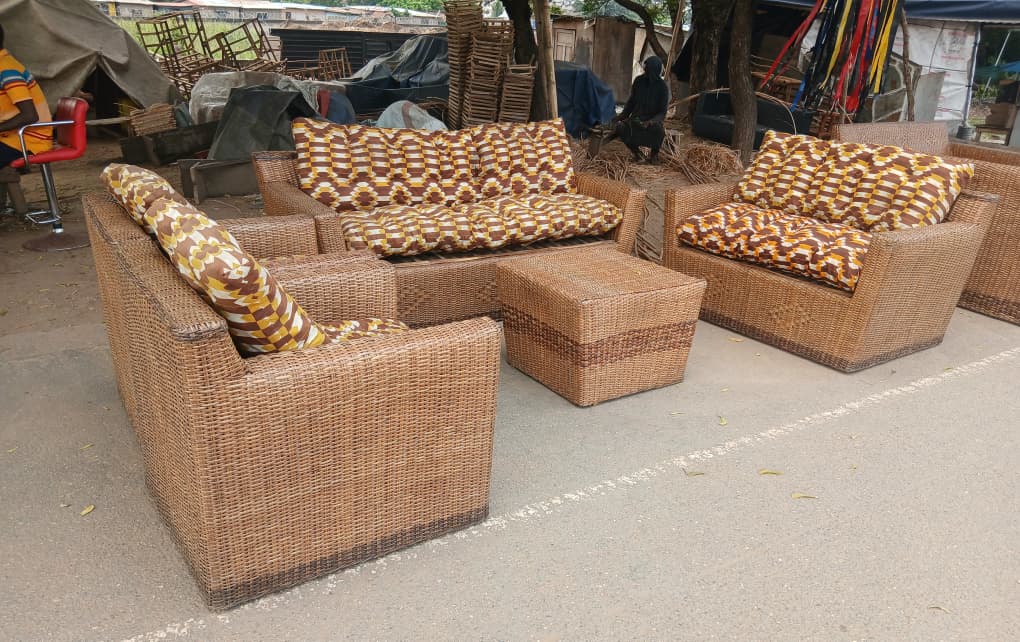
In the bustling area of Dzorwulu, situated on the George Walker Bush Highway in Accra, eye-catching displays of handcrafted cane furniture, including chairs, tables, baskets, and hampers, attract the attention of motorists and pedestrians alike. To the artisans toiling beneath rudimentary roadside shelters, this craft is far more than a means of livelihood; it is a hereditary legacy cultivated over many years through tireless effort and cultural preservation.
The artisans procure the raw cane stalks from the Western Region, transporting them to Accra where they employ traditional techniques to transform them into sturdy household items. Kwabena Harry Asare, a master weaver who has devoted 26 years to his craft, explains that this art form has been handed down through generations within his family.
Over the course of four years operating in the Dzorwulu stretch of the George Walker Bush Highway, Mr. Asare has managed to attain significant milestones, such as purchasing a vehicle, acquiring land, and constructing a home for his family. His achievements underscore the potential for traditional craftsmanship to sustain a household when approached with dedication.
Despite the advantages of this heritage trade, the weavers confront numerous daily challenges. Operating along the open road, they are vulnerable to adverse weather conditions. In the event of rain, the artisans must swiftly cover their completed products with sizable plastic sheets to prevent moisture from damaging the natural cane and nullifying their labor.
Kwabena notes that the head of the local weavers' association is currently engaging with government officials and local assembly representatives to secure a permanent location for their workshops and shops. Establishing a dedicated craft market would shield their goods from rain and sunlight while simultaneously enhancing safety and convenience for customers seeking to purchase these items.
One of the primary obstacles facing the industry is the reluctance of younger generations to learn this trade. According to Kwabena, many young individuals avoid the profession due to the inherent physical risks, particularly the repetitive use of sharp knives for cutting and splitting heavy cane stalks. "The dangers associated with using knives every day are what deter many young people," Kwabena remarked.
Written by urgent.news from MyJoyOnline Ghana's reporting — not their text. Machine-written — may contain errors; check the original before relying on it.