Anthropic Mathematician Claims to Have Solved Math’s Most Famous Problem
If confirmed, the proof of the Riemann hypothesis would cement the field’s sense that no unsolved problem is safe from artificial intelligence.
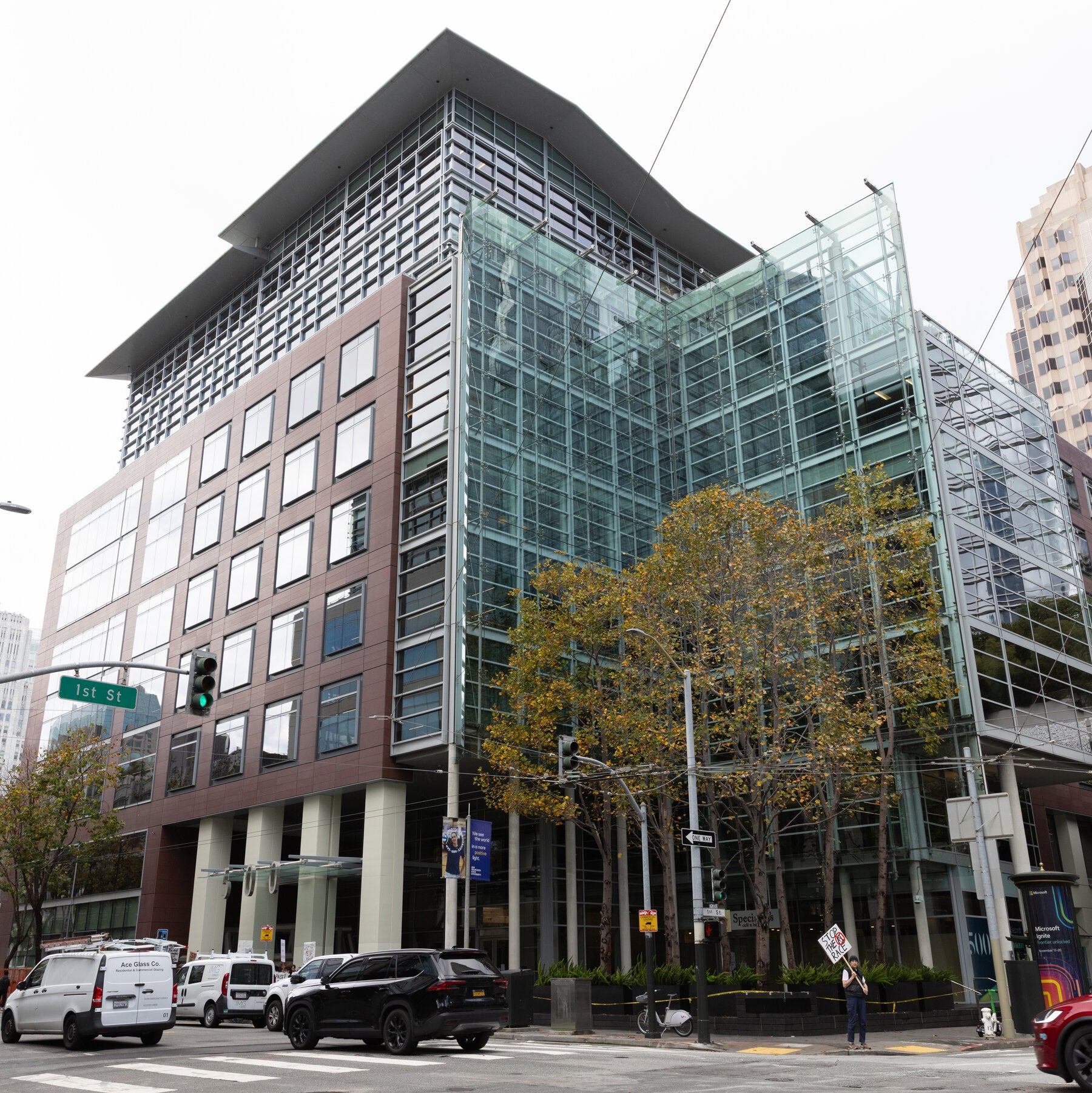
Anthropic's mathematician Levent Alpöge declared on November 20, 2026, that he had discovered a proof of the Riemann hypothesis, using the assistance of Anthropic's AI model Claude. The Riemann hypothesis, originally proposed by Riemann in 1859, revolves around the distribution of prime numbers, which are fundamental to whole numbers.
Mathematicians have been striving to prove this hypothesis for over 160 years, leading to advancements in various fields such as algebraic geometry, probability theory, quantum physics, and dynamical systems. The Clay Mathematics Institute has offered a $1-million prize for a solution. In his announcement, Alpöge provided over 1.7 crore lines of code, claiming to have the complete proof, and also asserted that he had proven a stronger result known as the generalized Riemann hypothesis.
Nevertheless, he refrained from presenting a conventional paper on his work and admitted that he does not fully comprehend all the arguments employed by Claude in arriving at the result. Several independent mathematicians, including Andrew Sutherland from the Massachusetts Institute of Technology, have verified that Alpöge's code, along with the proof, meets rigorous checks, and two distinct proof-checking systems have accepted the result.
Written by urgent.news from The Hindu - Sci-Tech's reporting — not their text. Machine-written — may contain errors; check the original before relying on it.
This story
This is one outlet's version. Read the fullest account.