Angels Of Nashik: 165 Truckloads Of Concrete Removed In Devang Jani’s Fight To Revive Godavari
Nashik: The Godavari, the lifeline of Nashik, has suffered considerable environmental damage due to indiscriminate concretisation undertaken in the name of development. Once a naturally flowing river, it gradually became dependent on water released from Gangapur Dam, while several natural water sources and historic kunds were buried beneath cement and concrete. Determined to restore the river's…
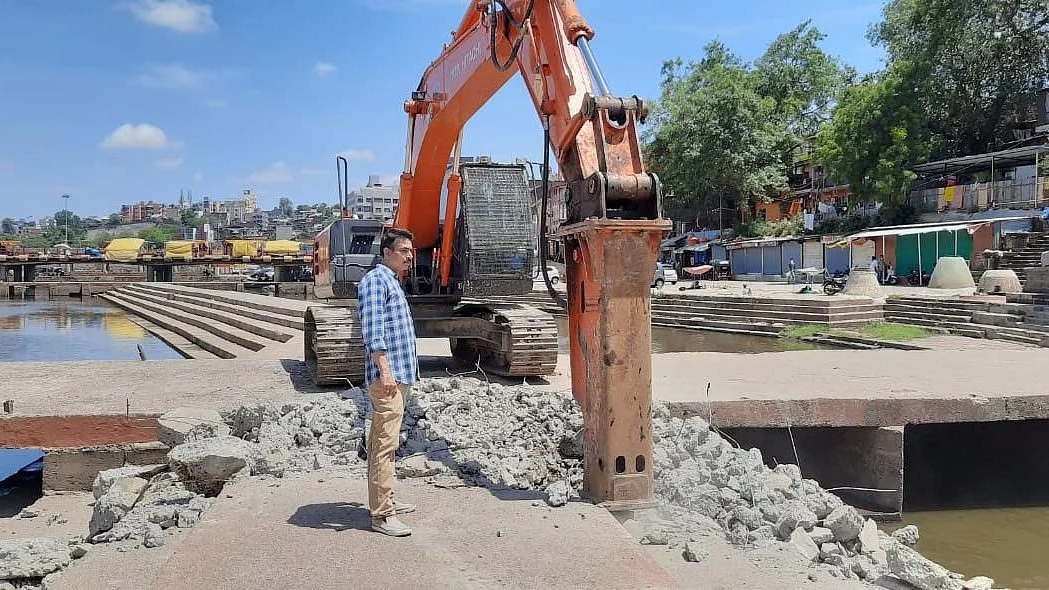
Nashik: The Godavari River, a crucial source of life for the city, has been adversely affected by excessive concretisation, owing to unchecked development. The river, once a self-sustaining body, now relies on water from Gangapur Dam, with several natural springs and historic water reservoirs, known as kunds, buried under cement and concrete.
Devang Jani, the Founder-President of the Godapremi Seva Samiti, has been campaigning for the river's restoration for the past twelve years. Jani's family has resided along the Godavari's banks, opposite the Dutondya Maruti temple, for nearly 140 years. Observing the river's deteriorating state, he began researching its historical water features.
In 2014, Jani discovered a 1941-42 book titled 'Key to Nashik-Trimbak' and uncovered, through further research, the existence of 17 ancient kunds in the riverbed. With the help of city survey maps from 1917, Jani pinpointed the exact locations of all 17 kunds, many of which had been submerged under concrete structures.
Legal Action for Revitalisation
To restore these historic water bodies, Jani filed a Public Interest Litigation (PIL) with the Bombay High Court, leading to the Nashik Municipal Corporation (NMC) allocating funds for the removal of concrete. This restoration task was later included in the Detailed Project Report (DPR) of the Goda Beautification Project. However, work on the project was temporarily halted due to opposition and later resumed following Jani's persistent efforts and a threat of contempt proceedings.
In the first phase of the project, five kunds - Anamik Kund, Dashashwamedh Kund, Ramgaya Kund, Peshwa Kund, and Khandoba Kund - had their concrete removed. This phase alone saw the extraction of approximately 165 truckloads of concrete, weighing between 350 and 400 tonnes, from the riverbed. Additionally, a significant discovery was made when a trial borewell located near Ahilyabai Holkar Kund revealed a natural water source, just 80 feet below the surface.
A 5-horsepower pump continuously pumped water for 24 hours, yielding approximately 44 litres per minute, demonstrating the availability of groundwater at the site.
Protecting the River's Natural Course
Devang Jani also took steps to protect the traditional course of the Dakshinvahini Godavari, opposing proposed changes to its southward path under the Ramkal Path project. His representations led to the project's work being halted, and the administration assured him that the river's traditional course would be preserved. The revival of the remaining 12 kunds, including the revered Ramkund, remains pending.
With preparations underway for the 2027 Simhastha Kumbh Mela, Jani has again demanded the restoration of these kunds, threatening to take further legal action. The Godapremi Seva Samiti does not accept donations and Jani personally covers the legal and administrative costs involved in this crusade. The successful revival of five kunds represents a crucial milestone in the preservation of Nashik's historic heritage and the maintenance of the Godavari's ecological balance.
Written by urgent.news from Free Press Journal's reporting — not their text. Machine-written — may contain errors; check the original before relying on it.