An all-algae diet could take wild fish out of fish farming
Farmed trout and salmon are usually raised on wild-caught fish. In a new study, trout fed only microalgae grew just as well, with the same omega-3s and protein, and the feed may cost less.
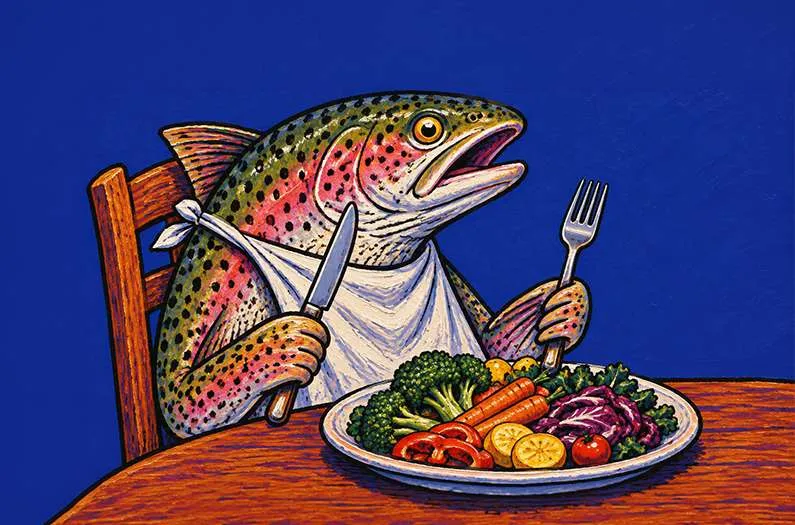
As human populations grow, farmed fish are increasingly relied upon as a protein source. Yet, to feed these farmed fish, significant amounts of wild-caught fish are processed into fishmeal and fish oil. A team of researchers at the University of California Santa Cruz has developed an alternative: a diet for farmed fish based on marine algae.
In 2020, they demonstrated that farmed tilapia could thrive on a diet consisting of two types of marine algae. In a new study, published in Antioxidants, the team tested rainbow trout on a 100 percent algal diet. After 84 days of aquaculture, the trout on the algal diet grew at similar rates to those on a standard fishmeal and fish oil diet.
The algal-fed trout also had similar levels of important fatty acids, essential amino acids, and various minerals. Economically, the algal feed might be slightly cheaper than the standard fish-based feed. While this algae-based diet doesn't solve all issues in aquaculture, such as greenhouse gas emissions and water pollution, it represents a significant step toward more sustainable fish farming practices.
Rewritten by urgent.news; may contain errors — check the original.
Source: anthropocenemagazine.org