600 looms and a centuries-old legacy: The story of Bengal’s traditional red-and-white Garad sari
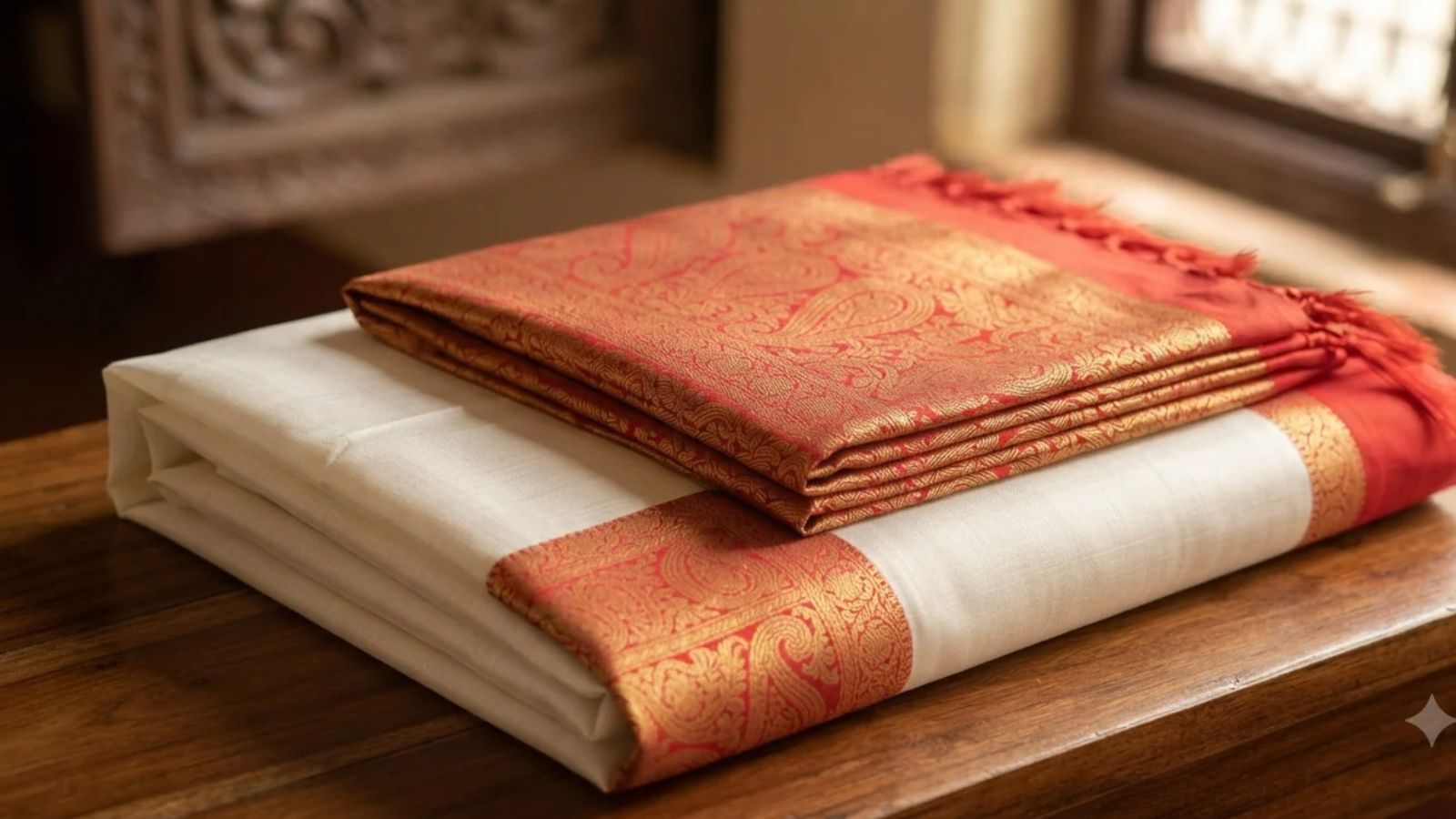
Garad, a traditional red-and-white sari, has a rich history rooted in ancient India and Bengali rituals. Darshan Shah, founder of Weavers Studio, explains that unstitched white cloth, known as pattabastra or shubhra bastra, was traditionally worn for scriptural recitations and mantras in ancient India. The significance of red in Bengal's auspicious traditions led to garad's association with purity and auspiciousness in religious ceremonies and celebrations.
While garad has retained its distinctive red border and white body, the sari has evolved over time. Partition played a significant role in shaping garad's modern history, with weavers migrating to other regions. In Mirzapur, the introduction of new weaving techniques, such as the Jacquard loom and Jamdani motifs, helped revive interest in the sari by adding design elements to its body.
Today, garad is recognized for its undyed white body, red border, and mulberry silk pallu. Contemporary designers like Mona Pali, Soumitra Mandal, Debarun, and Neeta Lulla have introduced modern interpretations of garad, incorporating geometric motifs and subtle color accents into its traditional design. Although the number of garad weavers has declined, the sari remains a symbol of Bengali tradition and cultural identity, particularly for auspicious occasions.
Its recognition as a Geographical Indication (GI) in 2024 has helped preserve the craft, but challenges remain in sustaining the weaving communities that keep garad alive.
Written by urgent.news from The Indian Express's reporting — not their text. Machine-written — may contain errors; check the original before relying on it.