Windows’ Baseline Protection Can Simplify Security, but There Could Be Pitfalls
It makes security a little easier to manage, but apps can also refuse to work if your machine fails security checks.
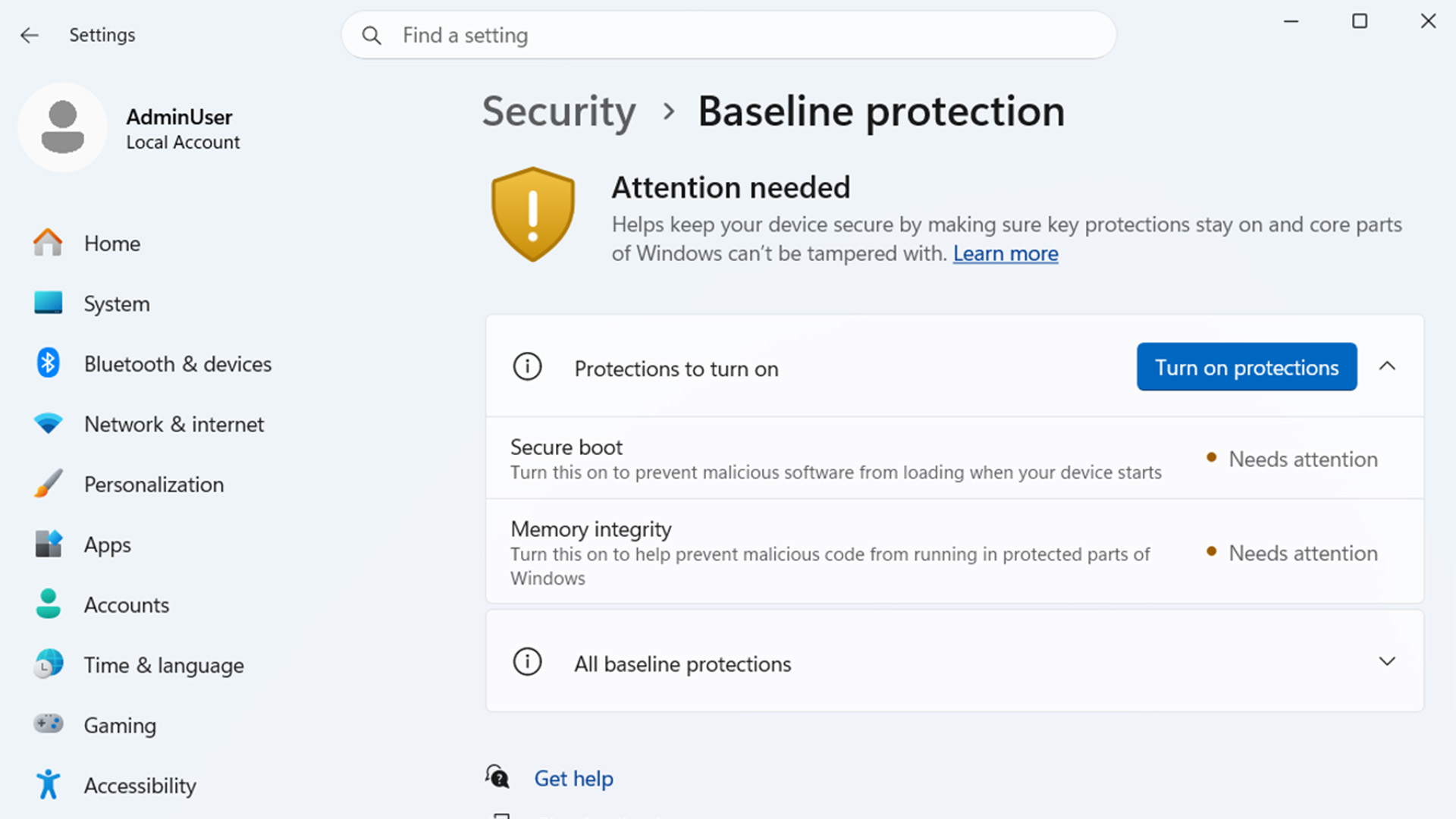
Microsoft unveiled a new feature called "Baseline Protection" for Windows 11 in 2027, aiming to streamline hardware-related security features under one roof. This consolidation of eight key security safeguards into a single check will simplify the security process for both users and developers. However, this consolidation may introduce challenges, particularly for gamers and power users who often modify operating system settings to optimize performance.
Baseline Protection will be accessible in the Windows Security settings section, where users can monitor the status of all eight security features and apply necessary updates. The feature is currently available in Windows Insider builds and is expected to roll out to the general public in 2027. Microsoft anticipates that developers will benefit most from this feature, as it simplifies the process of verifying security settings, reducing the need to check multiple locations and perform similar tasks.
The feature's integration into the operating system will allow developers to check for compliance with all security requirements in a single pass, eliminating the need to verify each feature individually. For example, developers of anti-cheat software, like those used in gaming, will find it easier to ensure that their products meet the required security standards.
Adobe, Blizzard, 1Password, and other partners have already incorporated support for the feature, signaling its potential impact on various software applications.
However, the consolidation of these security features may prove problematic for gamers and power users, who frequently disable certain security settings to achieve optimal performance or customize their systems. Many gamers intentionally disable security settings like Virtualization-Based Security to enhance gaming performance, but this new feature could force them to keep all eight features enabled, potentially impacting performance and causing visual glitches.
To address this issue, Microsoft has left the decision on enforcing the security requirements up to individual developers. While developers are encouraged to embrace all requirements for the strongest security, they may choose to allow users to proceed with a warning if certain features are not enabled. This approach may lead to a situation where applications refuse to run unless all security features are satisfied, limiting the flexibility of users who prefer to customize their systems.
Written by urgent.news from CNET's reporting — not their text. Machine-written — may contain errors; check the original before relying on it.