Will Voyager 1 ever be closer than 1 light-day from Earth again?
The Voyager spacecraft get closer to Earth for a few months every year. Will Voyager 1 cross back under the 1 light-day distance? The post Will Voyager 1 ever be closer than 1 light-day from Earth again? first appeared on EarthSky .
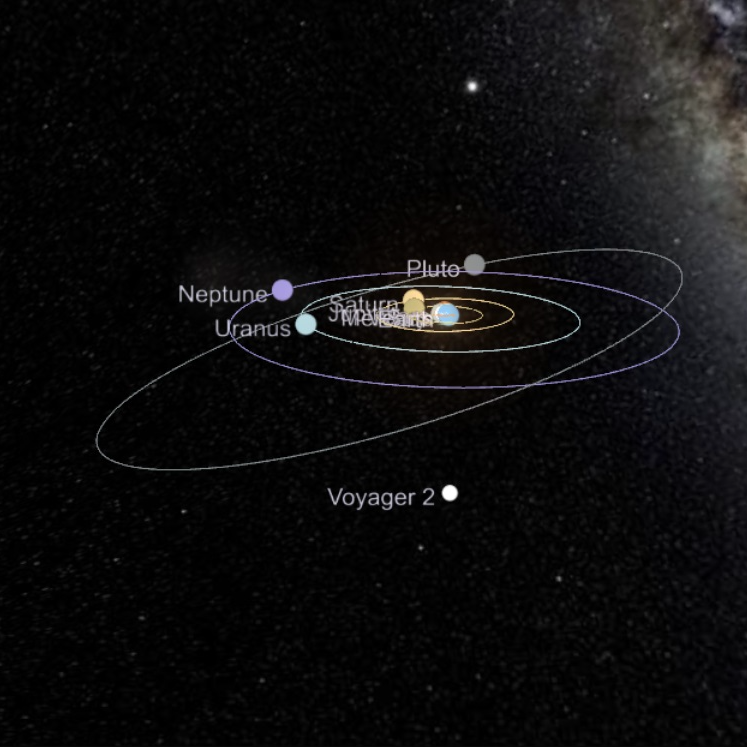
On November 18, NASA's Voyager 1 spacecraft achieved a historic milestone: it became the first human-made object to reach one light-day from Earth. This remarkable distance of 16.1 billion miles (25.9 billion kilometers) from our planet means that radio signals traveling at the speed of light take a full 24 hours to journey between Voyager 1 and Earth.
As the probe traverses the vast expanse of interstellar space, its continued operation and data collection remain crucial for NASA scientists, who anticipate that certain instruments will remain functional well into the 2030s.
Linda Spilker, who has been involved with the Voyager mission since its inception in 1977 and currently serves as the project scientist, emphasized the spacecraft's enduring ability to surprise us with unexpected discoveries. Spilker noted that Voyager often proved theories wrong, highlighting its capacity to challenge existing scientific understanding. In the following paragraphs, we will delve into some of Voyager 1's most significant achievements, as captured through its breathtaking photographs.
In 1979, Voyager 1 embarked on a journey through the outer solar system, capturing a series of awe-inspiring images of Jupiter. By photographing the planet from January to April, the spacecraft created an incredible time-lapse animation that showcased Jupiter's turbulent atmosphere. This close-up view revealed the planet's dynamic nature far more than previously anticipated.
Among Jupiter's many moons, Voyager 1 made a particularly groundbreaking discovery during its flyby of Io. The probe witnessed an explosion, marking the first volcanic eruption observed on another celestial body beyond Earth. This observation not only demonstrated the existence of geologically active worlds within our solar system but also opened up entirely new avenues for exploration and inquiry.
Another remarkable finding came from Voyager 1's close encounter with Callisto, one of Jupiter's moons. Imaging the moon's vast fields of well-preserved impact craters, scientists confirmed that Callisto was geologically dead. This finding contrasted sharply with their initial belief that moons like Callisto were ancient, inactive worlds.
Perhaps one of the most stunning revelations came when Voyager 1 approached Saturn in November 1980. The spacecraft took an extraordinary photo of Saturn's nightside, revealing a broad shadow cast onto the surrounding rings—a view that could never be observed from Earth. This image showcased the beauty of Saturn's rings and provided a unique perspective on the planet's shadow, offering a rare glimpse into the celestial body's hidden features.
Rewritten by urgent.news; may contain errors — check the original.
Sources: livescience.com · earthsky.org · channelnewsasia.com · hindustantimes.com
This story
This is one outlet's version. Read the fullest account.
- Voyager 1's light-day milestone: See the photos behind the discoveries livescience.com
- NASA’s Voyager 1 scripts history, becomes first spacecraft to travel a light-day from Earth hindustantimes.com
- NASA confirms Voyager 1 probe's 'light-day' distance milestone channelnewsasia.com