The Foreign-Born Architects Who Helped Shape Modern Colombia
The history of foreign-born architects in Colombia is also a history of people searching for opportunity, fleeing conflict and finding a place where they could build a life. Some arrived under government contracts; others came as children with families displaced by war. Their circumstances differed, but their work became part of the country’s cities, institutions […]
The story of modern Colombia's architecture is deeply intertwined with the journeys of foreign-born architects who sought opportunity, fled conflict, and built lives in the country. Among these pioneers were Thomas Reed and Pietro Cantini, who arrived in the mid-19th century and helped establish a monumental architectural style for the nation's institutions.
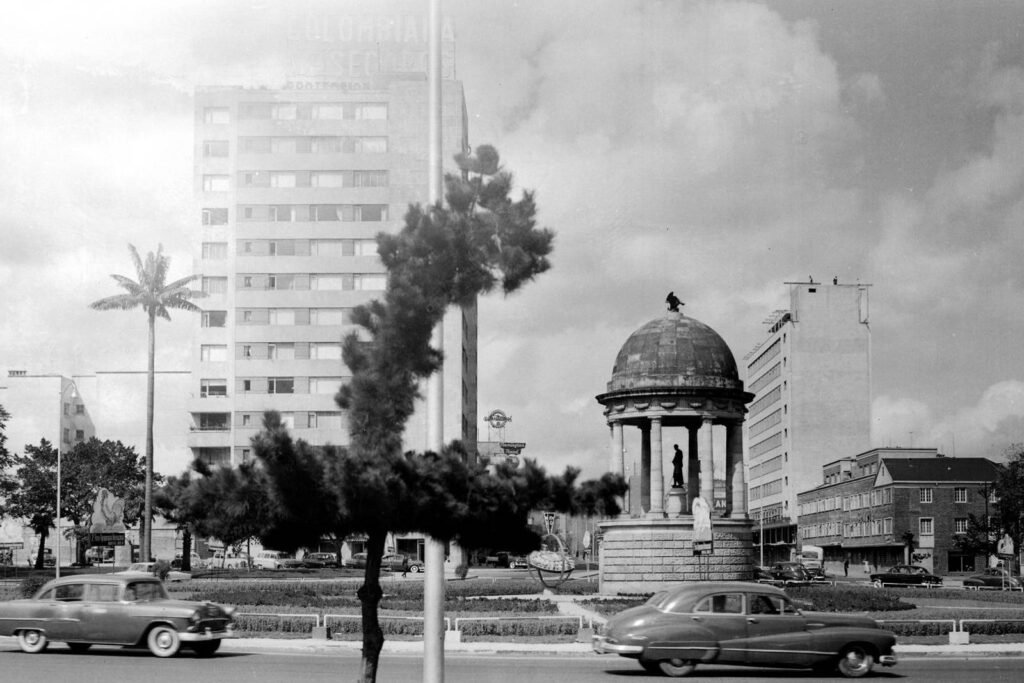
Reed, a Caribbean-born architect, designed the Capitolio Nacional, a project that was interrupted by political instability but ultimately completed by Cantini, an Italian architect who would later become a key figure in Colombia's architectural history. Cantini, who married in Bogota and spent much of his professional life in the country, designed not only the Capitolio Nacional but also other significant buildings such as the Teatro Colon and the Templete del Libertador.
His connection to Colombia was so profound that he was even buried in a mausoleum he had designed for himself. Other architects, like Gaston Lelarge and Agustin Goovaerts, also found a home in Colombia. Lelarge, a French architect, arrived around 1890 and established himself through projects in Bogota and Cartagena, his work reflecting a wide range of interests beyond architecture.
Goovaerts, a Belgian architect, arrived in the early 1920s and became one of the most influential architects working in Antioquia, designing public buildings, churches, and schools that helped shape Medellin's architectural identity. Meanwhile, Leopoldo Rother, a German architect forced out by Nazi policies, arrived in Colombia in 1936 and contributed to the Ciudad Universitaria, a landmark in Colombian university planning.
Rother's work was part of a broader effort to modernize education and urban planning in Colombia. His successor, Italian architect Bruno Violi, arrived in 1939 and also made significant contributions to the city's architectural landscape, including the El Tiempo building and the Volkswagen headquarters. Through their diverse backgrounds and unique experiences, these foreign-born architects helped shape modern Colombia, leaving an indelible mark on the country's cities, institutions, and collective memory.
Written by urgent.news from Colombia One's reporting — not their text. Machine-written — may contain errors; check the original before relying on it.