Tarifkonflikt: IG Metall plant ganztägige Warnstreiks – auch bei Audi und BMW
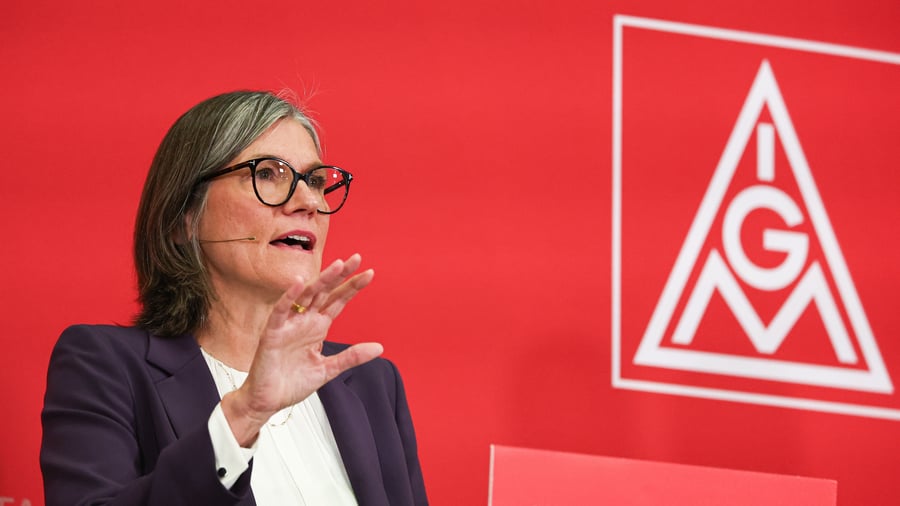
Die Gewerkschaft ist mit dem Angebot der Arbeitgeber unzufrieden und eskaliert in den Verhandlungen nun. IG-Metall-Chefin Christiane Benner zeigt sich frustriert.
The German metal and electrical industries' tariff conflict has intensified with IG Metall extending their warning strikes. For the first time in over eight years, workers at selected plants are now striking for an entire day. A major wave of these strikes is scheduled for this Friday.
What sets these warning strikes apart from previous ones is the duration and the additional right to strike pay. IG Metall first used this tactic in 2018, and it was not employed again until now. In 2018, around 500,000 people from 250 plants took a day off due to these strikes.
These warning strikes serve as the final escalation step before a general strike and an indefinite labor conflict. Former IG Metall leader Jörg Hofmann called them "the last yellow phase before the red phase of a sit-in strike".
So far, IG Metall has targeted only a few factories in North Rhein-Westphalia, including the auto supplier ZF. Each of these plants required a simple majority vote among members. The results from the known votes show 90% approval. IG Metall plans to hold votes and strike in large factories with many members across various regions and parts of the metal and engineering industries.
Employees do not receive their normal pay during the warning strike because their employment contract is paused. They also cannot be sanctioned for participating in a legal warning strike. Only wrongful strikes or individual breaches of duty could lead to legal action. The strike pay depends on the union's contributions and membership duration. For example, members with over five years of membership can receive up to 700 euros per week during a strike.
Unlike a regular strike, warning strikes are limited in duration. They must follow a secret ballot vote where at least 75% of eligible members vote in favor of the strike. Despite being a rare occurrence, warning strikes have been used in other industries and regions in the past.
The employers fear significant financial losses and a weakened position in the market. The head of Hessenmetall, Dirk Pollert, stated that such extensive warning strikes can cause million-dollar damages and act as an advertisement for foreign competitors.
The legality of the warning strikes was tested in 2018, but courts ruled them as proportionate and did not block them. The Bundesarbeitsgericht (Federal Labor Court) stated that warning strikes do not need to be limited to a few hours. Solutions to the conflict will likely be negotiated at the bargaining table, with the next round of negotiations set for 2026 between Baden-Württemberg and North Rhine-Westphalia.
Written by urgent.news from Handelsblatt's reporting — not their text. Machine-written — may contain errors; check the original before relying on it.
This story
This is one outlet's version. Read the fullest account.