Reanalysis of 1950s LSD experiments challenges the idea that psychedelics make art more creative
A reanalysis of 140 paintings from Oscar Janiger’s mid-century LSD studies found that professional artists painted more abstractly under the drug, while blind expert ratings showed no gains in creativity or aesthetic appeal.
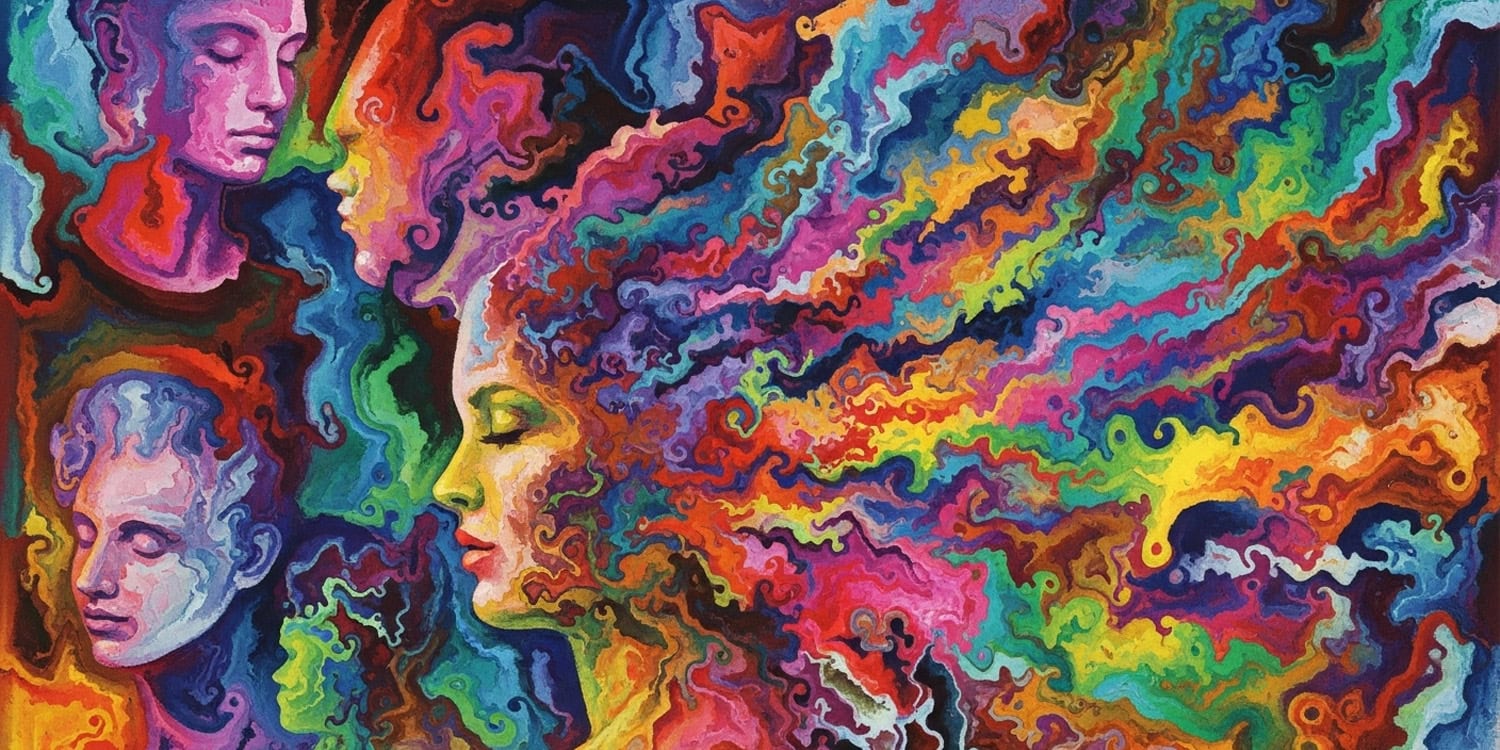
A recent reanalysis of mid-20th-century artworks created by artists under the influence of LSD has cast doubt on the notion that psychedelics inherently enhance artistic creativity. According to the findings published in the journal Psychology of Aesthetics, Creativity, and the Arts, professional artists who painted while under the influence of LSD produced a significantly higher proportion of abstract works compared to their pre-LSD creations.
However, blind evaluations by art experts found no significant improvement in the overall creativity or aesthetic appeal of the paintings, nor any reliable decrease in technical skill. LSD, also known as lysergic acid diethylamide, is a powerful hallucinogenic substance that impacts visual perception, emotions, and thought patterns primarily by stimulating specific serotonin receptors in the brain.
The resurgence of interest in psychedelic substances for enhancing creativity in recent years, particularly in tech workplaces and visual arts communities, has been based on anecdotal accounts. Nonetheless, subjective experiences during drug use can be deceptive, making it challenging to determine whether the substances genuinely improve creative output or merely amplify the perception of ideas.
In the realm of psychological creativity, two complementary thinking modes are crucial: divergent thinking, which loosens mental filters to generate a multitude of unusual ideas, and convergent thinking, which involves focused evaluation and refinement of the best options. Neuroimaging studies suggest that psychedelics disrupt communication across brain networks responsible for self-focused thought and executive control, a shift that may facilitate free-flowing associations while hampering deliberate evaluation.
Despite these theoretical predictions, controlled studies have largely failed to substantiate claims of a universal creative enhancement. For example, a 2023 meta-analysis of 12 creativity-enhancement methods in adults concluded that cognitive-manipulation drugs were the least effective option, while non-drug interventions such as structured training, meditation, and cultural exposure yielded meaningful boosts.
A 2022 double-blind, placebo-controlled study involving 24 healthy volunteers revealed that a low 50-microgram dose of LSD heightened novel associations and symbolic thinking in laboratory tasks but simultaneously diminished convergent thinking and practical utility. Nevertheless, a 2022 integrative review of 11 psychedelic creativity studies noted that the majority of contemporary trials focused on brief, puzzle-like thinking exercises rather than evaluating completed artworks.
To investigate the relationship between LSD and finished visual art, researchers Mathilde Firmin and Baptiste Barbot from UCLouvain's Psychological Sciences Research Institute and Yale University's Child Study Center conducted a new reanalysis using rare mid-century archival materials. The study drew upon historic collections amassed by psychiatrist Oscar Janiger, who administered LSD to over 900 adults in Los Angeles between 1954 and 1962 to document the drug's subjective effects.
Janiger invited 60 established professional artists to create artworks both before and after taking LSD in a naturalistic studio setting. Although Janiger and a colleague initially assessed 250 paintings from 20 artists in 1989, reporting that the LSD-created works appeared more abstract, aesthetically pleasing, and creative despite being more fragmented, their early report contained significant methodological shortcomings.
The paintings had been handpicked by the researchers rather than systematically sampled, and all ratings were provided by a single college art professor who was aware of the study's purpose. Firmin, Barbot, and their team hypothesized that rigorous modern testing would yield higher creativity, aesthetic appeal, and abstraction scores in paintings made under LSD intoxication, while concurrently lower scores in technical precision.
Employing archival materials made available by Janiger's son, the researchers cross-referenced 250 artworks against original study records to verify artist identity, creation date, and timing relative to LSD administration. Due to the absence of verified records for 110 pieces, those works were excluded from the reanalysis. The final dataset comprised 140 verified artworks created by 20 experienced professional artists, including six anonymous artists whose identities remained undisclosed.
Written by urgent.news from PsyPost's reporting — not their text. Machine-written — may contain errors; check the original before relying on it.