Nasa’s Voyager 1 phones home from an awe-inspiring 1 light-day away
Nasa’s Voyager 1 has phoned home from one light-day away, humanity’s first emissary to cross this monumental threshold way out in interstellar space. Flight controllers received the spacecraft’s call on Thursday, exactly 24 hours after it was sent. That is how long it took for the radio signal to traverse the more than 16 billion miles (26 billion kilometres) at the speed of light. “Travelling a…
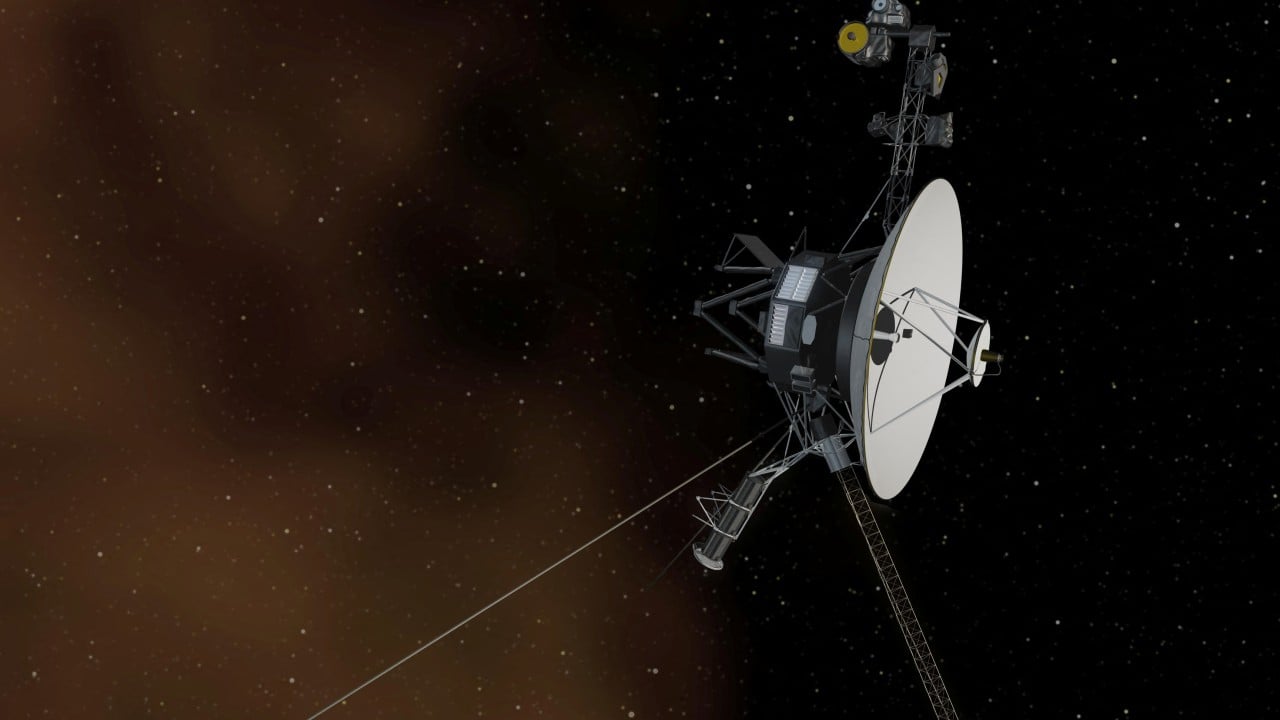
On November 18, 2026, NASA's Voyager 1, one of humanity's farthest-flying spacecraft, achieved a historic milestone by reaching one light-day from Earth. A light-day is the distance that light travels in 24 hours, which equals approximately 16.1 billion miles (25.9 billion kilometers). Voyager 1, which has been traveling for over 49 years, confirmed the achievement at 2:16 a.m. Pacific Standard Time (5:16 a.m. Eastern Standard Time) via its carrier signal.
Despite not receiving science and engineering data from the spacecraft since November 14, mission engineers used trajectory calculations to verify the light-day milestone. Voyager 1 and its twin, Voyager 2, were launched in 1977 to take advantage of a rare planetary alignment, with both spacecraft visiting Jupiter and Saturn and becoming the first to return high-resolution images of these planets and their moons.
They continue to study changes in the Sun's magnetic field across vast distances. Voyager 1 crossed the light-day threshold, another historic feat on its extraordinary voyage of discovery, and serves as a testament to the exceptional teams that built, programmed, and fly these spacecraft.
Written by urgent.news from NASA's reporting — not their text. Machine-written — may contain errors; check the original before relying on it.
This story
This is one outlet's version. Read the fullest account.
- NASA’s Voyager 1 Makes History Reaching One Light-Day From Earth nasa.gov
- Empire State Building glows gold for NASA's Voyager spacecraft | Space photo of the day for Nov. 19, 2026 space.com
- NASA’s Voyager 1 hits record one light-day distance, 50 years after launch island.lk
- NASA's Voyager 1 reaches a distance of one light-day from Earth techspot.com
- Voyager 1 is now a light-day from Earth. Here's what to know about NASA's longest-running mission pbs.org
- WATCH: NASA's Voyager 1 now a light-day away after 1977 launch abcnews.com
- NASA’s Voyager 1 hits record one light-day distance, 50 years after launch aljazeera.com
- NASA’s Voyager 1 phones home from an awe-inspiring one light-day away winnipegfreepress.com