Mirage.jl
Mirage.jl Mirage.jl is a multiplatform, integrated, OpenGL-powered framework for building interactive desktop applications in Julia, especially GUIs for simulations and scientific software. Its HTML5 Canvas–style 2D and 3D drawing API, Dear ImGui interface (via CImGui.jl), and GLFW application runtime work together as one system.Draw with calls like Mirage.fillrect and Mirage.drawimage, arrange…
Mirage.jl is an integrated, multiplatform framework for creating interactive desktop applications in Julia, with a focus on GUIs for simulations and scientific software. It utilizes OpenGL for rendering, Dear ImGui for its interface, and GLFW for application runtime. Key features include a drawing API similar to HTML5 Canvas, allowing shapes, images, paths, text, and transforms for 2D graphics and meshes, cameras, OBJ models, and custom shaders for 3D rendering.
It also supports GPU acceleration through ModernGL.jl, desktop applications using OpenGL, Dear ImGui, and GLFW, and a docking system for organizing canvases and layouts. Input methods include mouse, keyboard, and window callbacks. The framework offers high-DPI UI scaling and uses Roboto as its default font. Mirage.jl is live reload enabled, allowing users to edit running applications with run_live! and Revise, preserving the state during updates.
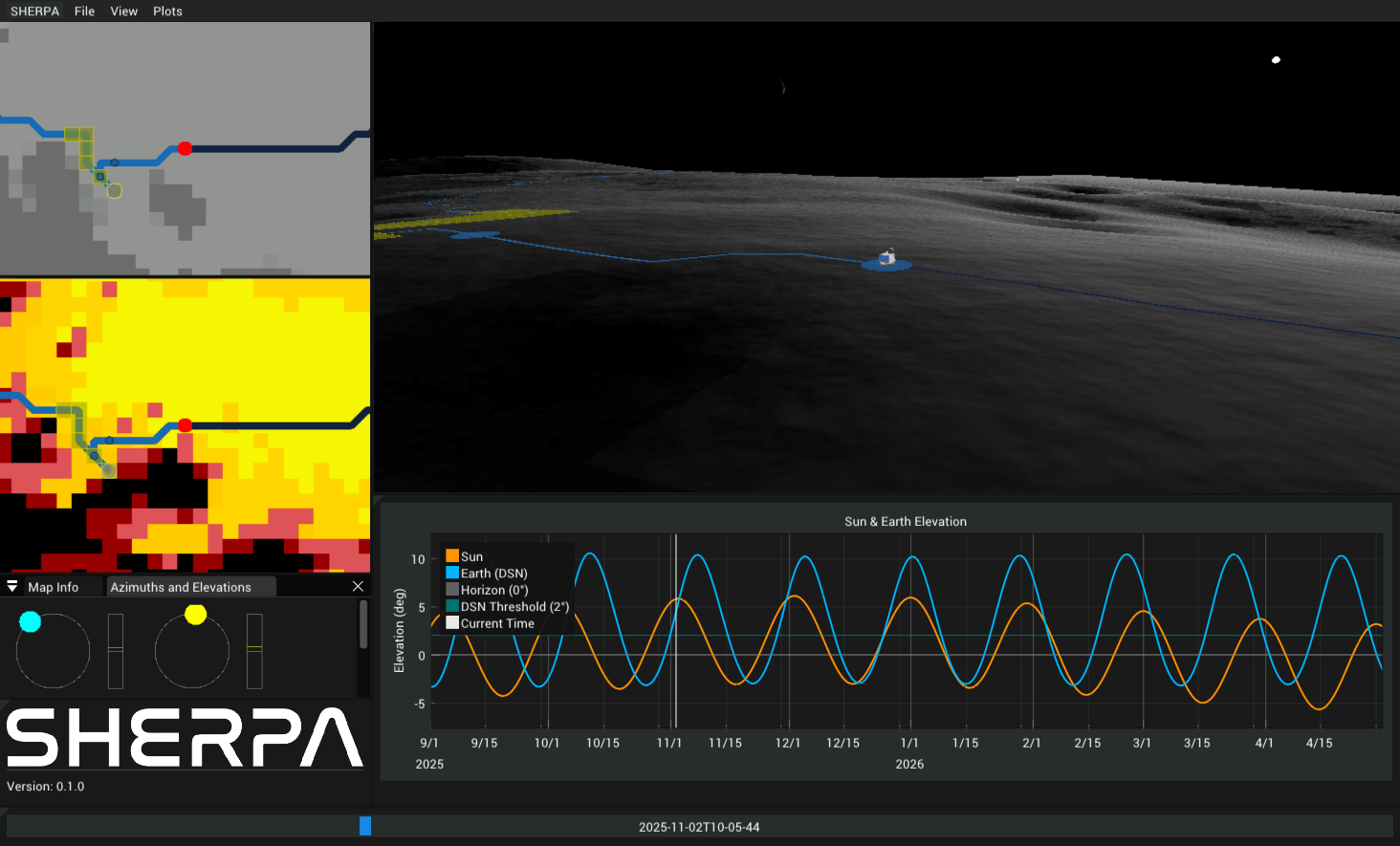
Developed by NASA, it has been used in projects such as SHERPA, a lunar rover strategic mission-planning tool, and VIPER. For more information, visit the GitHub repository: GitHub - nasa/Mirage.jl: Build desktop GUIs in Julia with real-time 2D and 3D graphics.
Written by urgent.news from NASA Science's reporting — not their text. Machine-written — may contain errors; check the original before relying on it.