Koalition der Willigen: Was hinter dem Ukraine-Gipfel bei Merz steckt
Zwei große Gipfel an einem Tag: Kurz nach dem Dreiertreffen von Trump, Putin und Xi in Shenzhen kommen in Berlin die Verbündeten der Ukraine mit Selenskyj zusammen. Worum geht es dabei?
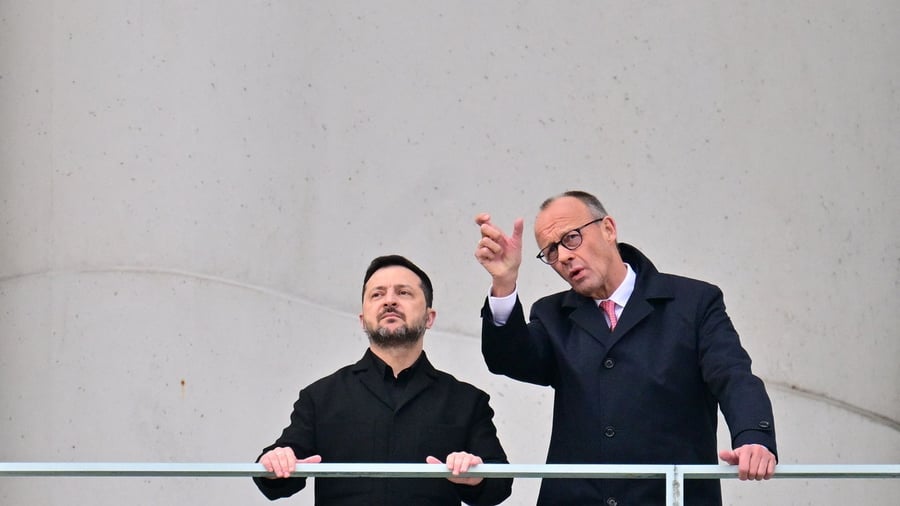
Bundeskanzler Friedrich Merz (CDU) hosted approximately 30 world leaders from the so-called Coalition of the Willing for a major Ukraine summit at the Chancellery today. The allies of Ukraine aim to reassure the country of their ongoing support in the defense against Russian aggressors, while also aligning on ongoing negotiations for an end to the war.
It is one of the largest gatherings of its kind in Germany in recent decades. The Coalition of the Willing was founded early in 2025 to support Ukraine, and currently includes nearly 40 countries from Japan to Canada, providing weapons for Ukraine's defense against Russia or helping it in humanitarian or financial terms. In December 2025, the group decided to form a multinational force to secure a possible ceasefire between Ukraine and Russia.
A first maneuver with around 2,800 soldiers from eleven countries is currently taking place in Poland, in airspace over Romania and in the western Black Sea, with the participation of the Bundeswehr. Attendees include, besides Merz, French President Emmanuel Macron and British Prime Minister Andy Burnham. In total, 37 countries will be represented, most with their heads of state.
Ukrainian President Volodymyr Zelensky is expected, who visited Berlin just two weeks ago. US negotiators Steve Wittkoff and Jared Kushner are traveling from the US to participate in the direct talks between Ukraine and Russia, which were resumed last week after a long hiatus in Abu Dhabi. The summit is themed "Together for Peace in Ukraine and European Security".
The German hosts hope for a commitment to financial support for Ukraine in the coming year. Currently, there is a gap of 45 billion euros between the EU's needs and its current contributions, and four countries have refused to participate. Europeans also want to sit at the table during future negotiations between Ukraine and Russia, supported by the US and Ukraine, but met with conflicting signals from Russia.
The coalition wants to give Ukraine security guarantees, including the multinational force, though the exact details are unclear. The summit begins with a meeting of the E3 - Merz, Macron and Burnham - with Zelensky (1:30 PM), during which they will accompany Italy, Poland and EU institutions on the European side in the negotiations between Ukraine and Russia.
Afterwards (starting at 2:00 PM), the other representatives will meet for the actual session of the Coalition of the Willing in the first floor of the Chancellery. Then (around 5:15 PM) Merz, Macron, Burnham, Zelensky, Wittkoff and Kushner will hold a joint press conference. The Gipfel in Berlin and Shenzhen are connected through the fact that a separate summit in Shenzhen, China, involving US President Donald Trump, Chinese leader Xi Jinping, and Russian leader Vladimir Putin, discussing reducing the global nuclear arsenal, took place earlier in the day.
President Zelensky has warned of a "second Jalta", referring to the 1945 conference in Jalta, Crimea, where victorious powers decided on the reorganization of Europe after World War II. The timing of the Berlin summit is not coincidental, as it aims to create the possibility of a rapid, coordinated, and well-prepared response in Shenzhen.
Chancellor Merz is presenting his guests with a "small piece of the Berlin Wall" that divided Berlin for 28 years, symbolizing the message that the fall of the wall demonstrated what can be achieved when people stand united and determined. This echoes a speech Zelensky gave in March 2022 in the Bundestag, emphasizing that the wall between freedom and oppression is shrinking with every bomb falling on Ukraine and every missed decision.
He directly addressed then-Chancellor Olaf Scholz (SPD), asking him to destroy the wall and give Germany the leadership role it deserves. Zelensky quoted then-US President Ronald Reagan's 1987 Berlin speech, demanding the removal of the Berlin Wall, a demand Gorbachev had made to Soviet leader Mikhail Gorbachev. Zelensky's appeal resonated then, and Germany is now the leading supporter of Ukraine.
Written by urgent.news from Handelsblatt's reporting — not their text. Machine-written — may contain errors; check the original before relying on it.