Knowledge Nugget | India’s first sustainable aviation fuel plant: What makes this fuel a game-changer?
Here is the story written from the provided source, following the specified rules:
India’s first sustainable aviation fuel (SAF) plant has received approval to start commercial production in India, according to Indian Oil Corporation’s chairman Arvinder Singh Sahney. The 30,000-tonne-per-annum facility at the Panipat refinery uses used cooking oil as feedstock and is expected to meet India's SAF needs by 2027 under proposed blending mandates.
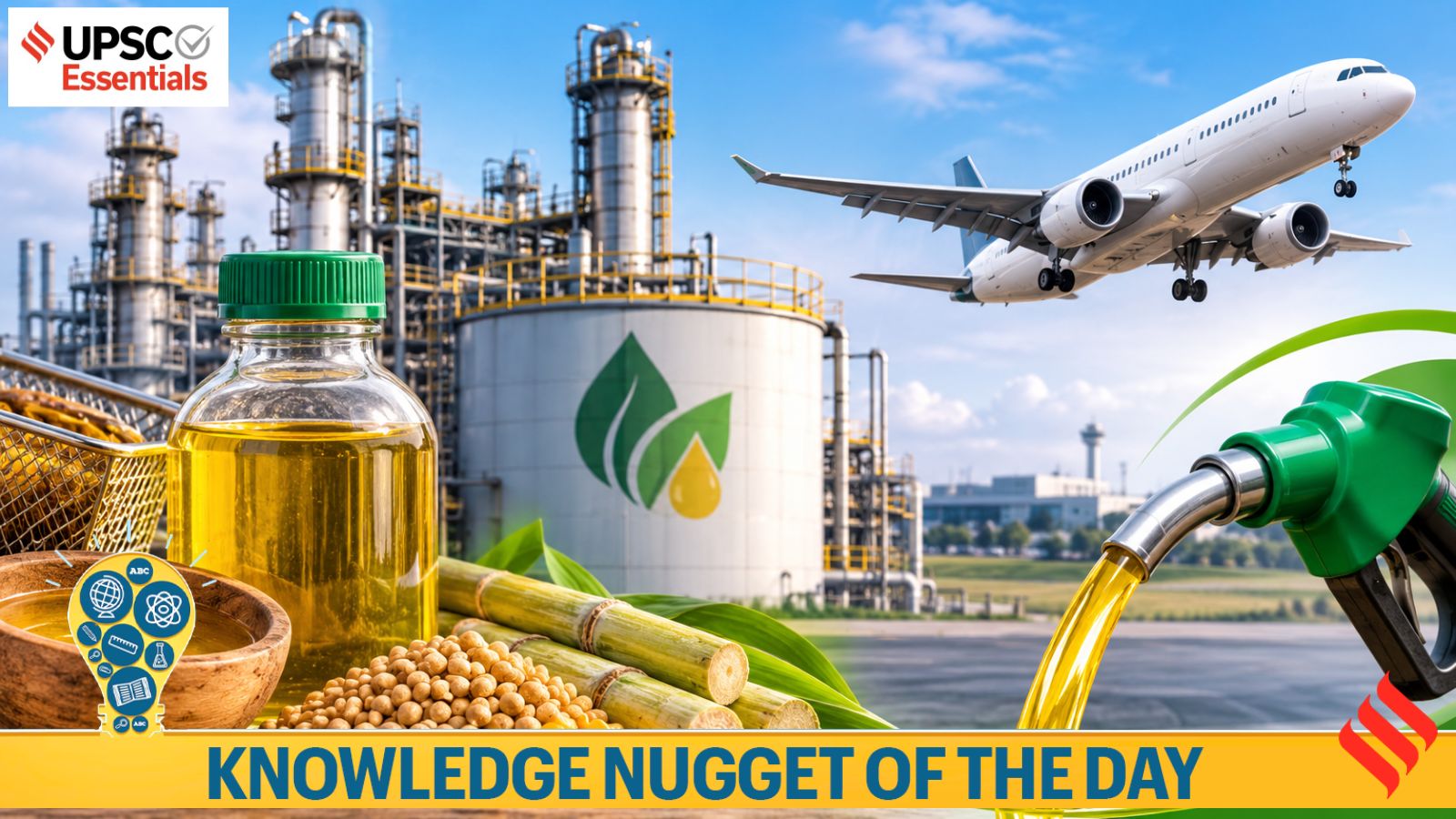
SAF is a biofuel produced from sustainable feedstocks that have a similar chemistry to conventional aviation turbine fuel (ATF). It can be blended with ATF without requiring any changes to aircraft machinery. Airbus states that all its aircraft can operate on up to 50% SAF blend. SAF can be made from various sources like used cooking oil, oil-rich seeds, algae oils, animal fats, municipal solid waste, agricultural residues, and more.
Producing SAF has benefits for reducing aviation-related emissions. It can cut GHG emissions in air travel by up to 80% compared to conventional jet fuel. It also helps reduce import dependence and avails job opportunities. The International Civil Aviation Organisation (ICAO) aims to decarbonise civil aviation globally, and several countries have announced SAF blending mandates, with India expected to start blending SAF for international flights in 2027.
However, challenges related to SAF adoption include its higher production cost, the need for new infrastructure, and the availability and sustainability of feedstock. Despite these hurdles, SAF holds significant potential for decarbonising the aviation sector and making air travel more sustainable and accessible.
Written by urgent.news from The Indian Express's reporting — not their text. Machine-written — may contain errors; check the original before relying on it.