Inside Frieze Abu Dhabi, from ancient Arabic treasures to South Korean contemporary art
A monument made 2,000 years ago in what is now Yemen, an Emirati artist's decade-long fascination with the sweet potato and sweeping charcoal compositions by a South Korean artist are among the highlights of the inaugural Frieze Abu Dhabi . The international art organisation's first fair in the Middle East, which is being held at Manarat Al Saadiyat until Sunday, builds on a base established…
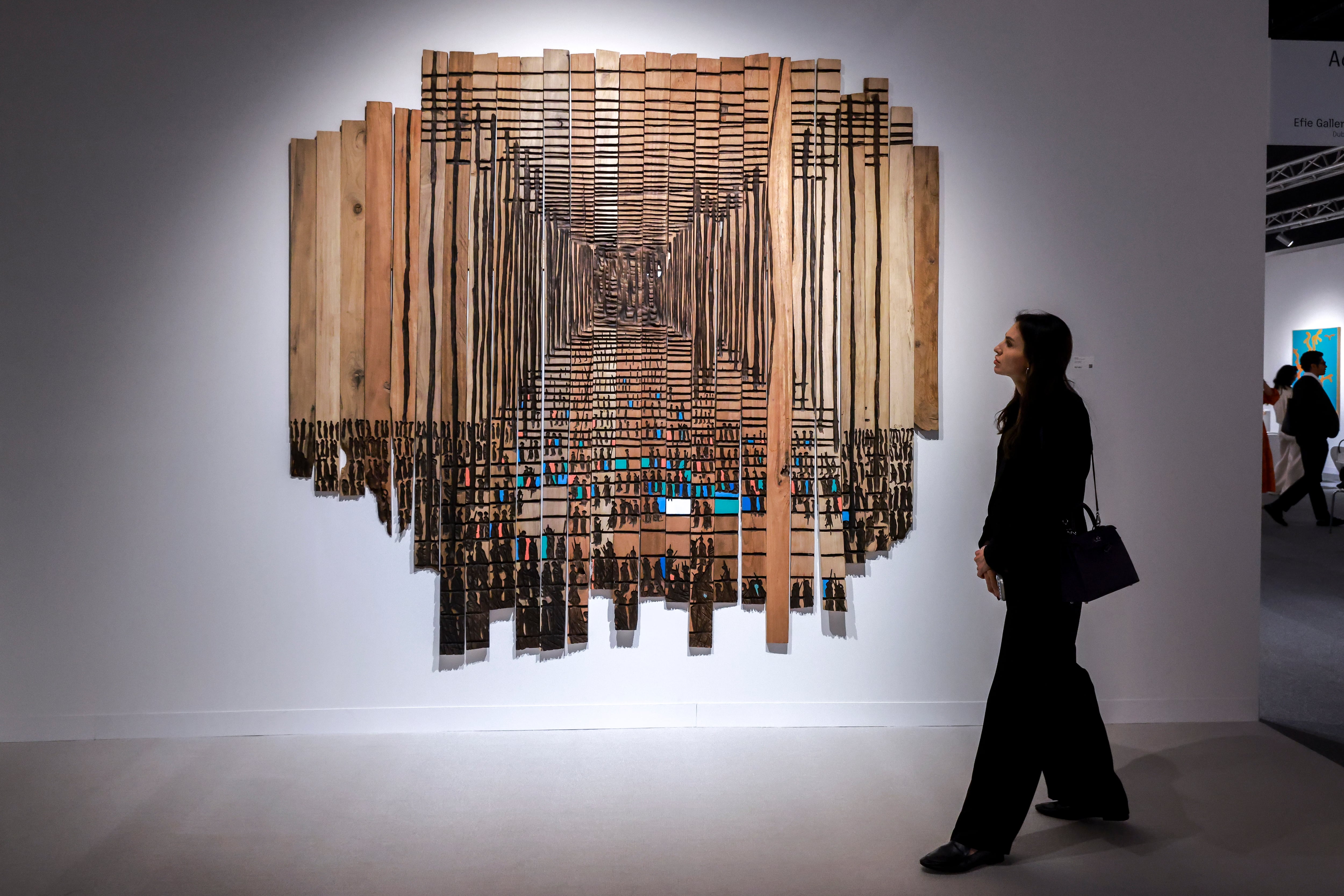
The inaugural Frieze Abu Dhabi art fair, held at Manarat Al Saadiyat, showcases a diverse range of works from ancient Arabic treasures to South Korean contemporary art. This is the first fair of its kind in the Middle East, built upon the success of Abu Dhabi Art, which has run for 17 editions. With 89 exhibitors from 64 cities across 37 countries and regions participating, the fair focuses on more focused presentations compared to the previous larger scale event.
Among the highlights are works from international art heavyweights such as Gagosian, Pace, and Thaddaeus Ropac, alongside galleries from the Arab world, Africa, Asia, and Europe. The fair is divided into four sections: Galleries, Focus, Global Futures, and Frieze Masters Abu Dhabi. The latter explores centuries of cultural exchange across the Indian Ocean, including ancient artifacts returning to the Arabian Peninsula for the first time in nearly 70 years.
One such artifact is the Dedicatory Stele of Faysat, a rare monument from the ancient kingdom of Qataban, dating back to the late first century BC. Made of alabaster, the stele depicts a woman holding ears of grain and is adorned with nine sculpted ibex heads. Another striking piece is a fragment from one of the largest Qurans ever known to exist, which visitors can examine without the typical glass barriers found in museums.
Emirati conceptual artist Abdullah Al Saadi presents works from his Naked Sweet Potato series at Dubai's Aisha Alabbar Art Gallery. The series explores the sculptural possibilities of the sweet potato, known locally as the fandal, by transforming its shapes into various forms, including jewellery, furniture, a book, and even an alphabet.
Egyptian artists also contribute to the fair, with traditional textile-making techniques, 20th-century cinema, and contemporary political imagery intersecting at Cairo's Gypsum Gallery. Artists Dina Danish, Jean-Baptiste Maitre, and Jamila Abdel Razek use khayamiya, a traditional Egyptian form of applique, to depict motifs associated with contemporary news cycles, while Pharaonic architectural references and contemporary issues of conflict and moral guilt are explored through various mediums.
Written by urgent.news from The National Business's reporting — not their text. Machine-written — may contain errors; check the original before relying on it.