In Sri Lanka, human actions are driving wild animals into cities and suburbs
COLOMBO – It was a surprise for Mohamed Fareed, a resident of Jawatte, an upscale neighborhood in Sri Lanka’s commercial capital Colombo, to find a peacock near his house back in 2020. Today, there are at least 12 peacocks, including peahens roaming the area. “In the mornings and evenings, we hear their loud and piercing […]
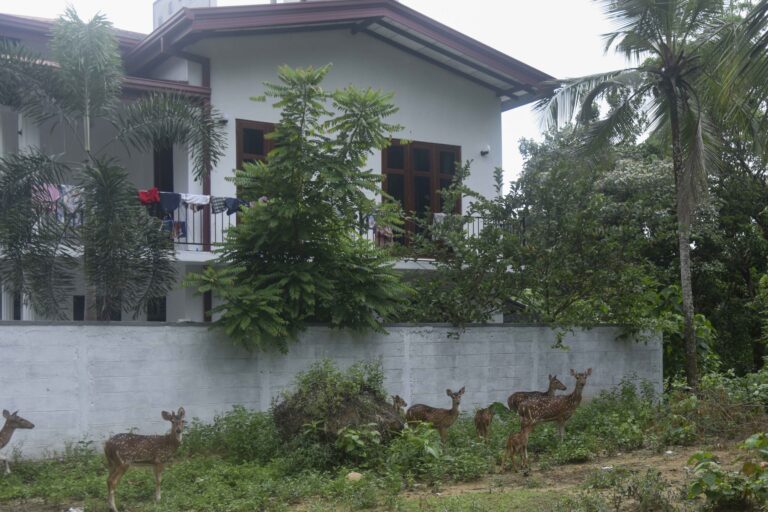
Sri Lanka's urban areas are witnessing a surge in wild animal populations as human actions drive creatures into cities and suburbs. Mohamed Fareed, a resident of Jawatte, a prestigious neighborhood in Colombo, encountered a peacock on his doorstep in 2020. Today, at least twelve peacocks, including peahens, roam the area. The peacocks are heard in the mornings and evenings, and residents have become accustomed to their presence.
Sometimes, they can be found on rooftops, and children express excitement at seeing them. The birds frequent the area near the mosque to feed on pigeon feed, provided by the mosque itself.
Peacocks have been spotted in densely populated regions such as Kollupitiya and Mount Lavinia. Many residents, like Fareed, are witnessing peacocks near their homes for the first time. Professor Sarath Kotagama, a former head of the Department of Zoology at the University of Colombo, explains that historical factors linked to environmental parameters like temperature have traditionally confined animals to the dry zone, which covers two-thirds of the island in the northern, eastern, and southeastern regions.
These areas are characterized by low annual rainfall and long dry seasons. In contrast, the wet zone, marked by high year-round rainfall, lush tropical rainforests, and major tea and rubber plantations, has traditionally been home to peacocks.
However, Kotagama suggests that changes in the wet zone's conditions could contribute to the expansion of peacock populations into urban areas.
Written by urgent.news from Mongabay's reporting — not their text. Machine-written — may contain errors; check the original before relying on it.