From pattern matching to governing intent: How Semantic DLP is securing enterprise Gen AI
Legacy DLP was built to catch patterns. It was not built to understand what employees paste into AI. Wald.ai, part of NetApp Excellerator’s Cohort 15, is teaching security to read intent.
In the current enterprise landscape, there is a growing tension between the adoption of generative and agentic AI for various tasks and the security concerns of protecting sensitive information. While engineers, financial analysts, legal teams, and operations staff leverage AI for code debugging, contract summarization, and task automation, security and compliance leaders are urgently trying to prevent unauthorized data leaks into AI models.
Chief Information Security Officers (CISOs) are now focusing more on the content that users are feeding into AI rather than questioning the use of AI itself. Traditional Data Loss Prevention (DLP) systems, built for structured data in predictable channels like emails and file transfers, struggle to handle the unstructured, natural language inputs of generative AI.
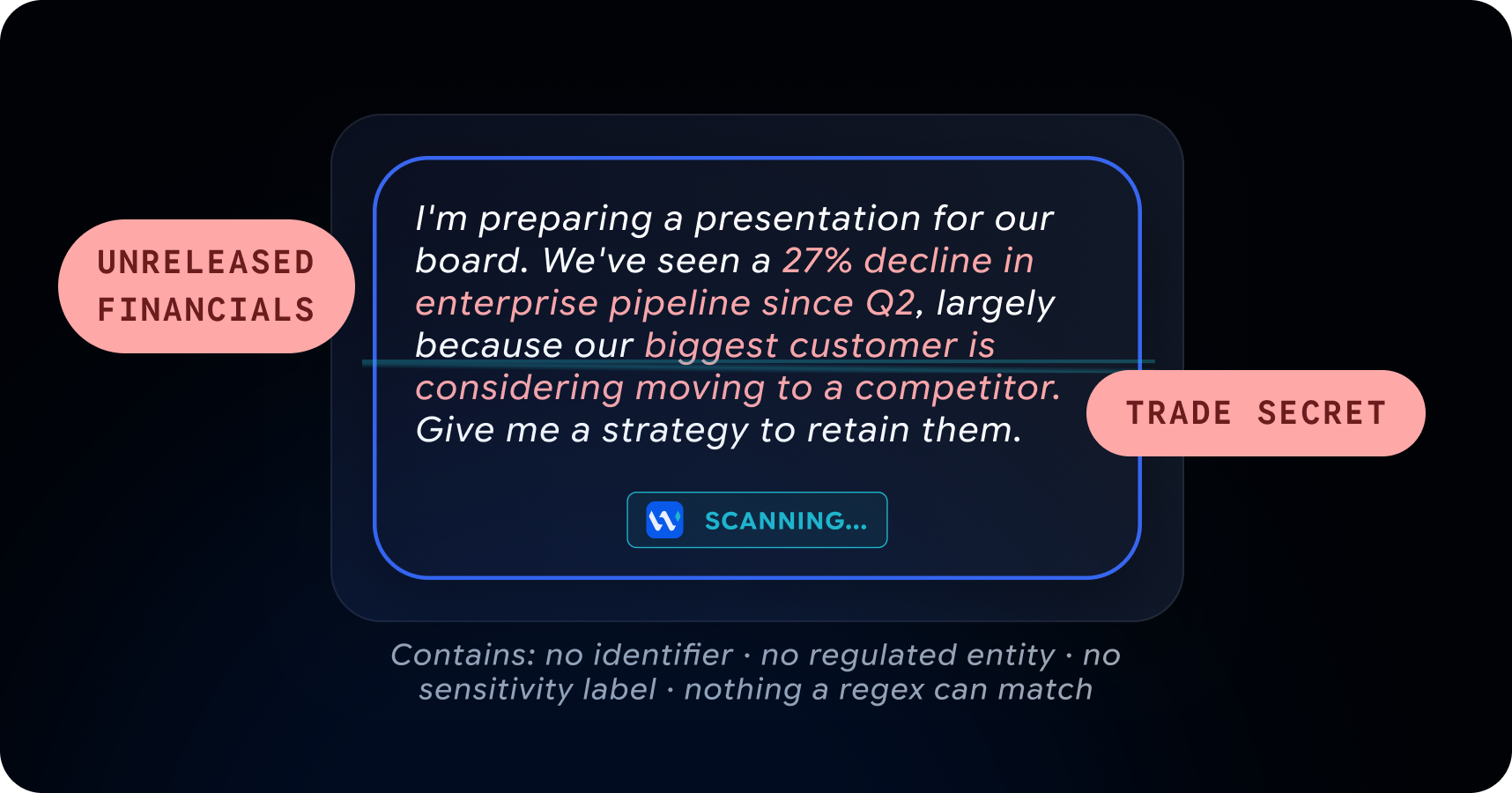
These legacy systems rely heavily on regular expressions, keyword lists, and static rules that cannot identify sensitive data based on context and intent. For example, an engineer sharing proprietary authentication code with an LLM or an analyst outlining an undisclosed product roadmap appear benign to regex-based DLP. Tightening keyword rules leads to excessive false positives, causing alert fatigue among security teams and frustration for employees.
Initially, organizations adopted broad bans on public AI tools, but this drives usage to personal devices and unsanctioned accounts, creating "Shadow AI" risks while stifling productivity. To address this, semantic, context-aware security is emerging. Wald.ai's platform uses a Small Language Model (SLM) deployed locally on employee endpoints to inspect and classify AI interactions in real-time before any data leaves the device.
This approach distinguishes between harmless and sensitive AI interactions, reduces false positives, and allows granular control over what sensitive entities can be shared with AI models. Industries like financial services, healthcare, and legal are already benefiting from this approach, transitioning from restrictive policies to company-wide AI adoption.
As enterprises mature in their AI journey, the integration of robust data infrastructure with real-time, endpoint semantic guardrails ensures protection from data storage to AI prompts. The future of enterprise competitiveness lies in building trust within AI systems, replacing reactive compliance checks with intelligent, context-aware guardrails that keep pace with conversational AI interactions.
Written by urgent.news from YourStory's reporting — not their text. Machine-written — may contain errors; check the original before relying on it.