Ethernet cable colors aren't random, and enterprise networks use them to save hours
Don't overlook the color code.
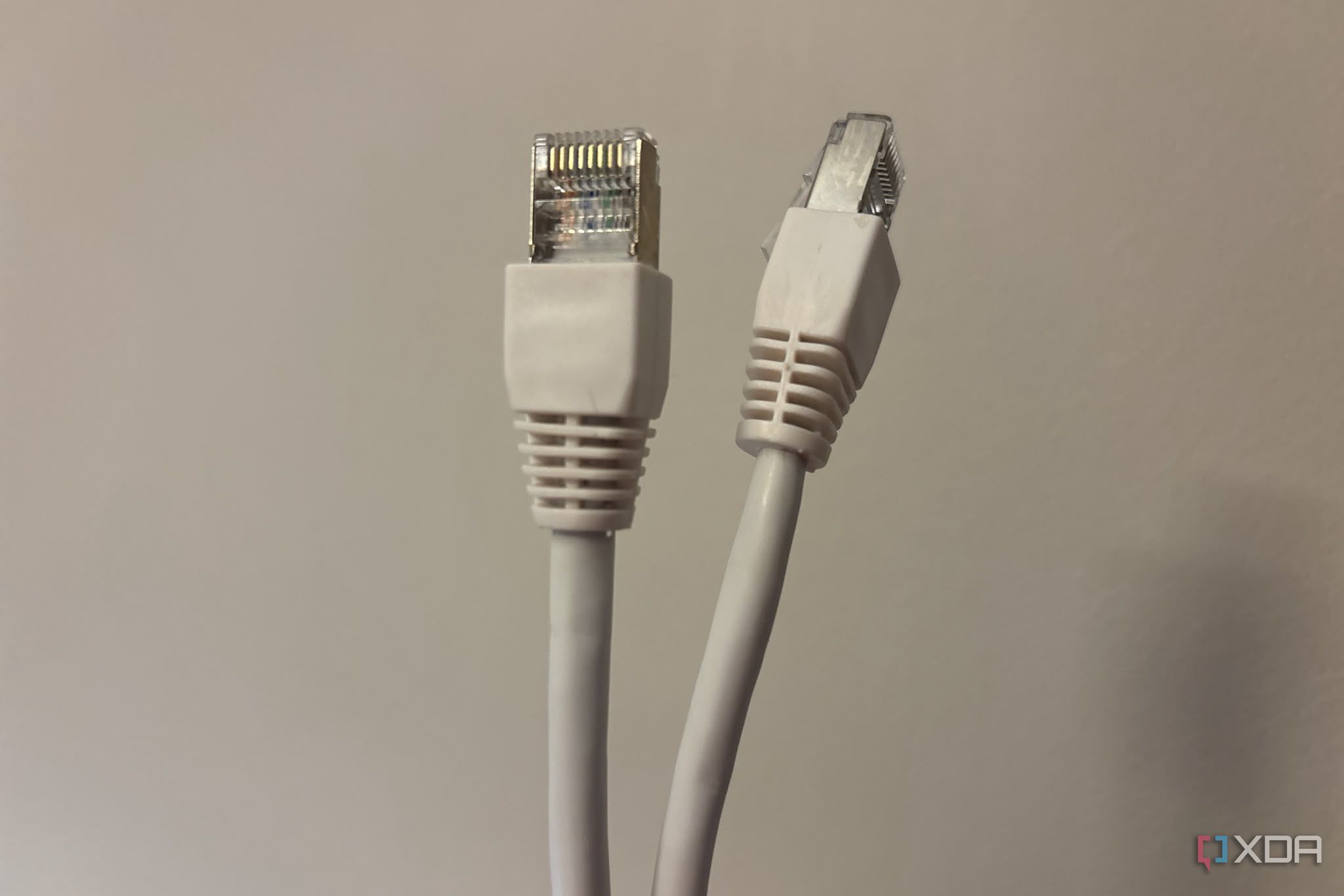
Ethernet cable colors may appear arbitrary, but they serve a purpose in enterprise networks, enabling faster troubleshooting and reducing the risk of incorrectly disconnecting critical equipment. The Telecommunications Industry Association (TIA), through ANSI/TIA-606 and its revisions, establishes color-coding conventions for structured labeling and termination field identification.
Within this framework, white represents the first-level backbone, gray the second-level backbone, and brown serves as an inter-building backbone. Orange is designated as the demarcation point where public carrier or ISP service enters the building and transitions to internal wiring. Green signifies direct network connections on the customer side of the demarcation point, most commonly used for modems, routers, and primary gateway switches.
Blue is allocated for horizontal cabling runs from telecommunications rooms to user-facing workstation drops and wall plates. Yellow signals auxiliary circuits, alarms, and building automation systems, which may include devices such as security cameras or access points. Specialized colors like purple denote common core equipment like PBX hardware, while red is reserved for telephone systems, although this may not be explicitly stated in the standard.
Although not universally mandated, applying these enterprise color-coding principles to a home network can significantly enhance troubleshooting efficiency and minimize the risk of inadvertently disconnecting vital devices. By reserving green Ethernet cables for Power over Ethernet (PoE) devices, such as security cameras and wireless access points, network administrators can quickly identify these critical components and prevent accidental disconnections.
This approach eliminates the common frustration of tracing backhaul lines during network outages or switch reboots. Implementing enterprise color coding transforms a tangled mess of cables into a clear, readable map, reducing the likelihood of human errors during moves, adds, and changes. In high-density networking environments, physical troubleshooting heavily relies on visual tracing, and standardized color coding allows for rapid diagnostic identification of circuit types, thereby cutting diagnostic time and minimizing catastrophic missteps.
While modern network management systems and VLAN tagging efficiently handle logical separation, the physical layer remains the ultimate ground truth. Adopting robust color discipline bridges the gap between software configuration and the physical reality of a home network, preventing technical debt accumulation as gear scales over time.
Although the discipline may seem excessive for a home setting, it ensures long-term infrastructure resilience and presents a practical visual interface for network topology.
Written by urgent.news from XDA Developers's reporting — not their text. Machine-written — may contain errors; check the original before relying on it.