Community Innovation: From polluted canals to new horizons — imagining Gqeberha’s future
In 2025, 41 artists, students and academics visited some of Gqeberha’s most polluted and important natural spaces to imagine what the metro could look like in 2055. A year later, what they saw has inspired new artworks, community projects and practical efforts to improve local spaces and create opportunities for young people.
In 2025, a diverse group of 41 artists, students, and academics visited Gqeberha's polluted and significant natural spaces to envision the city's future in 2055. This project, Horizon 2055, funded by the National Research Foundation's South African Research Chairs Initiative, aimed to inspire new artworks, community projects, and practical improvements for local spaces and opportunities for youth.
The initiative, led by philosopher Professor Andrea Hurst at Nelson Mandela University, combined 20 weekly online seminars with three "City (E)scapes" journeys in 2025. Participants explored areas such as Brighton Beach, the Fish Water Flats wastewater works, the Motherwell canal, the Volkswagen plant, Coega, and the Van Stadens flower reserve.
The project's impact extended beyond the initial visit. Tshiamo Gumbu, a first-year student, partnered with LoveLife to speak to matric learners about university study and wellbeing. Erin Smith collaborated with the Friends of Van Stadens on an art program in the reserve and curated their first exhibition for the annual Flower Festival.
Tessa McLeod Wattam assists at the Motherwell Community and Enviro Hub and researches the Swartkops estuary. Her master's work focuses on the community's efforts to improve local spaces. For World Oceans Day, she organized a children's art activity using waste materials and helped build an outdoor seating area using Xhosa building methods.
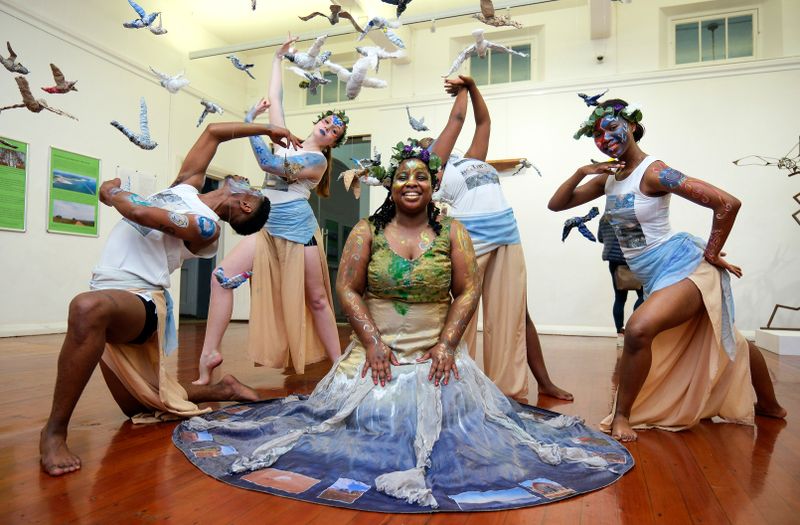
The project also inspired works in various forms. Choreographer Nicki Rayepen's performance, The Last Call of Mother GQ, won best dance production at the Eastern Cape Arts, Culture and Heritage Excellence Awards. Lindokuhle Gushu, led the performance and is now a music PhD candidate. Simphiwe Zondani's poem about pollution in the Swartkops River, Wemk’ umlambo Magwalandini!, was featured in the Writing Climate Resilience 2026 anthology.
Thembelihle Ngece organized a webinar series on student entrepreneurship, leading to the Creatives Launchpad Programme for students in creative industries.
The exhibition was not the end but a beginning. The team is working on a catalogue of over 400 pages, both in print and digital form. Professor Hurst and Dr. Gary Koekemoer are presenting and teaching at Durham University in the UK. Flowers brought insights from Gqeberha to Da Nang, emphasizing the ripple effect of autonomous ownership of spaces on people and the surrounding environment.
Written by urgent.news from Daily Maverick's reporting — not their text. Machine-written — may contain errors; check the original before relying on it.