Bademantel, Pizza und Co.: Hotel-Knigge: Was Gäste dürfen - und was nicht
Ein Hotelzimmer ist kein Lagerraum und der Bademantel kein Souvenir. Bei manchem Wunsch und Verhalten kommt es auf Hausordnung und Hoteltyp an, anderes ist eine Frage des Anstands - oder des Gesetzes.
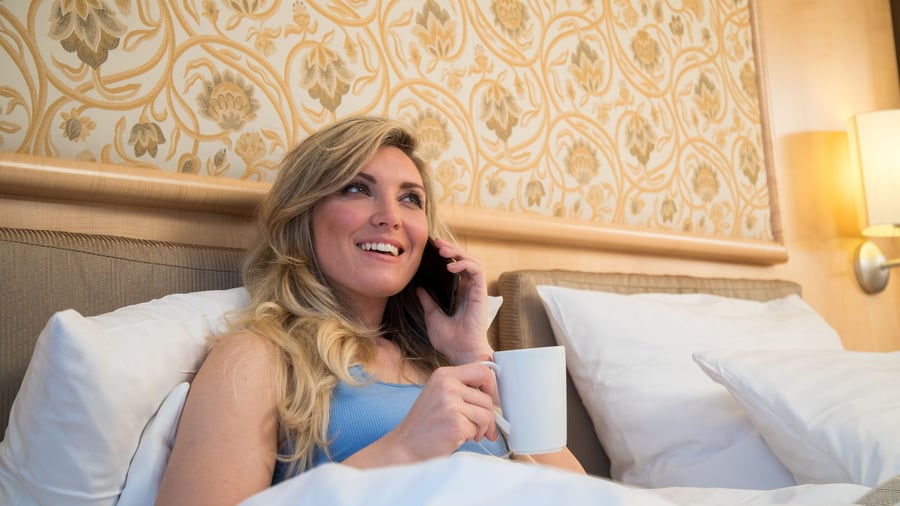
A hotel room feels like a home at best, but it is not a home. Certain rules and customs should be known by travelers - for reasons of law and respect. This brief hotel etiquette provides answers to commonly asked questions. How much luggage may I bring? There are no strict rules. A factor is the size and equipment of the room. "Those who book a suite may bring more luggage than in a standard room," describes Stefan Dinnendahl, deputy chief executive of the Hotel Association of Germany (IHA).
Those planning to bring a lot of suitcases and unsure should ask beforehand if there are any limits. If it is too much or bulky, the hotel may require belongings to be stored elsewhere. Flights may not be obstructed. May I bring food and drinks into the room? Yes, provided the house rules do not forbid it. Hotel operations may not be disrupted - odor or excessive dirt being examples.
Not allowed: preparing and consuming brought food with electric devices or in the hotel's water boiler, according to Dinnendahl. However, this is allowed in Aparthotels or "serviced apartments" that have a kitchenette. Here, the preparation and consumption of brought foods are provided for. But: "Even here, the respective house rules and applicable safety and fire protection regulations apply."
May I have pizza delivered to the room? According to Dinnendahl, this is handled differently. The delivery takes place exclusively in the reception area for security reasons. External delivery services are not allowed to enter guest rooms. May I move furniture if it feels more comfortable to me? It depends. If someone carefully moves a nightstand and then returns it to its original place, generally no problem will arise, Dinnendahl says.
However, if cables are pulled out or whole wardrobes are dismantled, greater changes should be coordinated with the hotel. "The arrangement of a hotel room should generally be treated as one would like it in one's own home," says the IHA representative. Common sense also helps. What happens if I damage something? Those who damage or destroy something are liable for damages.
It does not have to be broken. "If I, for example, soil the carpet so that it cannot be cleaned cleanly, I must stand for it," says Ines Kilian, deputy chairwoman of the Executive Committee of the Criminal Law Working Group of the German Lawyers' Association. If it can be proven that something was done intentionally, even damage is punishable as a crime.
May I bring others into the room? Enjoying football together or drinking a beer: This should not be a problem and part of a contractually agreed usage, according to Kilian. Stefan Dinnendahl emphasizes, though, that it is up to the hotel whether guests are allowed to receive visitors in the room. The hotel has the house right. Visits are usually announced at the reception.
Staying overnight would of course cost extra. How loud may I be in the hotel room? This also depends on the hotel concept: "In a hostel with a younger audience, it can get a bit livelier than in a wellness hotel where guests mainly seek rest and recovery." However, consideration is indispensable everywhere, especially during quiet hours.
To avoid further noise, one should inform the reception if one feels disturbed rather than banging on the wall or shouting. Where do I put my trash? Naturally, trash goes into the trash can, making the work of hotel staff easier. If an empty plastic bottle is next to the desk, is it trash or not? In the case of objects not clearly belonging to the trash bin, cleaning staff are often reluctant.
"It can often not be clearly seen what the guest wants to keep," says Dinnendahl. In doubt, the empty bottle will remain. What may I take with me? How lovely is that bathrobe! But taking it is theft, points out Kilian. Hand towels, bathrobes, bathrobes, that too must not be taken. The same applies to cutlery or décor. Even the batteries in the remote control - perhaps practical for the empty camera - are prohibited.
Legally speaking, everything in the room belongs to the hotel. "However, in practice, the taking of consumables and single-use products is no problem," Kilian explains. Examples she gives are shower caps, bathrobes, or shampoo. These must be consumables and not the stationary shampoo dispenser. Also, notebooks, ballpoint pens, or postcards with hotel branding that are obviously intended for marketing and are left as a reminder may be taken.
As Kilian says, even tea bags or sugar sachets may be taken if they are not part of the minibar, whose contents cost extra.
Written by urgent.news from Handelsblatt's reporting — not their text. Machine-written — may contain errors; check the original before relying on it.