Amelley Djosu: Ghana’s creative industry needs more than creative leaders
We must stop treating creative credibility and executive competence as though they are interchangeable. They are complementary, but they are not the same thing.
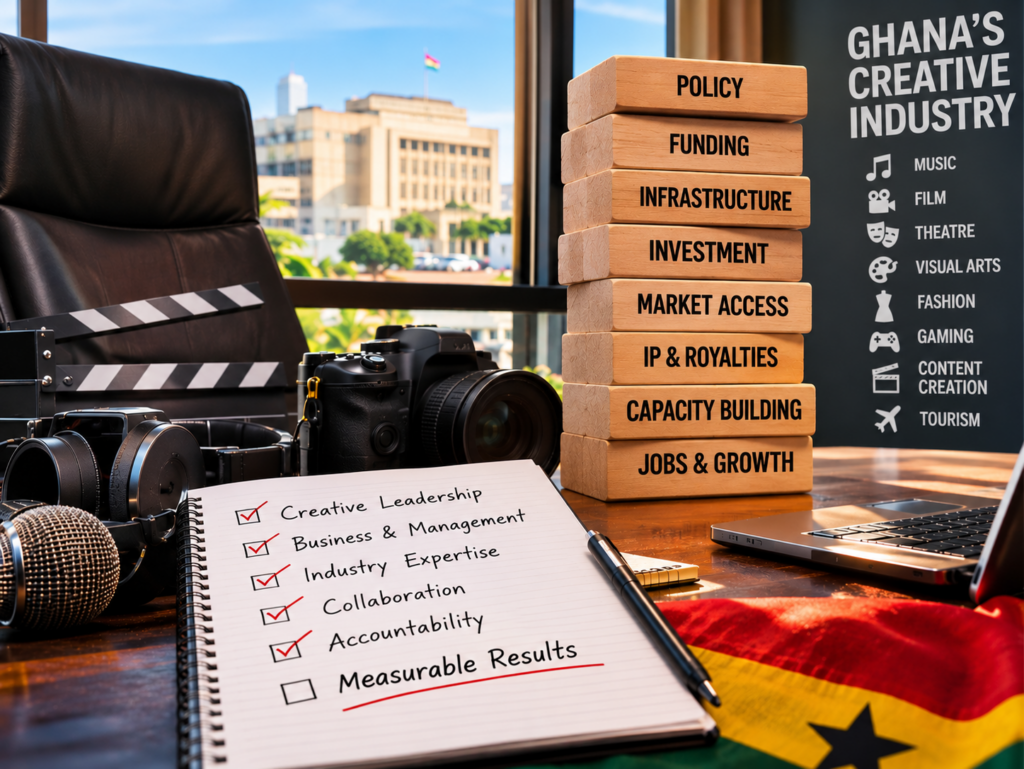
When President Mahama returned to office in January 2025, his appointments in the tourism, culture and creative arts sectors were seen as a positive sign. Many practitioners believed that those with direct industry experience would now have a chance to influence the sector's direction. However, as the administration nears its second year, a crucial question emerges: Has appointing creatives translated into stronger institutions, more sustainable businesses, and greater opportunities for the very practitioners who were appointed to serve?
This article is not an argument against appointing creatives or discrediting those currently in leadership positions. Rather, it calls for a closer examination of what truly constitutes leadership in a modern creative economy, and whether we have been giving enough attention to the difference between understanding an industry and running the institutions responsible for its growth.
While professional experience in an industry can provide valuable industry knowledge and authenticity, running an agency requires a different set of skills. These include strategic planning, financial management, policy implementation, stakeholder coordination, institutional governance, investment mobilisation, commercial negotiation, people management, and turning ideas into programmes with measurable outcomes. Simply understanding the challenges of an industry does not guarantee the ability to manage its institutions.
The industry in Ghana faces numerous challenges, including weak structures, limited access to finance, inadequate infrastructure, fragmented institutions, poor coordination, and inconsistent policy implementation. These problems cannot be resolved through talent alone. Research from the Advancing Creative Industries for Development in Ghana project reveals persistent constraints across sectors, particularly limited access to finance and infrastructure, inadequate institutional support, and weak policy coordination.
To truly grow, Ghana's creative industry needs not just representatives, but builders. These are individuals capable of constructing the systems necessary for the industry to function effectively as an economy. Key questions remain: What sustainable financing models are being pursued? How can private capital be attracted into film, music, fashion, and performing arts?
What measures are being taken to strengthen intellectual property management and commercialise creative products? How are agencies building partnerships to open international markets? And perhaps most importantly, what tangible improvements are practitioners experiencing in their businesses?
While initiatives such as the National Film Authority's National Film Dialogue and the introduction of platforms like AfroGastro are positive steps, the real test lies in the impact these efforts have on the people and businesses they aim to serve. A budget allocation alone does not equate to effective intervention. A stakeholder engagement is not the same as a productive partnership. A programme launch is not enough if it does not lead to measurable improvements.
Therefore, the conversation must shift from simply appointing creatives to ensuring that these individuals possess the skills and capabilities needed to build the institutional frameworks that will drive the creative economy forward. It's time to move beyond the rhetoric of leadership and focus on the practical measures that will create a sustainable and thriving creative industry in Ghana.
Written by urgent.news from MyJoyOnline Ghana's reporting — not their text. Machine-written — may contain errors; check the original before relying on it.