AI helps researchers investigate how thousands of medical studies share code
An MIT and Dana-Farber Institute-led team used large language models to examine nearly 4,000 studies and hundreds of code repositories, revealing gaps in the information needed to scrutinize and reuse published research.
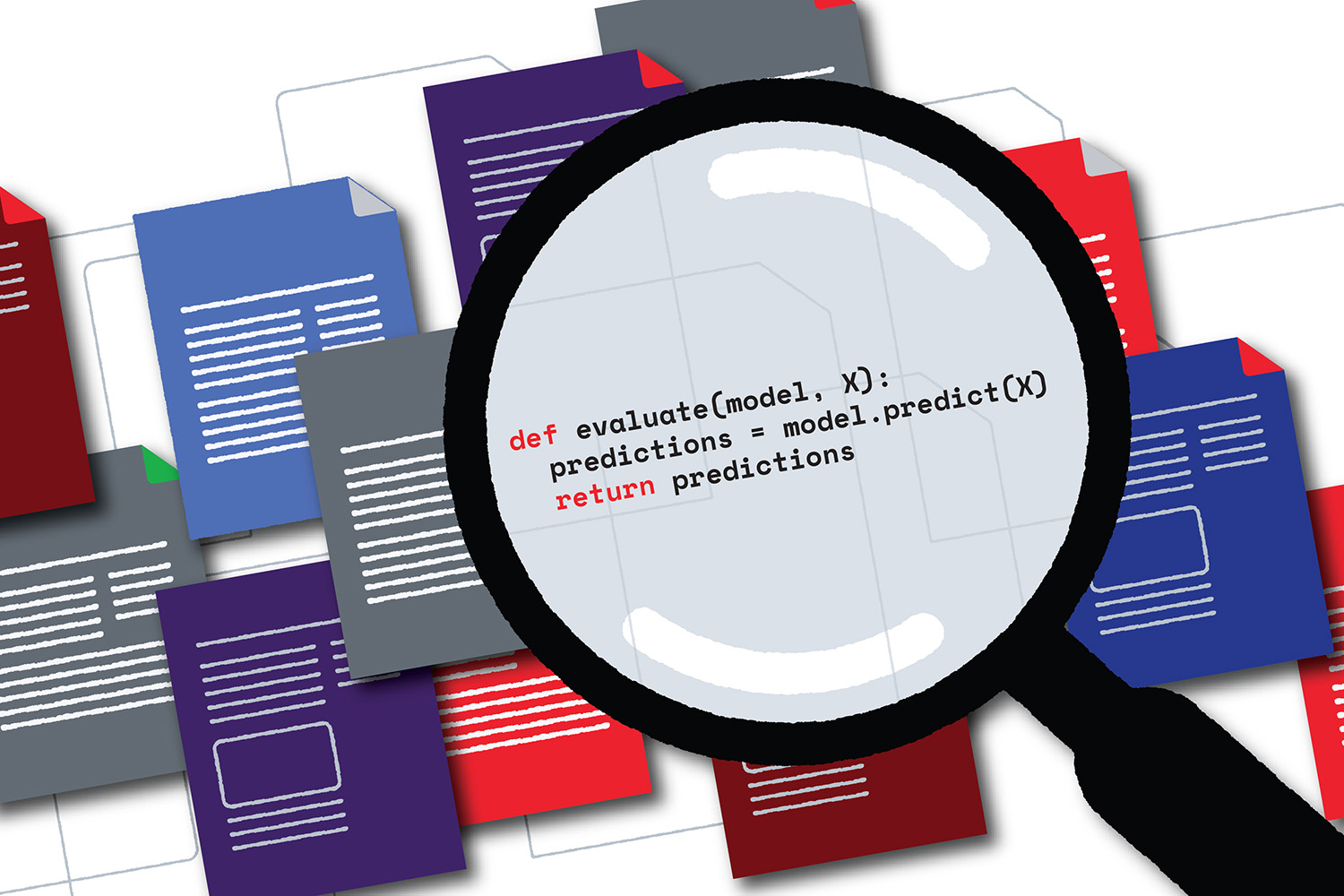
An international team of researchers, led by MIT and Dana-Farber Cancer Institute, has examined how code is shared in clinical prediction studies to improve the reproducibility and understanding of medical research. These studies develop or evaluate models to estimate patient outcomes, such as the risk of developing a disease, and researchers need to be able to scrutinize how they were built and tested.
Using large language models (LLMs), the team analyzed nearly 4,000 papers to identify statements about shared code, and then followed these statements to assess hundreds of associated code repositories. Their review revealed two key gaps: code sharing remains uncommon, and making code public does not consistently mean providing the documentation and supporting information needed for reuse.
To address these issues, the team is developing a reporting guideline called TRIPOD-Code, which builds on existing checklists that help researchers report how clinical prediction models were developed and evaluated. The findings, published in Nature Medicine, aim to improve the sharing and reuse of code in medical research.
Brief written by urgent.news from MIT News AI's own syndicated text. Machine-written — may contain errors; check the original before relying on it.
This story
This is one outlet's version. Read the fullest account.