Achieving justice begins with access to information
Malaysia's civil justice system is performing relatively well by international standards. Yet a persistent weakness in public access to information raises an important question: how accessible is justice to ordinary Malaysians who do not know where to turn?
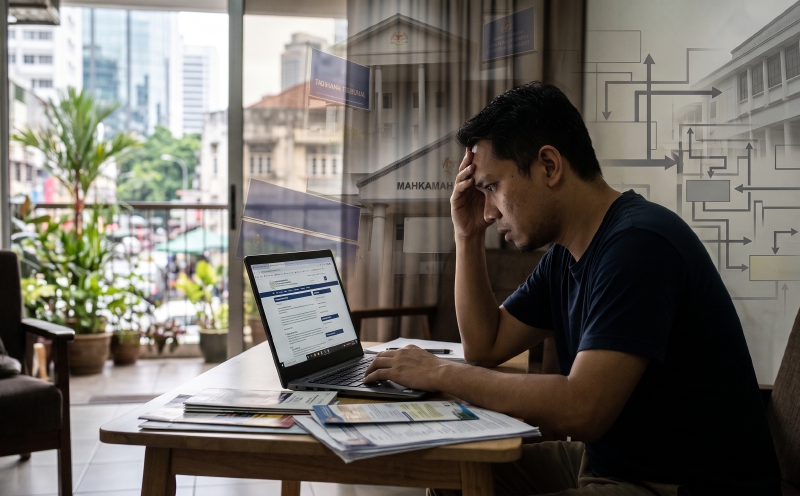
Malaysia's civil justice system demonstrates relative strength compared to global standards. However, a notable weakness lies in public access to information, raising questions about how accessible justice is for ordinary Malaysians. The World Justice Project's 2026 Rule of Law Index reveals Malaysia ranked 53rd out of 143 countries, with civil justice performance placing the nation 37th globally and third among 44 upper-middle-income countries.
While these rankings are commendable, they reveal an important issue: the experience of ordinary Malaysians navigating legal disputes. The disparity between civil justice performance and open government performance underscores this challenge. Malaysia ranks 37th in civil justice but 104th in open government, indicating significant accessibility issues.
For an individual facing a legal dispute, determining where to turn for help often requires uncovering the proper institutions. Consider a consumer with a defective online purchase - should they approach the Ministry of Domestic Trade, file a claim in consumer tribunal or seek legal advice? A worker facing unfair dismissal may be uncertain whether to involve the Labour Department or Industrial Relations Department.
These complexities multiply when disputes involve overlapping issues. Malaysia's existing dispute resolution institutions are numerous, yet their information is scattered across multiple websites, procedures and resources. This creates a significant accessibility problem as the system assumes the public already possesses some legal knowledge.
A solution lies in developing an integrated, one-stop online portal that serves as a central gateway to legal rights, remedies and dispute resolution mechanisms. The European Union's e-Justice Portal provides a useful model, providing a centralized platform to direct individuals to relevant resources across EU member states. Malaysia could adopt a similar approach, organized around common dispute types rather than individual government functions.
Users could select the nature of their dispute, with the portal then providing clear guidance on possible legal remedies, responsible institutions and procedures, with direct links to complaint channels, tribunal services and legal aid providers. The portal would need to be well-coordinated, up to date, multilingual, accessible to persons with disabilities and complement existing physical assistance channels.
While a new information infrastructure would need to be built, Malaysia could leverage existing government service portals and agency-specific platforms to reduce development costs.
Written by urgent.news from New Straits Times's reporting — not their text. Machine-written — may contain errors; check the original before relying on it.