What India Makes of Trump’s Asia Trip
New Delhi will watch closely as the U.S. president meets with Xi and Putin in Shenzhen.
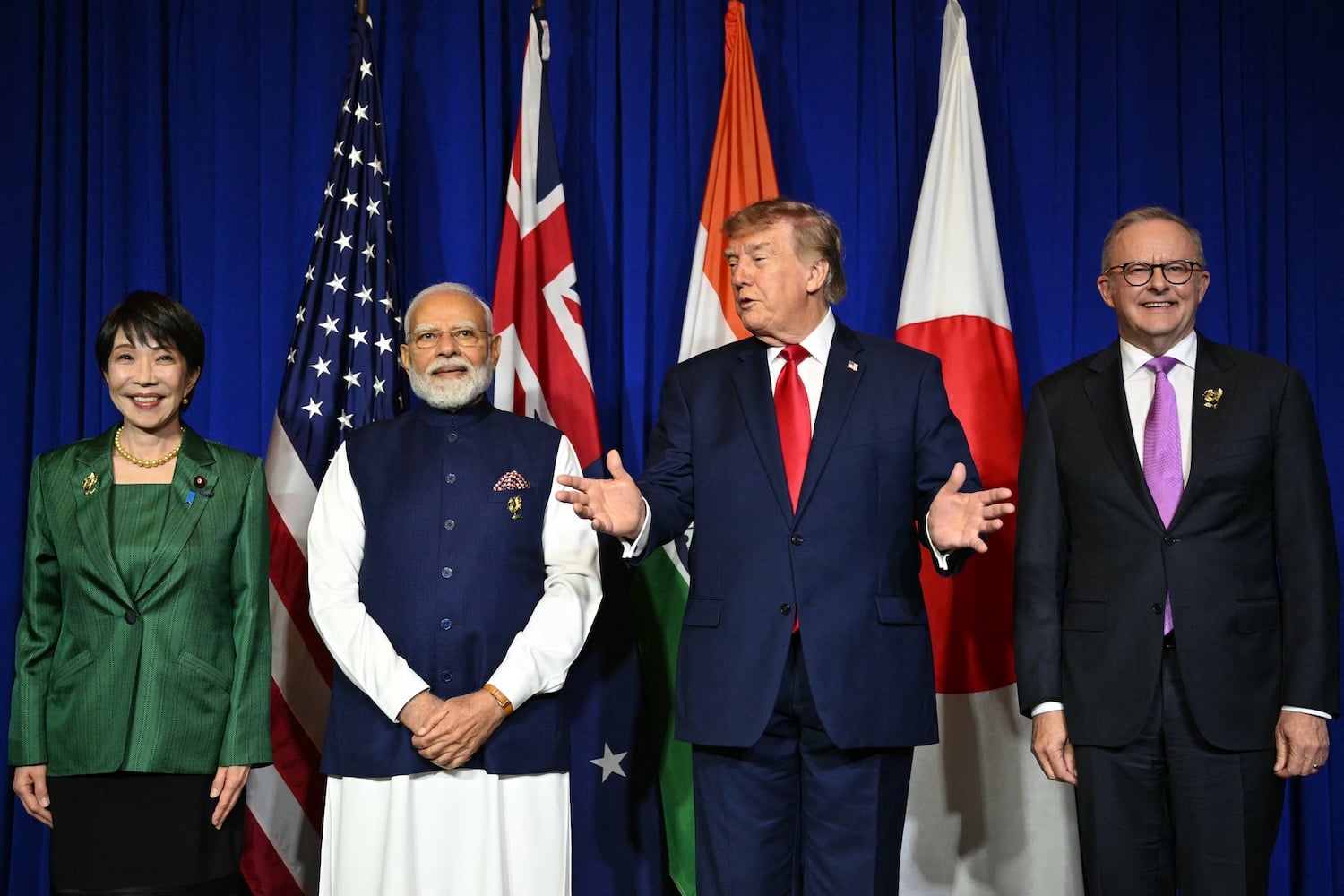
This week's highlights in South Asia focused on high-level diplomacy in Manila and Shenzhen. Indian policymakers were particularly interested in the events, as was Bangladesh, which was cleared to receive U.S. International Development Finance Corp. funding. Jailed former Pakistani Prime Minister Imran Khan also issued a plea for medical treatment.
The Quadrilateral Security Dialogue (Quad) held its first leaders' meeting in over two years at the Association of Southeast Asian Nations (ASEAN) summit in Manila. The Quad, comprising Australia, India, Japan, and the United States, announced initiatives such as cybersecurity collaboration, a cable connectivity framework, and a maritime surveillance exercise.
These actions likely provided relief for New Delhi, as the grouping is important for India's foreign-policy interests. The Quad aims to counter China through non-security collaborations in technology and infrastructure investment.
The Quad's relevance has been somewhat undermined by U.S. President Donald Trump's softer approach to China and lack of clear support for the grouping. Meanwhile, the wider ASEAN summit held more immediate significance for New Delhi, with Indian Prime Minister Narendra Modi seeking to strengthen India's engagement in Southeast Asia. The region's importance to India, due to China's influence there, added high stakes to Modi's engagement with ASEAN leaders.
In Shenzhen, China, there was a historic trilateral meeting between U.S. President Donald Trump, Chinese President Xi Jinping, and Russian President Vladimir Putin. The discussion reportedly included the Iran war and nuclear nonproliferation. While not directly concerning India, the meeting marked a diplomatic achievement, as China had previously been unable to convene the three leaders.
For New Delhi, the main takeaway was that the Quad leaders' meeting was a relative sideshow, with ASEAN and APEC summits holding more immediate significance.
Written by urgent.news from Foreign Policy's reporting — not their text. Machine-written — may contain errors; check the original before relying on it.