U.S. drivers are just absorbing high gasoline prices
Pain at the pump may have changed some votes, but it's apparently not prompting big changes in how much Americans drive. Why it matters: Most driving isn't especially optional, so people are absorbing the cost. This year Americans have paid an additional $88 billion for gasoline relative to a no-war baseline, according to Brown University's Climate Solutions Lab. The Energy Policy Research…
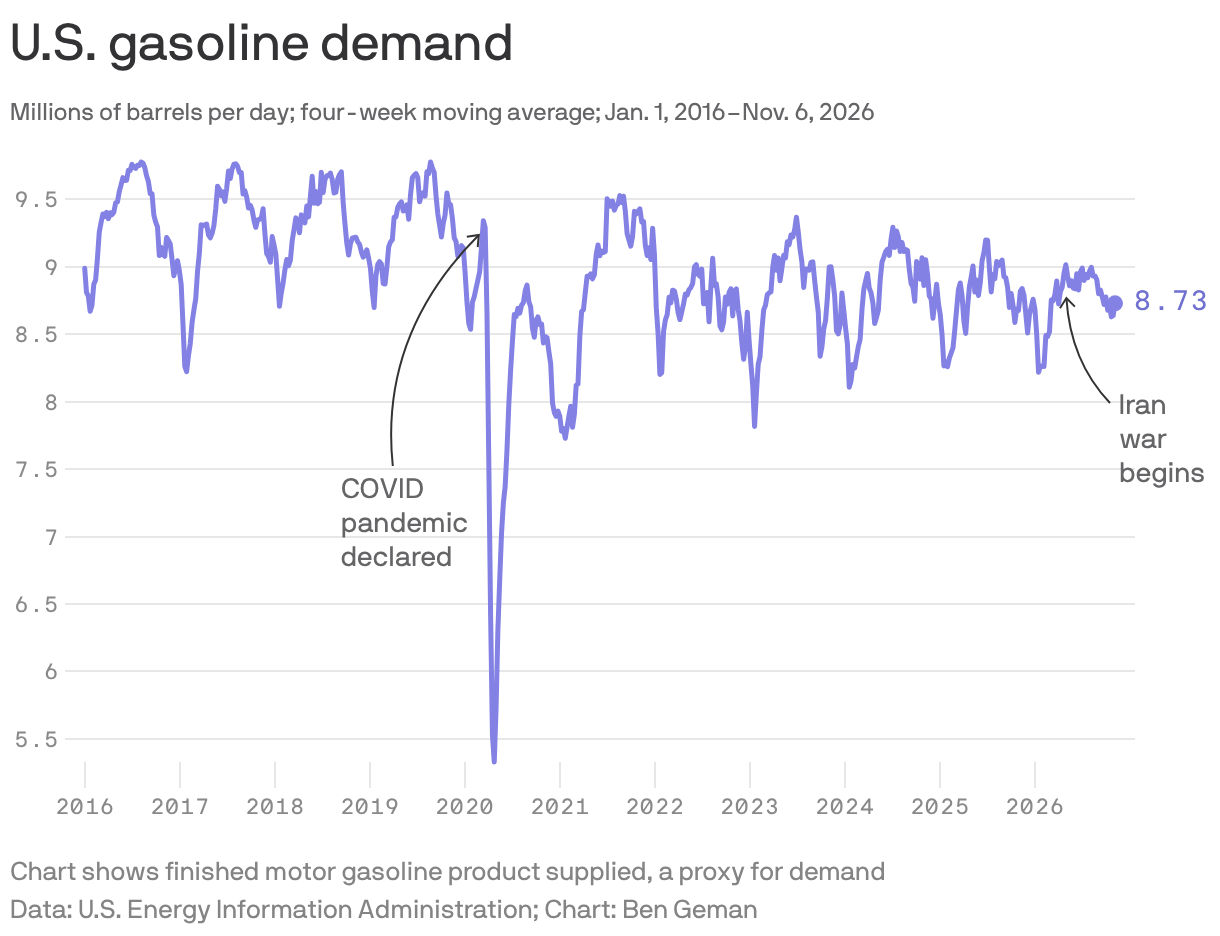
The ongoing Iran war has led to a surge in gasoline prices, causing Americans to absorb an additional $88 billion in costs this year, according to Brown University's Climate Solutions Lab. Despite this significant increase, there has been no noticeable decline in gasoline consumption, with federal data showing demand from March to early November to be virtually the same as the same period last year.
This lack of change in demand, despite gasoline prices being 31% higher, is puzzling, as polls indicate that many Americans believe high prices are prompting them to change their driving habits. A Washington Post-ABC News survey from April revealed that 44% of respondents claimed they had reduced their driving, and a June Gallup poll found that 57% of respondents said high prices were causing them to drive less.
However, UC-Berkeley energy economist Lucas Davis argues that these findings may not reflect the actual behavior of drivers. His analysis, based on federal data from the Energy Information Administration, suggests that gasoline demand is inelastic in the short run, meaning people are not significantly altering their driving patterns despite the high prices.
This discrepancy between people's stated intentions and their actual behavior highlights the gap between perception and reality in times of economic hardship.
Written by urgent.news from Axios's reporting — not their text. Machine-written — may contain errors; check the original before relying on it.