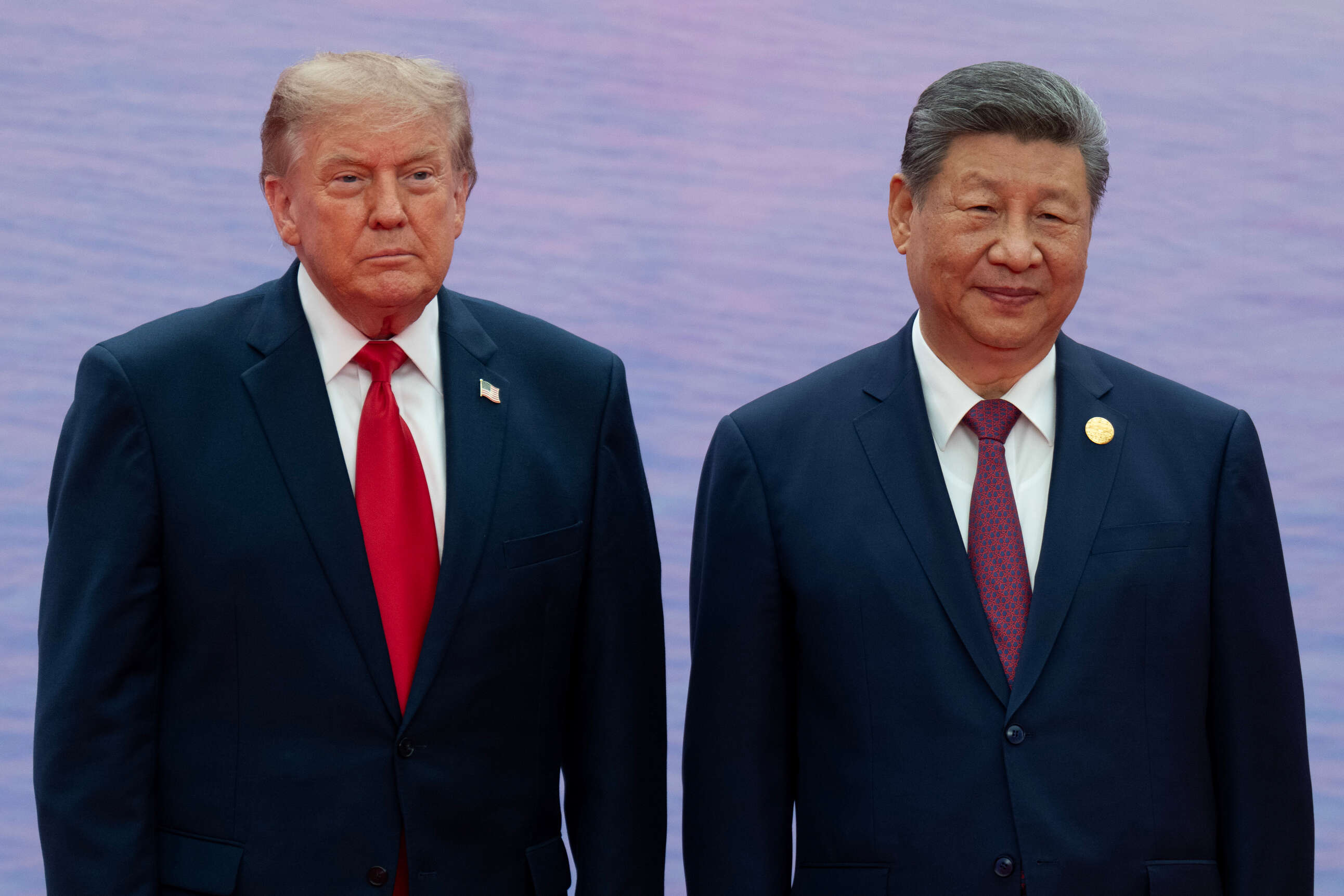
Trump administration weighs forcing US firms to disclose Chinese AI use
The Trump administration is considering requiring US companies to disclose publicly when they use Chinese AI models.

The Trump administration is contemplating requiring US firms to publicly reveal their utilization of Chinese AI models, aiming to deter dependency on the technology without enacting new restrictions that might provoke industry or China, according to three sources cited by Reuters. Both the Treasury Department and the White House Office of Science and Technology Policy have deliberated over the proposal, which would entail companies like Airbnb displaying such information on their websites.
It remains uncertain whether the concept is gaining momentum within the administration or if it would be formalized through a regulatory process should it progress. The announcement of this idea, initially reported by Reuters, highlights an increasing push within the administration to counteract the proliferation of potent Chinese open weight AI models, a source of significant concern for the government.
These models facilitate unrestricted access to their core components, enabling anyone to download and modify them. This proposal also suggests an approach to dissuade the use of Chinese AI through a "name and shame" campaign, while maintaining a general anti-regulation approach to AI. The White House, the Treasury Department, Alibaba, and Airbnb did not respond to inquiries for comment.
Airbnb stated in a statement that its AI operations predominantly rely on US-origin models, using only a limited number of China-origin models, all of which are open-source and run through sanctioned US-based service providers, thereby maintaining data and operations separation and protection. The Chinese Embassy in Washington expressed opposition to politicizing trade and technology matters, stating that such actions would only hinder global AI advancements and lack any benefit.
They pledged to firmly protect the lawful rights and interests of Chinese businesses. This development follows revelations about former Nvidia CEO Jensen Huang's alleged affair with a Chinese spy, which has reignited calls for a more stringent stance against China in Washington. These revelations have illuminated instances of Nvidia AI chips being smuggled to China, going unpunished, escalating pressure on the Trump administration to impose sanctions on Chinese tech threats.
Chinese open-weight AI models are gaining popularity among US companies due to their cost-effectiveness compared to proprietary tools from leading US labs like OpenAI and Anthropic, and their satisfactory performance. However, Chinese officials are apprehensive about Beijing leveraging such models, such as Moonshot AI's Kimi, DeepSeek, or Qwen, to ensnare US companies into reliance on Chinese AI.
In July, US Treasury Secretary Scott Bessent indicated that the administration might sanction Chinese AI companies if they are found to have committed intellectual property theft through model distillation, a technique used to train smaller AI models using the output of larger ones to reduce training costs. This sentiment was echoed by OSTP director Michael Kratsios, who accused China of stealing AI intellectual property "on an industrial scale" in April, prompting a State Department-led initiative to publicize such practices to foreign partners.
Despite these concerns, US officials have refrained from restricting or targeting punitive measures against Chinese AI companies. The matter has garnered the attention of Congress. Representatives Andrew Garbarino of New York and John Moolenaar of Michigan, who preside over the House Homeland Security Committee and the House select committee on China, respectively, initiated an investigation into the use of Chinese AI by American companies this year.
They dispatched letters to Airbnb, Anysphere, the creator of the AI coding tool Cursor, and DoorDash, whose co-founder mentioned that the company routes certain tasks through Kimi. Moonshot, DoorDash, and SpaceX, which acquired Anysphere, did not promptly respond to requests for comment. Moolenaar endorsed the administration's deliberations, deeming disclosure a crucial step in managing the potential risks associated with the dissemination of Chinese open-weight models in the United States, even if US companies operate these models on their own infrastructure.
Chinese AI models ranked among the top three in token usage on OpenRouter, an AI marketplace platform that monitors usage data, in October. Chinese AI models have also been employed by the US government. Reuters reported in September that a US government website utilized an AI model from Alibaba, the Chinese company, to enable users to search for proposed federal regulations, despite the FBI accusing the model's developer of copying Anthropic's technology.
American open-weight AI models encompass Meta's Muse Glimmer, Nvidia's Nemotron, and Reflection AI's Beam.
Written by urgent.news from Hindustan Times - World News's reporting — not their text. Machine-written — may contain errors; check the original before relying on it.