The world cannot afford another nuclear arms race
That Donald Trump, Xi Jinping and Vladimir Putin will be together in the same room for the first time, when they meet for three-way talks in the Chinese city of Shenzhen, certainly makes their summit unprecedented. But the prospect of the American, Chinese and Russian presidents sitting around the same table to discuss denuclearisation is of even greater import – if only because the alternative…
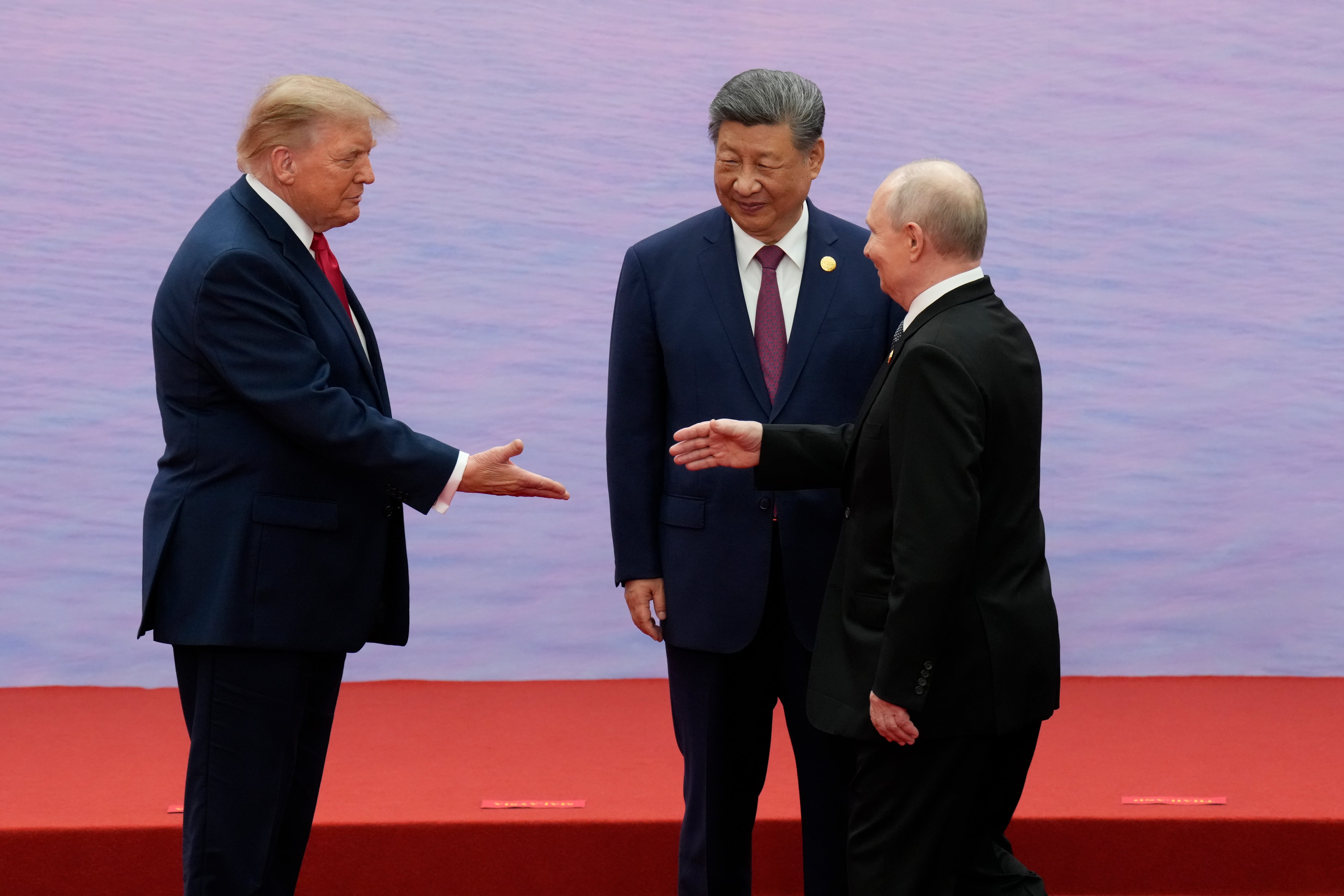
The recent meeting of American, Chinese, and Russian presidents in Shenzhen presents an unprecedented opportunity to address the global nuclear arms race. However, despite the historic nature of their gathering, there is little reason to expect that the leaders will immediately reach an agreement on reducing their nuclear arsenals.
The world is currently home to 13,400 nuclear weapons, and delivery systems are becoming increasingly sophisticated, thanks to artificial intelligence. Regional conflicts, such as those on the Korean Peninsula and in the Middle East, heighten the risks of miscalculation. Additionally, the expiration of the New Start Treaty in February has left the US and Russia without legally binding limits or verification measures on their strategic nuclear arsenals for the first time in over half a century.
China, while expanding its capabilities, is still far behind the US and Russia in terms of nuclear weapons stockpile. While China's position complicates future negotiations, it is essential to proceed with caution and not ignore the talks entirely. Recent tensions, such as the Iran war, add urgency to the situation, with the specter of proliferation and the threat of radiological weapons increasing.
The meeting should be viewed within the broader geopolitical context, as escalation involving a nuclear threshold state is a significant concern. While the Big Three may not determine the future of smaller countries, their decision-making on nuclear security is crucial. The world's multipolar nature means that individual charisma and mutual chemistry alone will not achieve denuclearization, but personal meetings and decisions are vital for long-term agreements.
Commitments to continue dialogue and establish working-level channels for arsenal transparency and crisis communication are practical steps forward. The proposed Track 1.5 and Track 2 dialogues, involving officials and scholars without binding governments, offer promising avenues for discussion. Ultimately, political will is the key to overcoming the challenges ahead, and Shenzhen marks the beginning of this essential endeavor.
Written by urgent.news from The National Business's reporting — not their text. Machine-written — may contain errors; check the original before relying on it.