Power in every form has an expiry date!
Whatever power you wield, either administrative or pollical, there is always an expiry date. For those who are in control of corporate organisations, there is always the day to step down. In the corridors of politics, terms end, or the people get fed up at a point. The post Power in every form has an expiry date! appeared first on Ghana Business News .
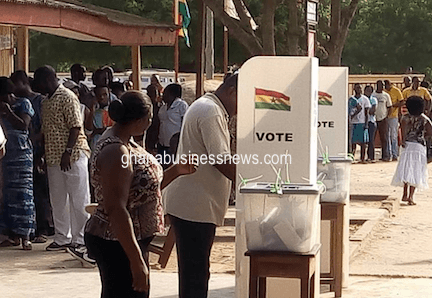
Every form of power, be it administrative or political, has an expiration date. Those who control corporations eventually step down from their positions. Political terms end, and public discontent can lead to the downfall of leaders. This is why the recent mid-term elections in the United States are a crucial lesson for politicians worldwide: citizens do not surrender their country to politicians, but merely grant them power.
The most alarming sound in politics is not the criticism of opponents, but the silence of citizens who feel their government has abandoned them. The upcoming U.S. mid-term elections in November 2026 have already revealed this reality. According to CBS News projections, Democrats will control both chambers of Congress starting in January 2027, with at least 54 Senate seats and around 256 seats in the House of Representatives.
However, these figures should not be considered final, as some races are still unresolved. Regardless, the projected shift in congressional control sends a warning that political dominance is not an indefinite entitlement. In Texas, CBS News reports that Democrat Gina Hinojosa defeated Republican Governor Greg Abbott, further emphasizing that political power is not a secure title.
For Ghana and other African nations, the key takeaway is not that American voters have shown them how to vote, but that no governing party, no matter how confident or well-equipped, owns the people's consent. Political office is a public trust, not private property. While Donald Trump retains the presidency, he does not possess an open mandate to advance his agenda.
A Democratic-controlled House can intensify oversight through hearings, investigations, and requests for records. A Democratic-controlled Senate can reject presidential nominees, including those for the federal judiciary. Together, the chambers can resist spending proposals and force negotiations over legislation. These powers are significant, but not unlimited.
Congressional investigations must comply with legal boundaries and may face disputes over executive privilege and enforcement. Ordinary legislation still requires presidential approval, unless Congress overrides a veto with a constitutionally required two-thirds vote in each chamber. Impeachment would not automatically remove a president, as the House can impeach, but the Senate would need to convict by a two-thirds majority of those present.
The likely outcome is not a powerless presidency, but a divided government, leading to slower legislation, harder bargaining, and greater scrutiny. Whether this results in constructive compromise or destructive confrontation will depend on the political choices made by both parties. Democrats must demonstrate that oversight can uncover facts and improve government, while Republicans must determine if their loyalty to a president takes precedence over their duty to their constituents.
The accountability demanded of government cannot become an excuse for irresponsible opposition. In Ghana, this lesson has already been learned. In December 2024, voters removed the ruling New Patriotic Party and returned John Dramani Mahama of the National Democratic Congress to the presidency. The NDC also secured a substantial majority in Parliament.
A November 2026 report by The Rio Times, based on Parliament's October membership listings, shows the NDC holding 185 seats out of 276, compared to 87 seats for the NPP and four independent members. This composition places the NDC just above the two-thirds threshold. However, current membership must be separated from election-night results and earlier election records, as disputed returns, subsequent elections, and changes in membership can alter the situation.
The precision of this information is crucial for responsible political reporting. Nevertheless, what is indisputable is the governing party's opportunity—and their accompanying responsibility. The 2024 Ghanaian election, which occurred amidst severe economic hardship, saw the ruling party suspend payments on much of its external debt, face inflation, currency depreciation, and undergo debt restructuring.
These challenges cost households heavily. In an interview with VOA's Paul Ndiho on December 13, 2024, Mahama explained that his campaign focused on the economy and employment, identifying these as the most critical issues for voters. While this assessment is based on opinion polls, it highlights the promises against which his administration should be evaluated.
The NDC cannot assume unconditional acceptance of everything the new government does. A mandate authorizes service, but it does not exempt scrutiny. Ghana's majority must continue to hold their government accountable. While the American and Ghanaian political systems are distinct, America's separation of the presidency from congressional membership differs from Ghana's constitutional requirement that a majority of ministers be appointed from among members of Parliament.
This arrangement creates a unique accountability challenge: while a large governing majority can pass legislation more easily, excessive party discipline can weaken oversight when executive power is at its peak. Ghana's Constitution does not treat Parliament as a mere ceremonial chamber. Article 103 grants parliamentary committees significant investigatory powers, allowing them to scrutinize the executive thoroughly.
Written by urgent.news from Ghana Business News's reporting — not their text. Machine-written — may contain errors; check the original before relying on it.