Parallels Desktop review
Improved graphics support with OpenGL 4.3 and AI functionality makes it the undisputed champion of VMs on MacOS
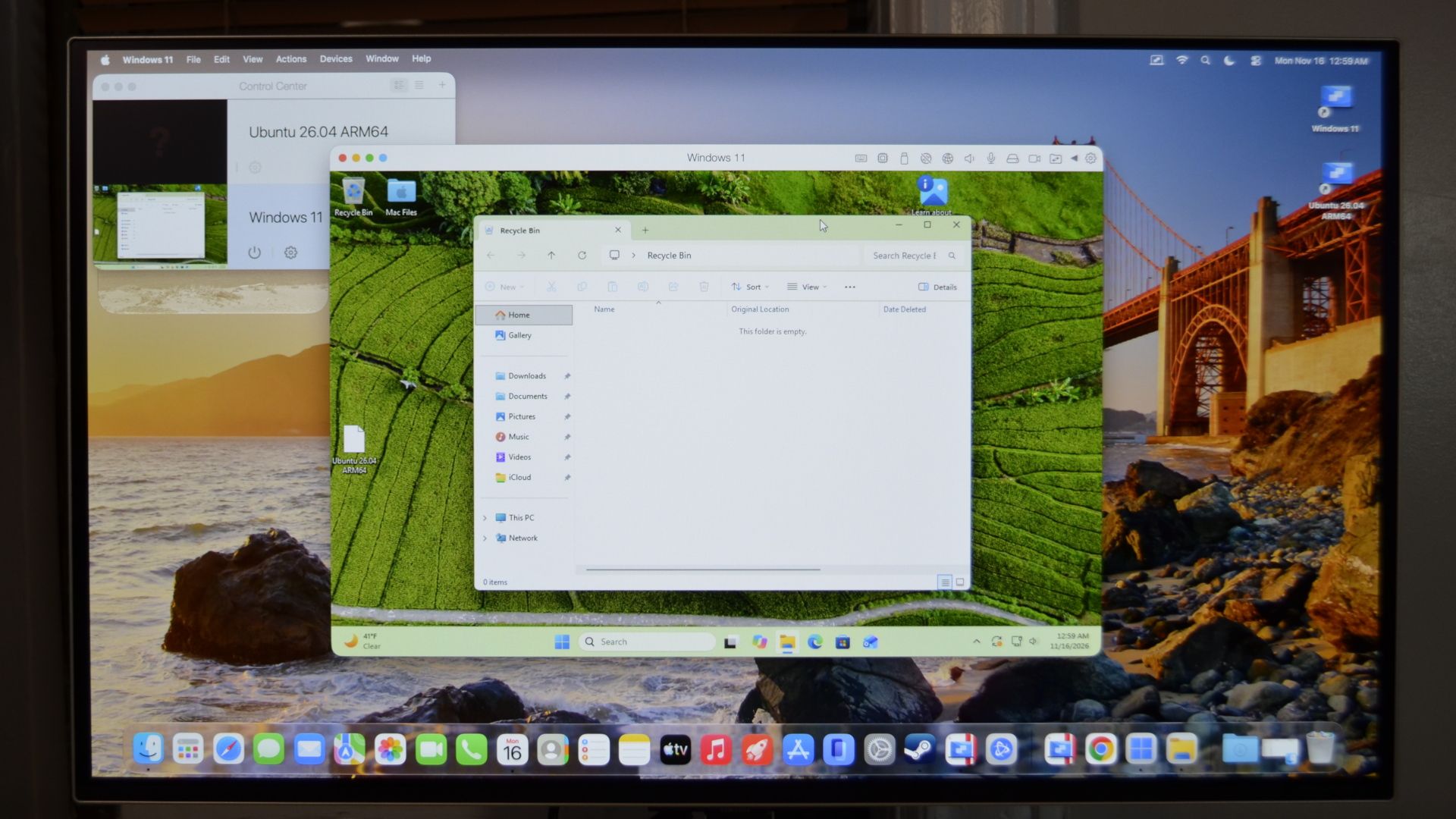
Parallels Desktop 27 is a virtual machine software that offers a solution for Apple users who need to run Windows software. The latest version brings some significant changes, including a complete rewrite of the graphics pipeline for the Apple Metal API, OpenGL 4.3 support, and a move to Apple Silicon-only. These updates have garnered praise from users, but the subscription-based pricing model has raised concerns.
Parallels 27 offers four different plans: Standard, Pro, Business, and Enterprise. The Standard plan is available as both an annual subscription and a one-time purchase, with the annual subscription priced at $99.99 (about £75 / AU$145) and the one-time purchase costing $219.99 (about £165 / AU$320). The Pro and higher plans require an annual subscription, starting at $119.99 (about £90 / AU$175) for Pro and $149.99 (about £110 / AU$220) for Business. Enterprise customers must negotiate a rate with Parallels' sales department.
The Standard plan is suitable for casual users, offering up to 4 virtual CPU cores (vCPUs) and 8GB of virtual RAM (vRAM). Upgrading to the Pro tier allows for 32 vCPUs and up to 128GB vRAM. Additional features, such as AI Agent Integration, disk and memory cleaner, system and performance monitoring, and screen capture and recording, are included with the Pro plan, while Business and Enterprise plans offer further enhancements like volume licensing, centralized license admin, and automated CI/CD workflows.
The most notable change in Parallels 27 is the discontinuation of Intel-powered Mac support, as the software is now designed for macOS 27, which is based on Apple Silicon. This means Intel Mac users will need to stick with Parallels 26. Additionally, Parallels 27 utilizes Windows on Arm by default, which may result in lower compatibility with Intel x86-based Windows VMs due to the need for emulation.
The rewritten graphics driver in Parallels 27 supports OpenGL 4.3, a feature highly requested by users. However, it remains limited to DirectX 11.1, so apps requiring DirectX 12 will not function properly. For optimal performance with OpenGL 4.3, users must ensure they have the latest version of Parallels Tools installed. Starting from Apple M4 systems or newer, Parallels also supports Apple's Scalable Matrix Extension instructions in both Windows and Linux environments, which can enhance AI workloads.
Despite the subscription-based pricing model, Parallels 27 remains an attractive option for many users, thanks to its ease of setup and installation. Compared to other virtual machine solutions, Parallels 27 offers a straightforward process that requires only a few clicks and about 15 minutes of installation time. Other features, such as shared folders and seamless drag-and-drop functionality, make file transfer between the host and guest OS simple.
Written by urgent.news from TechRadar's reporting — not their text. Machine-written — may contain errors; check the original before relying on it.