KNUST launches AI winter school to advance responsible healthcare innovation in Africa
The Kwame Nkrumah University of Science and Technology (KNUST) has launched a winter school focused on developing responsible, African-led artificial intelligence solutions for healthcare, with researchers already testing AI tools to support stroke diagnosis using brain scans from Ghanaian patients. The RAIL-DATAIA Winter School, organised by the university’s Responsible Artificial Intelligence…
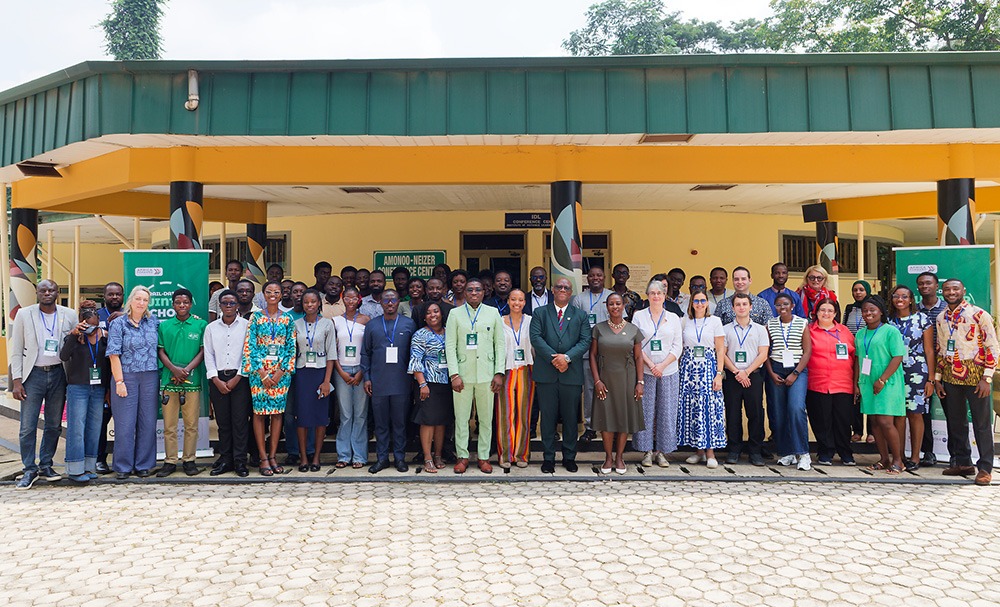
The Kwame Nkrumah University of Science and Technology (KNUST) has launched a winter school aimed at fostering responsible, African-led artificial intelligence solutions for healthcare. The RAIL-DATAIA Winter School, organized by the university's Responsible Artificial Intelligence Lab (RAIL), gathers researchers, students, health professionals, and international partners from Ghana and France to explore practical AI applications in healthcare.
This initiative is part of the Africa Forward AI Clusters program, a collaboration between African universities and French institutions to bolster AI research, training, and entrepreneurship across the continent.
RAIL Scientific Director Professor Jerry John Kponyo emphasized that AI should complement rather than replace healthcare professionals, enabling them to serve more patients, work more efficiently, and make better clinical decisions. He highlighted Ghana's alarming doctor-to-patient ratio of about one to ten thousand, underscoring the need for technological assistance in addressing the pressure on the health system.
Kponyo also mentioned that AI could support triage, early disease detection, remote consultations, and clinical decision-making, particularly for patients requiring specialist care over long distances.
The university's researchers are currently testing AI applications on brain scans from Ghanaian patients to aid stroke diagnosis in hospitals with limited radiologist access. Kponyo stressed that AI systems trained on data reflecting local populations are crucial for effective healthcare applications. He called for a focus on fairness, transparency, accountability, and the protection of patients' privacy and dignity in the development of health technologies.
Kponyo advocated for African-led AI development, emphasizing the importance of building the capacity to create and govern solutions that meet local priorities.
The Africa Forward AI Clusters initiative, involving six African countries—Kenya, Benin, Ghana, Morocco, Egypt, and South Africa—aims to strengthen the continent's AI research, training, and entrepreneurship capabilities. Representing the French Ministry of Higher Education, Research, and Space, Nathalie Nilsson-Thiello stressed the importance of balanced partnerships, involving young people, and engaging the public and private sectors to ensure the collaboration's success.
Written by urgent.news from MyJoyOnline Ghana's reporting — not their text. Machine-written — may contain errors; check the original before relying on it.