Keine Wunderbeere: Acai-Beeren: Was am Superfood-Hype dran ist
Als gefrorenes Püree in der Bowl, als Pulver im Smoothie: Acai-Beeren haben ihre Fans. Warum sie es mit dem vermeintlichen Superfood aber lieber nicht übertreiben sollten.
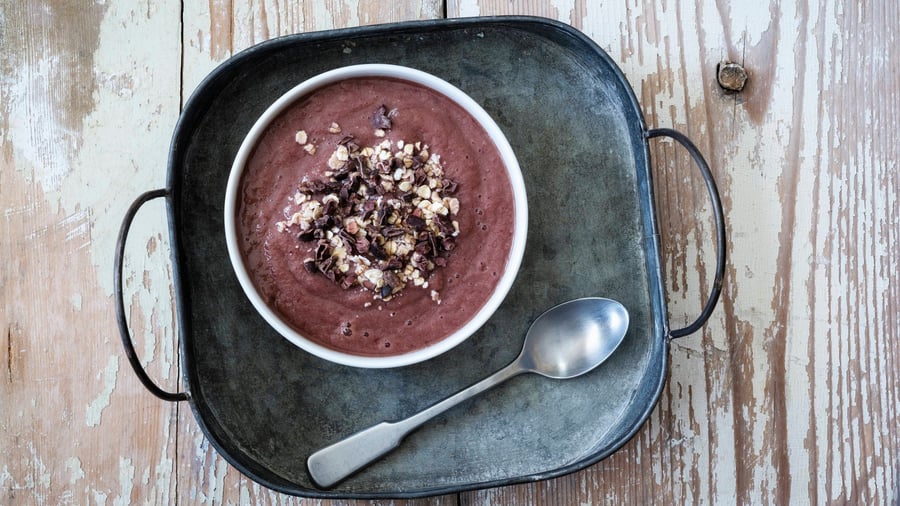
Acai bowls have been a popular food trend for years, with long lines forming outside stores to get a taste of the deep purple purée topped with granola or nut butter. The aesthetic appeal of the acai bowl, coupled with the earthy, slightly cocoa-like flavor of the acai berries, has fueled the hype. Acai berries are considered superfoods, purported to be particularly beneficial for health.
The key to their vibrant color lies in anthocyanins, which are secondary plant compounds. Daniela Krehl, an nutrition expert from the Verbraucherzentrale Bayern, explains that the acai berry is not a typical berry, but rather a small fruit growing on a palm tree, primarily found in the tropical Amazon region. Due to the delicate nature of the fruit, it is difficult to transport across the globe and is mostly available in the form of powder, juice, capsules, or deep-frozen purée.
Regardless of the form, the dark violet color is always striking, a result of the anthocyanins. Krehl adds that acai berries are also rich in vitamin C and E, as well as fiber, minerals, and unsaturated fats. However, there is a lack of scientific evidence to support the numerous health claims often made about acai berries. According to Krehl, attributing specific health benefits solely to individual components is not advisable.
Additionally, health-related claims about acai berries are prohibited by the Health Claims Regulation, meaning manufacturers cannot make any health promises about their products. While acai berries are not a miracle food, they are still considered healthy. Consumer protection advocates recommend consuming acai products in moderation, as they naturally contain higher levels of manganese, which can interfere with iron absorption in the body.
This is particularly concerning for children, vegetarians, and individuals with iron deficiency. Furthermore, acai berries are almost half fat, making them significantly more calorie-dense than local berries. Lastly, it's worth noting that the health benefits of anthocyanins are not exclusive to acai berries. They can also be found in locally-sourced fruits such as blueberries, raspberries, lingonberries, blue grapes, and red cabbage, often at a lower cost.
Written by urgent.news from Handelsblatt's reporting — not their text. Machine-written — may contain errors; check the original before relying on it.