How to Structure AI Adoption Teams and Measure Software Delivery Improvements
Learn how engineering leaders can structure AI adoption teams, sustain AI tooling, and measure improvements in software delivery after rollout.
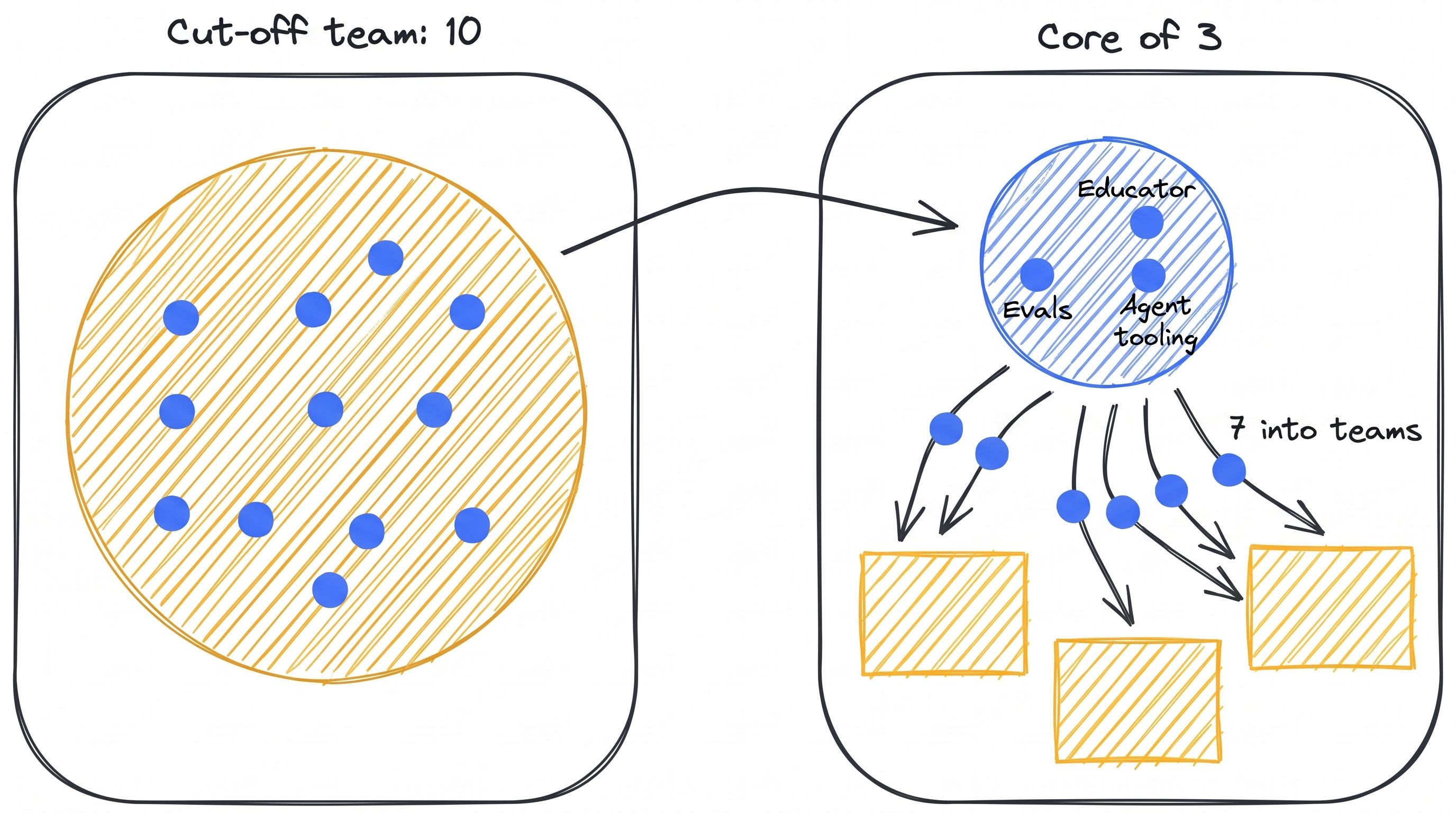
To structure AI adoption teams effectively, you need to borrow a small group of dedicated individuals for a period of time. After their four-month stint, they return to their original product teams, allowing the gains they make to compound over time. However, this approach is flawed because AI technology evolves rapidly, requiring a permanent team focused on it rather than a temporary group that returns to their prior tasks.
AI transformation is not a one-time project with a defined end date. It involves measuring the share of real product work that teams accomplish with AI tools, alongside the time it takes for a merged change to reach production. While better tooling is necessary, it's not sufficient if people do not utilize it. A new version of Java will not benefit anyone until someone ships a product using it.
A VP of Engineering, referred to here as Tomas, secured approval for an AI transformation initiative. The post that follows the decision focuses on who will perform the work and how success will be measured. The misconception that AI transformation can be managed by simply removing ten people from product work for a few months is misguided.
AI moves too quickly for a team of this size to maintain ongoing support. Instead, a core team of three should be established: one focused on education and staying updated on trends, another to run evaluations and experiments, and a third to manage and deploy the agent tooling. After a few months, the remaining seven team members should return to their product teams, bringing with them the knowledge and experience of working with AI.
Budgeting is essential for AI adoption. Internal communication, workshops, and external assistance should be allocated towards fostering AI adoption, rather than simply investing in the tooling itself. Many employees may not be AI-native, so it's crucial to identify a handful of individuals who can serve as the foundation for AI adoption within the organization.
Written by urgent.news from HackerNoon's reporting — not their text. Machine-written — may contain errors; check the original before relying on it.