Exclusive-Trump administration weighs forcing US firms to disclose Chinese AI use
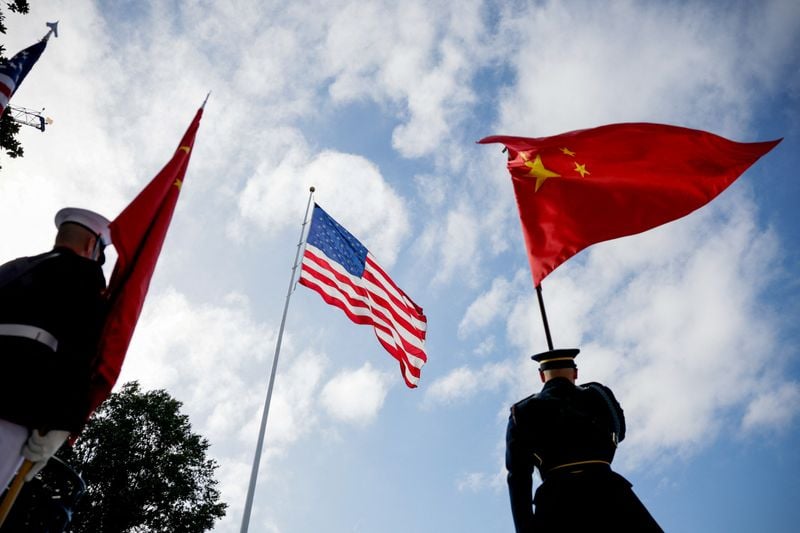
The Trump administration is contemplating a move to require US firms to publicly disclose their utilization of Chinese AI models, aiming to curb reliance on the technology without enacting new restrictions that might offend the industry or Beijing, according to three sources familiar with the matter. The Treasury Department and the White House Office of Science and Technology Policy (OSTP) have deliberated on the proposal, which would mandate companies like Airbnb to publicly state their reliance on Chinese AI models on their websites.
It remains uncertain whether the idea is gaining traction within the administration or if it would culminate in a formal rulemaking process should it progress. The announcement, first disclosed by Reuters, highlights an emerging effort within the administration to counter the proliferation of potent Chinese open weight models, a concern echoing throughout the government.
Open weight models make their core components accessible to anyone, enabling them to download and modify them as per their needs. This proposal also suggests a strategy to dissuade the use of Chinese AI models through a "name and shame" campaign, all while maintaining a broader anti-regulation policy on AI. The White House, Treasury Department, Alibaba, and the Chinese Embassy in Washington have not yet commented on the matter, nor did Airbnb when asked for their stance.
The consideration comes at a time when revelations about Nvidia CEO Jensen Huang's alleged affair with a Chinese spy have reignited calls in Washington for a firmer stance against China. These revelations have cast a spotlight on instances where Nvidia AI chips have allegedly been smuggled to China without any repercussions, thereby intensifying pressure on the Trump administration to take action against Chinese tech threats.
Open-weight Chinese models are becoming increasingly popular among US companies due to their affordability compared to proprietary AI tools from leading US labs OpenAI and Anthropic, and their adequate performance. However, Chinese officials worry that Beijing is leveraging these models, such as Moonshot AI's Kimi, DeepSeek, and Qwen, to ensnare US companies into dependence on Chinese AI.
Secretary of the Treasury Scott Bessent suggested in July that the Trump administration could sanction Chinese AI firms for intellectual property theft via distillation of American models. Distillation involves training smaller AI models using the output of larger ones to reduce the costs associated with training a potent new AI tool.
This sentiment was echoed by Michael Kratsios, OSTP director, who accused China of intellectual property theft on an "industrial scale" in April, sparking a State Department-led initiative to spotlight such activities to foreign counterparts. The issue has also caught the attention of Congress, with Republican US Representatives Andrew Garbarino of New York and John Moolenaar of Michigan, who lead the House Homeland Security Committee and the House select committee on China, respectively, initiating an investigation into American companies' use of Chinese AI this year.
They had previously sent letters to Airbnb, Anysphere, and DoorDash, among others, over their use of Chinese AI models.
Written by urgent.news from Investing.com's reporting — not their text. Machine-written — may contain errors; check the original before relying on it.
This story
This is one outlet's version. Read the fullest account.
- Chinese AI firms tap US models as chip restrictions tighten techinasia.com