‘Death is near’: Inside the hoax bomb threats that rattled Europe’s schools and airports
In the two weeks after emailed threats on Oct. 19, the hoaxers appear to have kept a low profile. Then, they came roaring back.
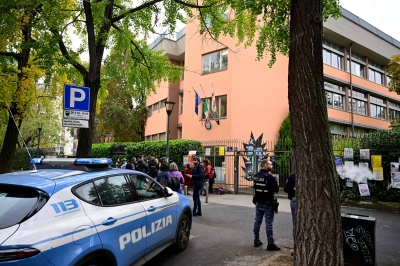
An unprecedented surge of bomb threats has left the European Union grappling with a security challenge of significant proportions. The threats, believed to be originating from anonymous sources, have struck various forms of media, over 50 flights, thousands of schools, and an entire cruise ship, causing widespread disruption and raising concerns about vulnerability to such attacks.
These hoaxes have exposed the fragility of public infrastructure in the face of anonymous, difficult-to-trace communications and have emphasized the necessity for a more cohesive response strategy at the European level. The impact of these threats varied across the nations, with some countries opting to divert flights and others, such as Hungary and France, taking more aggressive measures such as deploying fighter jets to escort disrupted passenger planes.
In response, there is mounting pressure on European countries to adopt a more streamlined, bloc-wide security framework to address these incidents. The CEO of budget Hungarian airline Wizz Air, József Váradi, recently called for harmonized security procedures, suggesting the potential creation of a central body to manage such incidents.
However, he acknowledged the complexity of the issue, noting that the sovereign nation state concept poses significant obstacles to a coordinated approach. Grégoire Roos, a director at the London-based Chatham House think tank, highlighted the inadequacy of current national security responses, advocating for the establishment of a continental standard for threat assessment.
He argued that a more unified response would depend on corroborating intelligence and the specific circumstances of each incident. Roos pointed out that the current 'scrambled response' undermines effectiveness, prolonging reaction times and exacerbating public anxiety. The financial implications of these hoaxes are substantial, as a single email can trigger extensive security measures, flight diversions, or public evacuations, placing a heavy burden on public resources and disrupting everyday life.
School evacuations, for instance, were a direct response to threats targeting thousands of educational institutions in Italy, with Prime Minister Giorgia Meloni urging parents to remain calm while balancing the need for safety.
Written by urgent.news from Egypt Independent's reporting — not their text. Machine-written — may contain errors; check the original before relying on it.
This story
This is one outlet's version. Read the fullest account.