Deadly shootings renew focus on SA’s gun violence
Two attacks in Sweetwaters and Atteridgeville have left 17 people dead, prompting renewed concern about illegal firearms, criminal markets and targeted violence.
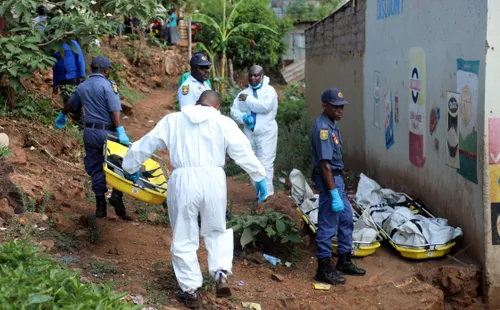
Two mass shootings in KwaZulu-Natal and Gauteng on Sunday night claimed the lives of 17 people, sparking concern among crime experts about a pattern of systemic violence in South Africa. These incidents are believed to be the result of competition in criminal markets, targeted revenge, and the use of illegal firearms. The Global Initiative Against Transnational Organised Crime recorded 45 separate mass killings linked to criminal markets between January and September 2026, resulting in at least 210 deaths and 79 injuries.
In Mabane Section, near Pietermaritzburg, police discovered eight men with gunshot wounds inside a vehicle, all killed after a shooting occurred. The motive for this attack remains unclear as investigators gather evidence. In Gauteng, nine individuals were killed in Jeffsville informal settlement when police responded to a mass shooting between 10 pm and 11 pm.
The victims, six men and three women, were found dead inside a shack with gunshot wounds. No arrests have been made yet, but the Gauteng Serious and Violent Crimes, Murder and Robbery Unit is investigating the case.
Experts warn that most mass murders are well-planned, often involving multiple shooters with assault rifles and pistols targeting taverns, house parties, hostels, or transportation. These shootings are frequently tied to competition over criminal markets, such as illegal mining, extortion, taxi routes, and drug trafficking. In some instances, the violence is linked to political disputes. Criminologists emphasize that these incidents are increasingly planned and systematic, rather than random acts of aggression.
Law enforcement in KwaZulu-Natal is making progress, but the prevalence of such incidents is on the rise, particularly in provinces with high rates of violence. Gun Free South Africa notes that the country experiences an average of 30 people being shot dead and 43 injured daily. Survivors often face long-term consequences, including treatment, lost income, or permanent disability.
The executive director of Gun Free South Africa, Dr. Stanley Maphosa, states that South Africa is experiencing a surge in mass shootings, highlighting the need for comprehensive crime prevention strategies specific to local contexts.
Written by urgent.news from IOL's reporting — not their text. Machine-written — may contain errors; check the original before relying on it.