Brazilian agtech opens markets with innovation
Krilltech has developed a plant solution that combines increased productivity with more efficient water use. A finalist for an award in the UAE, the company has already entered seven international markets and is expanding into others. The post Brazilian agtech opens markets with innovation appeared first on ANBA News Agency .
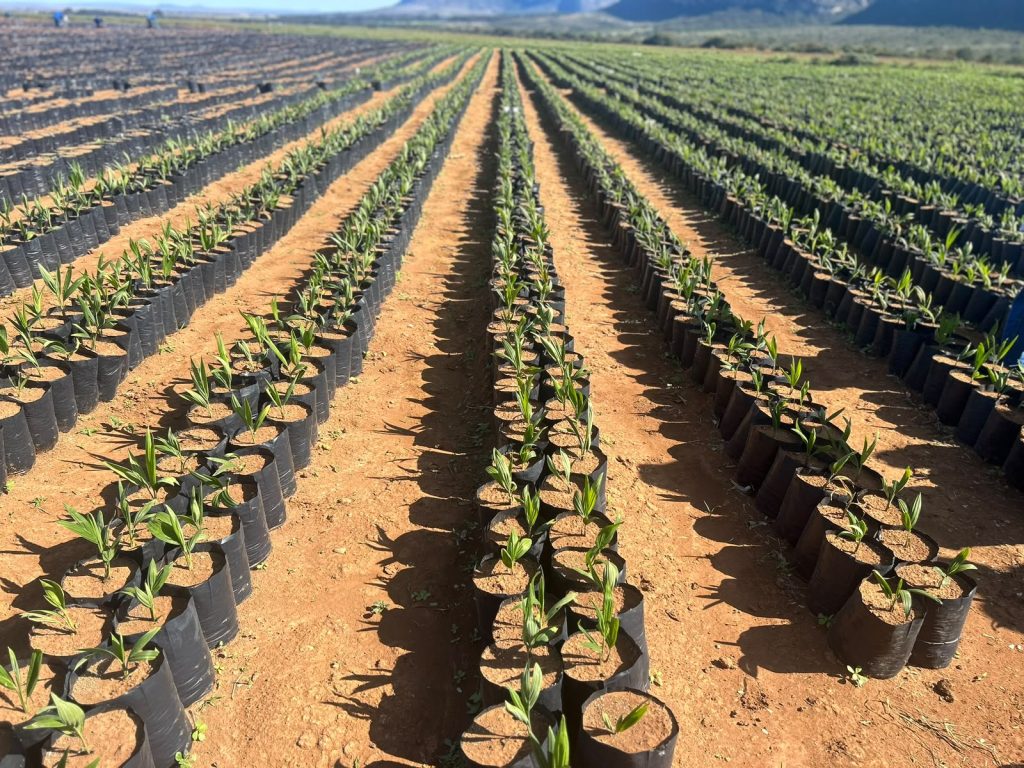
São Paulo — Brazilian agtech company Krilltech is expanding its presence in the international market to enhance agricultural plant performance. Founded in Brasília, Krilltech has already exported to seven countries and is set to enter new markets. The company is a finalist in the United Arab Emirates (UAE) competition focused on water-saving technologies for agriculture without sacrificing crop productivity.
Krilltech's flagship product, Arbolina, improves plant productivity and water-use efficiency by utilizing carbon nanomaterials (carbon dots) to stimulate specific plant functions. CEO and founder Marcelo Rodrigues, a PhD in Chemistry and associate professor at the University of Brasília, explains that Arbolina acts like a high-performance athlete, enhancing the plant's potential through proper nutrition and physiological stimulation.
Krilltech has served growers in 18 Brazilian states and foreign markets such as Uruguay and Peru. In Europe, including Spain, Portugal, France, Italy, and Poland, sales were made with the help of a commercial partner. The company is currently in the final stages of registration and testing in Ecuador, going through registration in South Africa, and is in advanced talks with Japan and England.
Arbolina has already been used on over 40 crops in Brazil, with coffee, tomatoes, and vegetables accounting for the largest share of use. In a study with Embrapa, Krilltech observed a 10% reduction in irrigation for tomatoes and a 7% increase in productivity. Rodrigues envisions expanding into the Middle East and Asia, particularly the UAE, where Krilltech is a finalist in the Al Miyah Challenge for Agriculture.
The company plans to find a commercial partner for product distribution, conduct further field tests in the desert environment, and build a factory in an Arab city to facilitate business. High temperatures pose a challenge for Arbolina, but Rodrigues notes that treated plants maintain photosynthesis effectively up to 41°C, while plants without the product show a decline around 35°C.
This potential to adapt crops to climate change and heat and water scarcity conditions aligns with the challenges faced in Brazil and the UAE.
Written by urgent.news from ANBA News Agency's reporting — not their text. Machine-written — may contain errors; check the original before relying on it.