Alzheimer’s Disease and Aging Linked to Changes in the Hypothalamus
Researchers combined measurements from brain images and single cell transcriptome maps to build a resource, HypoAD, as an atlas of the human hypothalamus in aging and AD, which they have made available to the research community. The post Alzheimer’s Disease and Aging Linked to Changes in the Hypothalamus appeared first on GEN - Genetic Engineering and Biotechnology News .
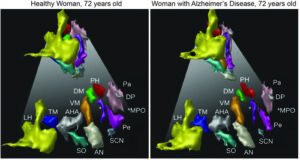
Many individuals with Alzheimer's disease (AD) initially exhibit difficulties with sleep, disruptions to daily routines, and alterations in metabolism and stress hormones. These functions are largely regulated by the hypothalamus, a region situated at the base of the brain. A research team from the Buck Institute for Research on Aging has discovered that the hypothalamus does not merely passively observe the progression of Alzheimer's, but actively undergoes changes in its structure and function as early as the onset of the disease.
To investigate these alterations, the researchers combined brain imaging data and single-nucleus RNA sequencing to develop a comprehensive resource called HypoAD, an atlas of the human hypothalamus in aging and AD, which is now accessible to the scientific community.
The study, published in Nature, revealed that while the overall size of the hypothalamus remains relatively stable with age, specific sub-regions within it display varying degrees of change. The lateral hypothalamus, which plays a crucial role in regulating sleep and circadian rhythms, experienced a reduction in volume with advancing age.
Conversely, other regions such as the SCN (suprachiasmatic nucleus), ARC (arcuate nucleus), and DMH (dorsomedial hypothalamic nucleus) expanded in size. These findings, which have not been previously documented, highlight the intricate, cell-type-specific alterations occurring within the hypothalamus during both aging and early stages of Alzheimer's disease.
Written by urgent.news from GEN Biotechnology's reporting — not their text. Machine-written — may contain errors; check the original before relying on it.
This story
This is one outlet's version. Read the fullest account.
- Israeli man facing early-onset Alzheimer's develops potential treatment for Parkinson's disease jpost.com
- Type-2 diabetes may raise Alzheimer’s risk by 53%, study finds freemalaysiatoday.com
- Plasma biomarkers of Alzheimer's disease reveal conserved features of age-related neurodegeneration in chimpanzees and humans biorxiv.org
- The hypothalamus is not a bystander in Alzheimer's disease medicalxpress.com
- New blood test tracks progression of Alzheimer’s disease english.ajel.sa