AI Is Supercharging Cyberattacks, But Are Indian Enterprises Ready?
It has been a week of outages. From big tech giants like Microsoft and Apple to JPMorgan Chase and the…
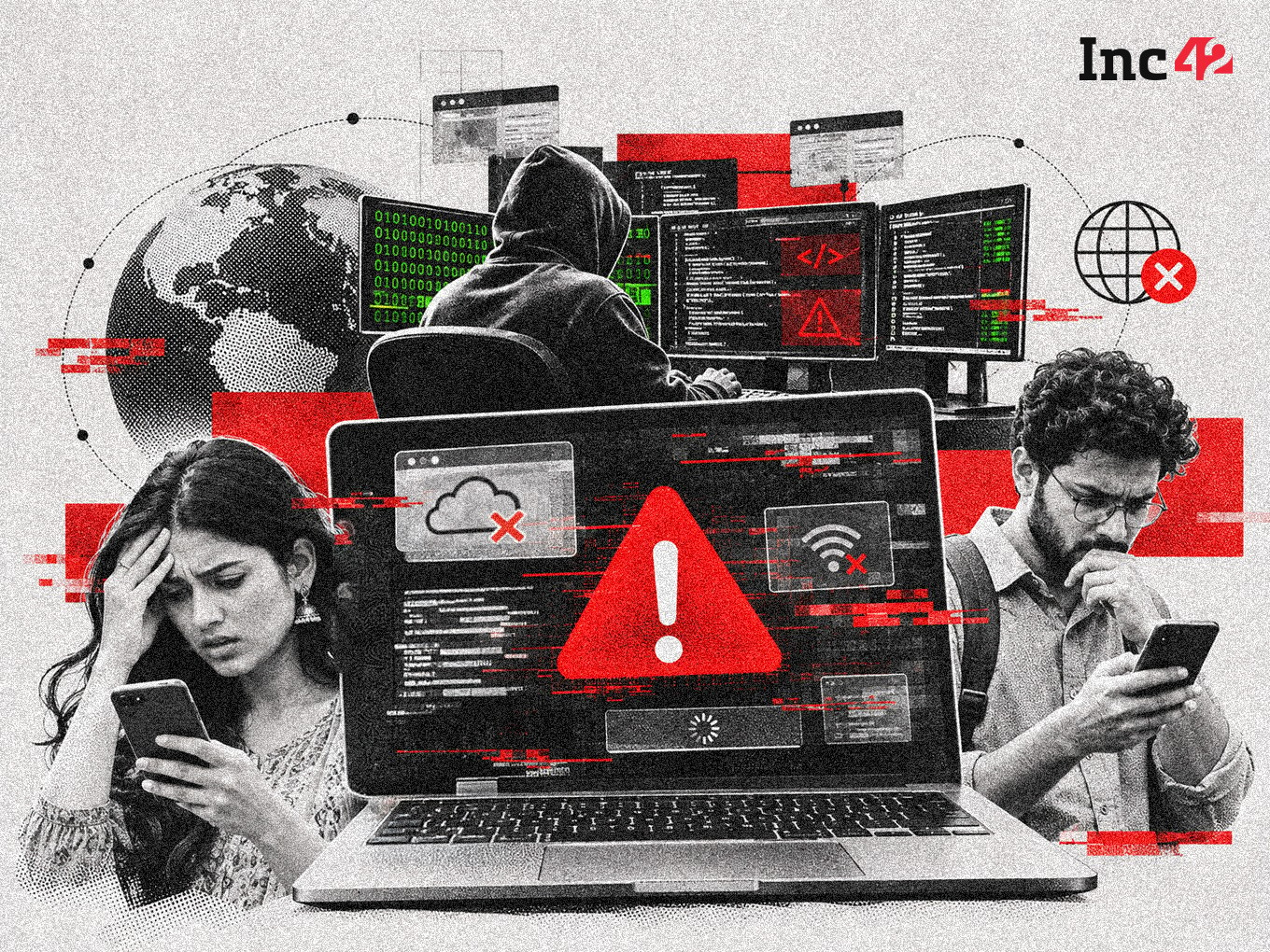
India's digital landscape has been shaken by a series of recent cyberattacks targeting major tech companies and government agencies. While these incidents have not been conclusively linked to AI-assisted attacks, cybersecurity experts warn that artificial intelligence is significantly accelerating the threat landscape.
Nikesh Arora, CEO of Palo Alto Networks, stated that the recent outages were indicative of the growing risk AI poses to enterprise cybersecurity. He urged organizations to test their infrastructure across multiple AI models and revamp their security operations centers to keep pace with the evolving threat.
AI is making it easier for hackers to automate reconnaissance, generate exploit code on the fly, and probe thousands of targets simultaneously. This has drastically compressed the time between discovering a vulnerability and weaponizing it. With new vulnerabilities surfacing daily, organizations struggle to defend against the rapid pace of attacks.
Experts highlight three key areas where AI is intensifying cyber threats: speed, scale, and realism. Tasks that once took days or months can now be completed in seconds, minutes, or hours. AI-generated phishing emails are more convincing, and deepfakes enable attackers to impersonate executives and issue fraudulent instructions.
Larger enterprises face additional challenges with "shadow infrastructure" – untracked systems that can be exploited by AI-assisted attackers. Third-party vendors, often relying on less secure service providers, become attractive targets. The concentration risk is exacerbated if an attacker can compromise a technology provider serving numerous organizations.
Within enterprises, AI is inadvertently expanding the attack surface. Developers can rapidly generate code with minimal scrutiny, increasing the likelihood of critical flaws slipping into production. Attackers leverage AI to probe vulnerabilities, reverse-engineer applications, and map attack paths swiftly.
The convergence of AI with day-to-day business operations poses new vulnerabilities. Enterprises are integrating AI into customer service, processing refunds, generating code, and accessing internal databases. Independent adoption of unapproved "shadow AI" tools by employees further complicates security efforts.
To mitigate these risks, experts recommend a shift from traditional perimeter defense to a focus on sovereign resilience and system modernization. Indian enterprises must prioritize addressing vulnerabilities in production code, implementing strict visibility and governance over AI tools, and ensuring AI systems operate within defined boundaries.
Written by urgent.news from Inc42's reporting — not their text. Machine-written — may contain errors; check the original before relying on it.