105 major housing markets to enter 2027 above this key inventory threshold
Want more housing market stories from Lance Lambert’s ResiClub in your inbox? During the Pandemic Housing Boom, housing demand was running so hot—and homes sold so quickly—listings barely even registered as active inventory. Indeed, in October 2021, there were only 565,707 active homes for sale, according to Realtor.com ’s data series. That was a staggering…
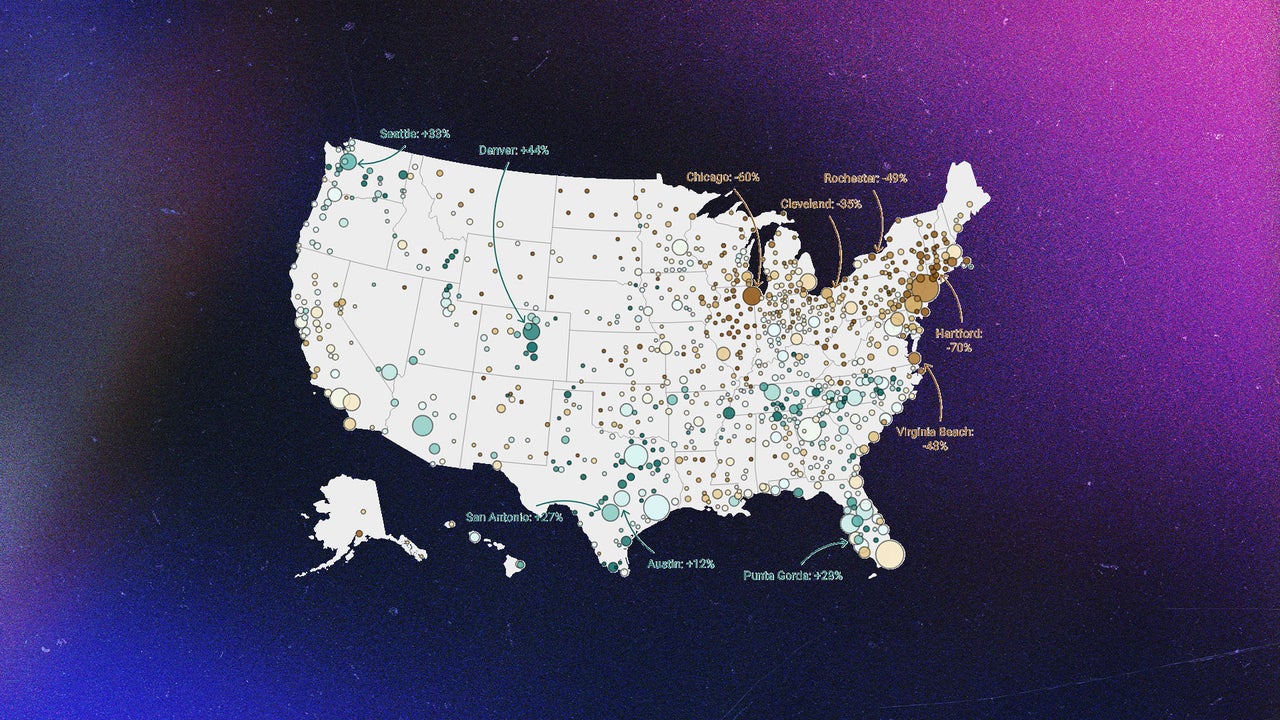
105 of the 200 largest U.S. housing markets entered 2027 with active inventory exceeding pre-pandemic levels set in October 2019, according to recent data. This shift marks a significant improvement from October 2021 when only 565,707 homes were for sale, a decrease of 53.8% compared to October 2019's 1,208,311 listings. In October 2026, active homes on the market reached 1,183,520, representing a mere 2.1% drop from the pre-pandemic October 2019 levels.
Beyond population growth, the sharp decline in for-sale market activity post-pandemic boom has contributed to the surge in inventory. This phenomenon is not unique to larger markets but is seen across the nation as various factors such as deceleration in domestic migration, oversupply of new construction, and shifting affordability preferences collectively drive a larger supply-demand equilibrium shift.
Looking ahead, by 2032, comparing active inventory to 2019 levels will be less relevant due to changes in market size. To counteract the metric's diminishing relevance, ResiClub is now comparing active inventory per 1,000 households instead. Despite this adjustment, the general trend remains: housing markets with inventory close to pre-pandemic levels have witnessed weaker home price growth, while those with significantly lower inventory have experienced stronger price appreciation.
Soft housing markets, where buyers have more leverage, are mainly found in the South and Mountain West regions, which were among the top pandemic boomtowns and have since faced challenges due to oversupply of new homes.
Written by urgent.news from Fast Company's reporting — not their text. Machine-written — may contain errors; check the original before relying on it.