Strengthening the competitiveness of Indonesia's textile industry
The textile and textile products (TPT) industry employs approximately 3.96 million workers, nearly one-fifth of the total manufacturing workforce, and attracted investment of Rp 20.2 trillion (US$1.1 billion) in 2025.
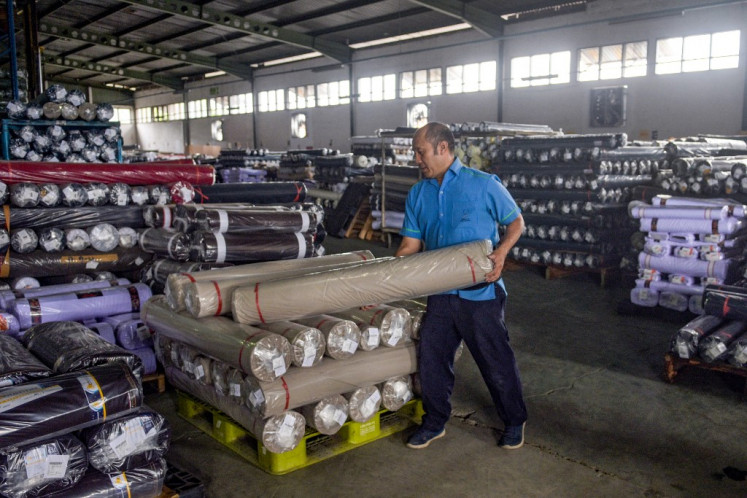
Indonesia's textile and textile products industry employs nearly 4 million workers and attracted Rp 20.2 trillion ($1.1 billion) in investment in 2025. This strategic sector plays a crucial role in the nation's manufacturing landscape, exporting $11.98 billion in goods with a $2.77 billion trade surplus. However, the industry faces challenges, such as competition from other producing countries, shifting global demand patterns, and geopolitical dynamics, which have resulted in lagging growth and rising wages eroding cost competitiveness.
Additionally, the industry relies on imported raw materials, making it vulnerable to currency fluctuations and illegal imports.
Despite these challenges, opportunities exist to bolster the industry's performance and global standing. The ongoing trade tensions between the United States and China may prompt global companies to diversify production locations, potentially positioning Indonesia as an alternative production base. The upcoming Indonesia-European Union Comprehensive Economic Partnership Agreement (IEU-CEPA), set to commence in January 2027, will grant zero-tariff access for Indonesian textile products to the EU market, contingent upon meeting rules of origin and green product and industry standards.
Furthermore, the government's plan to establish a state-owned textile enterprise through the Danantara fund, focusing on an integrated upstream-to-downstream industrial area, could bolster the sector.
To fully capitalize on these opportunities, strategic and integrated measures are necessary. First, enhancing the investment climate to attract foreign direct investment (FDI) is crucial. This includes ensuring legal and regulatory certainty, simplifying licensing processes, offering targeted incentives, and providing competitive infrastructure and energy supply.
FDI can bring production facilities, advanced machinery, and access to international markets, creating new export opportunities. Knowledge transfer through partnerships with domestic businesses, such as joint ventures, can also strengthen the industry by pooling capital, sharing technology, expertise, and market networks, while fostering local involvement in operations.
Second, the industry should transition from being merely a manufacturer to a creator and owner of brands. Many domestic textile companies have limited their profits to the production stage, while value generated from design, marketing, and customer relationships benefits brand owners. Encouraging a shift to a "create and own" model requires investment and innovation to strengthen Indonesia's position in the global value chain.
Third, consistent investment in machinery modernization, production technology, and research and development (R&D) is essential. R&D can drive innovations in design, new materials, and more efficient production processes, while also helping companies understand consumer trends to create products that compete on quality and distinctiveness, not just price.
Strengthening human resource capabilities through vocational training and skills certification can further increase value added and competitiveness in the global market.
Lastly, enforcing trade remedy instruments like safeguard duties and anti-dumping duties must be complemented by stricter oversight. These measures can protect domestic industries from unfair competition, ensuring a level playing field and fostering a more resilient textile sector. By implementing these strategic measures, Indonesia can enhance the competitiveness of its textile industry, leveraging its strategic position in global supply chains and contributing to the nation's economic development.
Written by urgent.news from The Jakarta Post's reporting — not their text. Machine-written — may contain errors; check the original before relying on it.
This story
This is one outlet's version. Read the fullest account.
- Indonesia urges strengthening of ASEAN crisis management mechanisms en.antaranews.com