States Must Enforce Noise Pollution Rules
High ambient noise is a global issue, but Indian cities stand on a depressingly weak footing when it comes to acting against noise pollution. It is welcome, therefore, that the Bombay High Court has taken up the matter on a petition seeking enforcement of the 55 decibel limit—dB(A)—for daytime noise at construction sites in Mumbai and called for strict compliance by the authorities. It is useful…
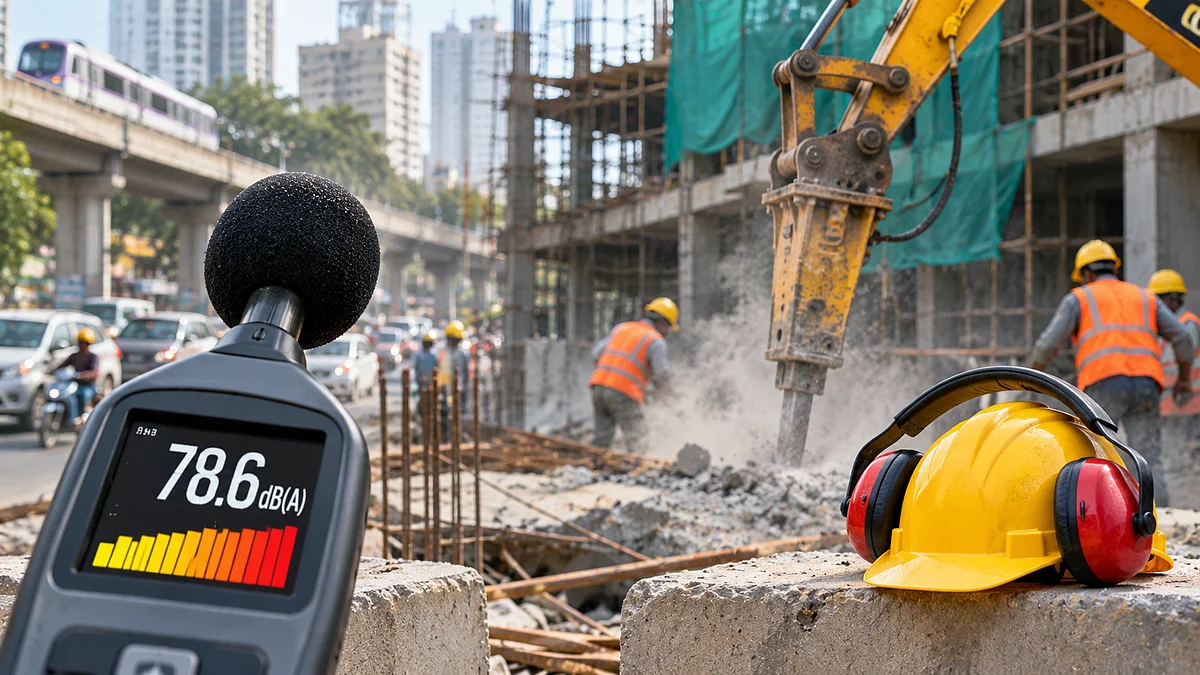
High ambient noise is a global issue, yet Indian cities struggle to enforce noise pollution regulations. The Bombay High Court recently addressed this matter by petitioning for strict compliance with the 55 decibel limit—dB(A)—for daytime noise at construction sites in Mumbai. Researchers have recorded average urban noise levels of 70 dB(A), which can rise to 80 dB(A) or higher due to continuous vehicle honking.
Prolonged exposure at these noise levels has been linked to negative effects on cardiovascular health, including stress and sleep disturbances. Similar workplace noise levels are prevalent in construction zones, where outdated or poorly maintained machinery often disregards the law. The 45 dB(A) limit for night-time noise is also frequently ignored by large construction projects, like Metro Rail.
The court emphasized that while the law is clear, enforcement remains inadequate, warning against "paper compliance" by authorities and construction companies. Cities must take this ruling as a call to action against noise pollution from vehicular traffic, construction, and unauthorized loudspeaker usage. Chronic noise exposure, combined with loud headphone use, may lead to significant hearing deficits, particularly among youth.
In particular sectors, like mining, saw milling, metalworking, grinding, and ginning, occupational noise-induced hearing loss is a major public health concern. A study in an industrial unit found that 86% of workers experienced hearing impairment due to exposure to noise levels ranging from 89 to 106 dB(A). Moreover, many urban groups with high noise exposure, such as transport crews, traffic police, and road-facing businesses, are unaware of the risks associated with chronic noise exposure.
Some countries, like Germany, have implemented strict noise regulations, including restrictions on homeowners' use of vacuum cleaners and mixer grinders based on the time of day. It is crucial for India to recognize noise as a public health problem rather than merely a nuisance. The Bombay HC order treats noise reduction as a social determinant of health, urging construction industries to comply across all cities.
Implementing acoustic barriers around worksites, upgrading machinery with updated mufflers, and replacing outdated equipment can help address the issue. Until these measures are enforced, the law on noise pollution remains ineffective.
Written by urgent.news from Free Press Journal's reporting — not their text. Machine-written — may contain errors; check the original before relying on it.