Singapore in damage control after Nvidia scandal exposes China loophole
SINGAPORE is working to maintain its reputation as a trusted business hub, tainted by allegations that Chinese companies had exploited it to gain access to top-end AI chips despite US export restrictions.
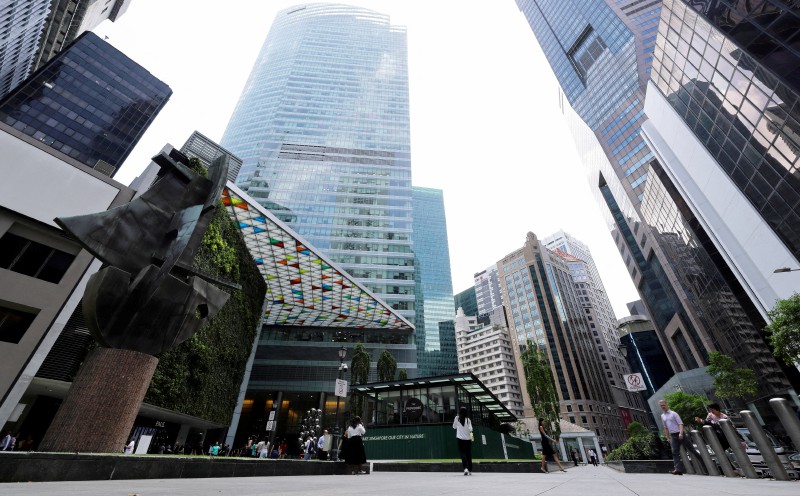
Singapore is striving to uphold its reputation as a trusted business hub, despite allegations that Chinese companies took advantage of the city-state to gain access to high-end artificial intelligence chips, even though US export restrictions are in place. The ongoing scandal, which began with the affair between Nvidia CEO Jensen Huang and a suspected Chinese spy, has highlighted Singapore's role as a global crossroads for advanced semiconductors.
In response to the controversy, the United States has introduced new rules aimed at curbing illicit chip smuggling and the grey market for Chinese companies renting computing power from data centers housing Nvidia chips in third countries, primarily Southeast Asia.
The scandal has raised concerns about Singapore's image, with political scientist Chong Ja Ian stating that it is not a good look for the city-state. Singapore is currently investigating Megaspeed International, a Singapore-based cloud computing company, for allegedly transferring Nvidia chips to China in violation of US regulations. Chong emphasized the need for Singapore to strengthen its regulatory oversight to prevent the perception of systemic issues.
Some US officials suspect that Alice Huang, the former executive linked to the affair, was spying for Beijing. Singapore is reviewing the new US measures, which require data centers worldwide to obtain a US license to provide a significant volume of computing power from advanced chips to companies based in China or other locations under US arms embargoes.
This includes Singapore, Malaysia, Thailand, Indonesia, and Brazil, which the US Commerce Department identifies as countries at a higher-than-normal risk of diversion of sensitive components.
The government of Singapore expressed its commitment to maintaining its international reputation and asserted that it does not condone companies using their association with Singapore to circumvent or violate the laws of other countries. Analysts note that Singapore is grappling with factors beyond its control, caught in the crossfire of the US-China tech rivalry.
Nvidia holds approximately 90% of the market for chips used to train and run AI models, and US restrictions on their sales to China began four years ago. Singapore has taken strong enforcement measures in previous cases involving companies using the city-state as a transhipment point for restricted high-tech AI chips. Megaspeed reportedly handled up to $4 billion worth of Nvidia chips over two years, potentially facilitated by a connection to Chinese tech giant Alibaba.
Written by urgent.news from New Straits Times's reporting — not their text. Machine-written — may contain errors; check the original before relying on it.