Sicher in Sicherheit bringen: Autobahnpanne: Wie Sie sich und andere nicht gefährden
Immer wieder hört man von schweren Unfällen, bei denen Autofahrende wegen einer Panne auf der Autobahn von anderen Fahrzeugen erfasst werden. Wie verhält man sich eigentlich möglichst sicher?
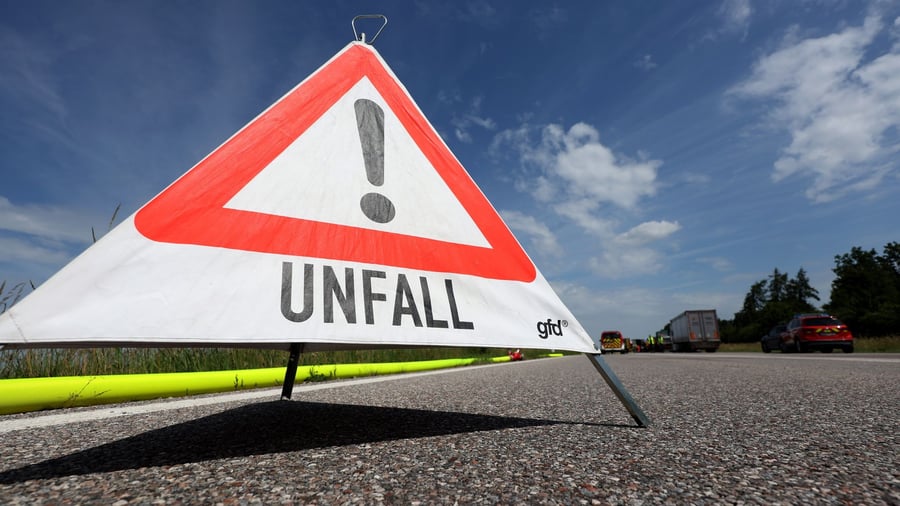
The words "sicher in sicherheit bringen" suggest the story is about ensuring safety on the road. A radio plays in the background, traffic is light, and reaching the destination is not a long process. However, suddenly the car brakes, leading to a breakdown. The ACE (Auto Club Europa) provides guidelines on how to behave in this situation to minimize harm to oneself and others.
The car should display warning lights, and the driver should remain calm, but also stop as soon as possible. Speed should be reduced without endangering the following vehicles. Ideally, the car should come to a stop safely with minimal frantic driving or braking maneuvers. If parking or a rest area is available, that's the best option.
If not, a shoulder rest area might be reachable. If all else fails, the safest option is to pull over at the side of the road or on the right lane. The next steps are crucial. The car should be parked and a reflective vest should be worn. If the car is on the shoulder or breakdown lane, the tires should be turned towards the road to prevent it from being pushed towards the driving lane.
Everyone should put on their reflective vests. At night, in poor visibility or rain, the hazard lights and parking light should be turned on to increase visibility. The driver should get out of the car, but never remain inside. Even in bad weather, help should not be waited for inside the vehicle, as it could lead to fatal consequences.
The reflective vest should be worn and the driver should exit the car quickly, but not recklessly. Important items like a phone, water, and clothing should be brought. Only exit on the side away from the road, even if it requires some acrobatics. The main goal is to move away from the road, not to endanger following vehicles. Once out of the car, all should quickly move behind the safety barrier.
If there is no barrier, the driver should stay at least 200 meters away from the breakdown car, facing the opposite direction and at a safe distance from the road. If the area is not clear, due to curves or hills, more distance should be maintained. On highways, a distance of 150 to 400 meters, depending on visibility, is recommended.
It's important to always keep an eye on traffic and move to the safety area as quickly as possible without endangering oneself. The warning triangle should be placed correctly. In towns, a distance of about 50 meters is sufficient, but at least 100 meters on country roads. If the location is unclear due to curves or hills, more distance should be kept.
On highways, a distance of 150 to 400 meters is recommended, depending on visibility. It's crucial to always be aware of traffic and move to the safety area as quickly as possible without putting oneself at risk. The warning sign should be carried clearly. When measuring the distance, the roadside posts can help, which are spaced 50 meters apart.
Don't forget to collect the warning sign before continuing or towing the car. Call for help - but never enter the road. If the warning triangle is placed and everyone is at a safe distance, emergency services can be called. If cargo has been lost or parts have fallen off the vehicle, never approach the road to retrieve them as it poses a risk of life.
In such cases, contact the police in Germany at 110. The number may vary in neighboring European countries, so it's best to call the emergency number 112 if unsure.
Written by urgent.news from Handelsblatt's reporting — not their text. Machine-written — may contain errors; check the original before relying on it.