Satellites now outnumber the visible stars above most towns
More than 700 satellites are crossing the sky over an average mid-latitude town at any moment of the night, outnumbering in many cases the stars visible to the naked eye.
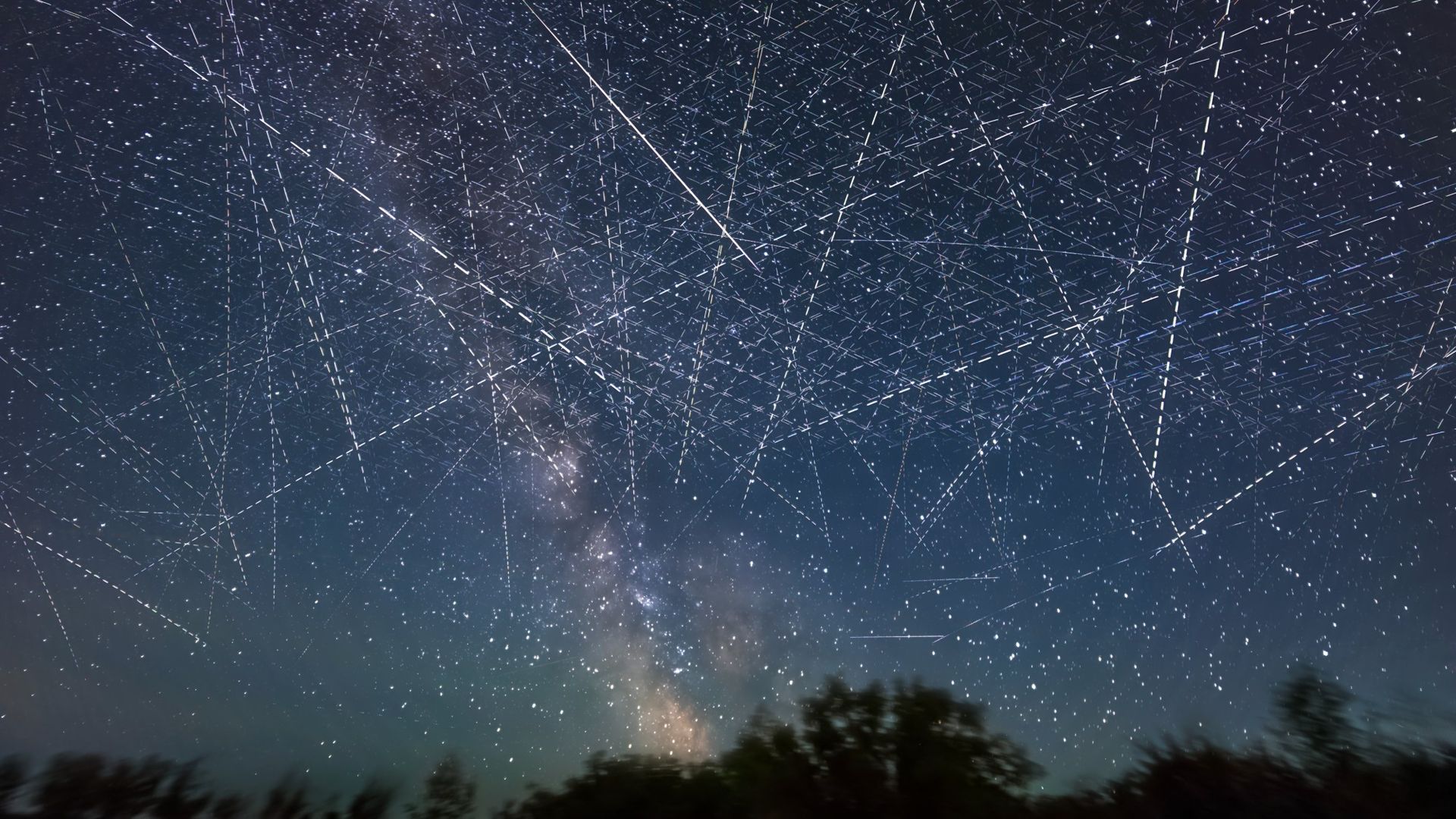
In the night sky above an average mid-latitude town, more than 700 satellites often outnumber the stars visible to the naked eye. This conclusion stems from an analysis of 15,833 active satellites in low Earth orbit, located below an altitude of 1,200 miles, according to researchers. The study, conducted by engineering firm Accu Components using data from the U.S. Space Force, reveals that with an unobstructed horizon, 710 satellites traverse the sky during every moment of the night.
Mid-latitude regions, including Europe, the U.S., and other areas between 40 and 50 degrees north or south, experience the heaviest satellite traffic. Most Starlink satellites, orbiting at approximately 53 degrees to the equator, cluster over these mid-latitudes. Satellite density is lowest near the equator, with around 490 satellites, while the sky above mid-latitudes sees the most satellites.
While not all satellites are visible to the naked eye, about 105 of the 710 satellites in view are illuminated by sunlight, reflecting enough light to appear as bright as stars. The actual number of visible satellites fluctuates throughout the night, with an average of 300 catching sunlight in the first hour after dusk, decreasing to fewer than 20 at midnight before rising again before dawn.
In the darkest hours, fewer than a few dozen stars are visible in major cities, while suburban and smaller towns witness a few hundred.
The rapid expansion of satellite populations, particularly with SpaceX's Starlink constellation, is expected to vastly outnumber stars in the sky worldwide. This proliferation concerns astronomers who worry about the impact on their ability to study the universe. Satellite trails can leave streaks in astronomical images and increase the overall brightness of the night sky, potentially hindering the visibility of distant stars and galaxies that hold crucial information about the universe's history.
Written by urgent.news from Space.com's reporting — not their text. Machine-written — may contain errors; check the original before relying on it.